the writer is a lonely hunter

writing by Gail Aldwin and other authors

On a road to somewhere

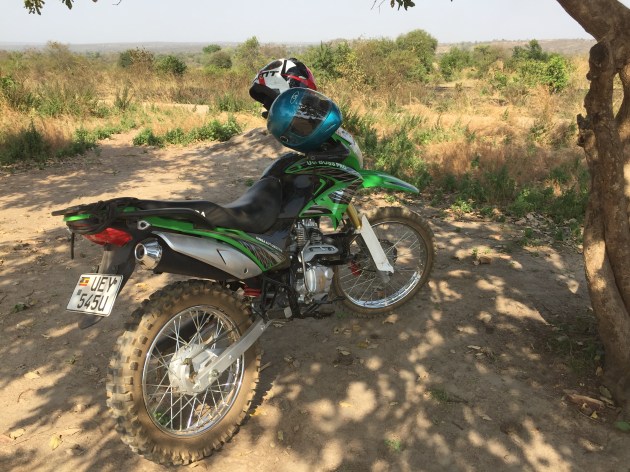
At a time when we’re restricted in our movements due to Covid19, it occurs to me that travelling by road is now something to savour. And there have been many journeys I’ve taken by road that are worth revisiting. From unsealed routes to highways, roads are symbolic of progress, a life path, even a map to the future and a way back to the past. But it’s the physical experience of travelling by road that I’m interested in exploring here. If you’ve followed my recent posts, you will be aware that the journey from Koboko to Yumbe in Uganda is along a red dust road. Travel behind another vehicle and visibility becomes a huge problem. Other hazards include cows (they always have right of way), motorbike taxis called boda bodas (which slip in the dust) and the inevitable potholes. The drive to Bidibidi refugee settlement is even worse especially when riding pillion on an off road bike. It felt like we were driving over corrugated iron and it was hard to believe the conditions could get any worse… but they did. With the arrival of the wet season in March, rivers of rain gouged deep tracks in the paths and on more than I occasion I got off the bike to walk rather than face negotiating another gully.
6E141557-4AD5-413E-84FB-E3E6DBFCC12B

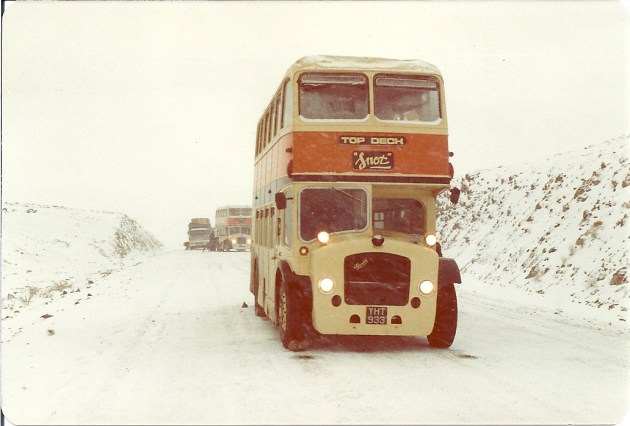
Other occasions when I’ve walked alongside a vehicle include a journey from London to Kathmandu in 1981 with Top Deck. The travel company was started in the 1970s by a group of Australians who converted Bristol Lodekka buses into touring vehicles by fitting a kitchen and seating downstairs and installing bunks on the upper deck for sleeping.

Inside 'Snot' Turkey0001

photo: Philip Wadds

On the mountainous roads across northern India and into Nepal, we were frequently required to walk in order to lighten the load on the vehicle. Doug Foskett’s footage shows instances of us doing just that. Another perilous road, this time covered in snow, was negotiated with the use of only two snow chains for the wheels. As we approached the Turkish border with Iran, the bus slipped and slid so much we passengers were like crew on a dinghy, lurching from one side to the other in order to keep the bus steady.
Turkey Iran Border0001 (2)

photo: Philip Wadds

Read the rest of this entry »

2 Comments »

Crazy few days

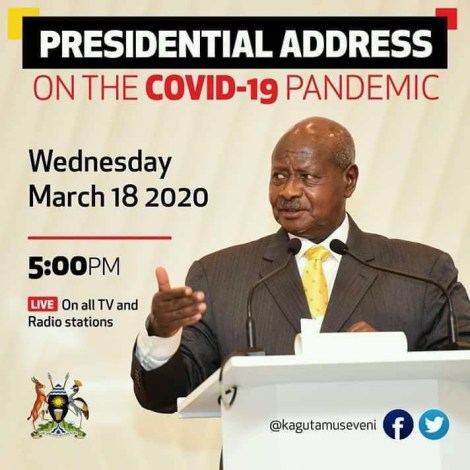
We rushed back from Bidibidi refugee settlement to the main town in Yumbe, Uganda on Wednesday 18 March to listen to President Museveni’s address. It had been a busy day  at the settlement where I delivered activities to parents of village 15 and 13. The sessions were particularly enjoyable. I distributed loops of string so that we could share string figures. The purpose was to allow refugee parents to reconnect with their cultural traditions in order to build psychosocial wellbeing. I also taught the English string figure ‘cup of tea’ so that we could reflect on the challenges of undertaking new learning for adults and for young children.  It isn’t easy teaching a string figure to a group of over one hundred participants so I relied on parents who grasped the process quickly to be able to help others. The session was an amazing success. Discussion focused on how we learn best and we talked about observing demonstrations, listening to instructions, following illustrated guidance contained in handouts, having one-to-one support and how moving our muscles can help us to learn. We then related this to children’s learning and how parents can best support learning in the home. Women in the group ululated when participants showed string figures they knew and I felt everyone went away from the session having learnt something. I had four further sessions to deliver that week, so I was looking forward to more positive experiences, but first we needed to know what President Museveni had planned in response to Covid19.

IMG_5096

There was the usual power shortage in Yumbe, so my colleagues and I went to a cafe with solar power in order to watch the address on television. The restrictions announced weren’t exactly a surprise, but the email I received during the speech was. My flight home had already been brought forward from 2 April to 26 March and now there was new advice from VSO Uganda to take the Emirates flight to Gatwick leaving on 20 March. That meant I had to start packing for departure to Kampala the next morning in order to catch the flight the following day.

So that’s what happened. Yumbe to Kampala is over 600km and the road is unsealed for the first part of the journey. I said goodbye to my colleagues at the office in the morning, then set off.

4E714409-7C27-46C7-87A3-497F5EEB2735_1_201_a

I arrived in Kampala at 8pm, just in time to grab some dinner at the hotel then head off to bed. I got up early the following morning to complete a couple of reports and finish my work. One of the achievements of my placement involved collecting information on young children with disabilities living in the seven villages with Early Childhood Care and Education centres in Zone 3. With the database complete, I shared it with other NGOs to allow staff to follow up with medical and/or educational assessments. A replacement for my role at Bidibidi has been appointed and the database will also be useful to offer targeted provision to children and families in need of psychosocial support and parenting help.

Read the rest of this entry »

7 Comments »

Bidibidi Refugee Settlement: activities to support psychosocial wellbeing

This week I began the second in a series of activities offering support to parents of young children attending Early Childhood Care and Education (ECCE) centres on the settlement. The purpose is to strengthen the psychosocial wellbeing of children by encouraging greater parental involvement. The flight to safety from conflict in South Sudan has created a legacy of loss among families on the settlement. Loss of extended family connections – some have family members remaining in South Sudan, other families are dispersed across different refugee settlements in Uganda. Loss of home and land – some families have heard their houses are now occupied by others; there has also been much destruction of property and land during the conflict. Loss of a hoped-for future – parents who wanted to continue their education or further their careers now find themselves without educational or work opportunities. These losses can impact on the psychosocial wellbeing of parents who may find themselves increasingly unable to parent effectively given the instability of life as a refugee and the effects of poverty. (Although recently there have been encouraging signs of peace in South Sudan following  six years of civil war, refugees on the settlement have a ‘let’s wait and see’ attitude.) In terms of the psychosocial wellbeing of children, there is some research to suggest an intergenerational effect. Even children born in safety may share some of the wellbeing needs experienced by their parents.

As the ECCE centres are at an early stage of development, there are currently no referral systems in place to target specific support. (I am working on a database to address this by collecting information about children using the Washington Group of Questions.) For the time being, I extend an open invitation to my activities for all parents where ECCE centres are located in zone 3 of the settlement. Uptake varies according to the village but one session had over one hundred participants. In order to manage this number, I encourage skill sharing amongst parents so that those who engage with the tasks readily can support others.

‘Why play?’ is the title of the session and it considered the importance of parents taking time to play with their children. We discussed how play builds family bonds, opens lines of communication and trust which help to keep children safe, supports learning in the ECCE centre and is fun for the whole family.

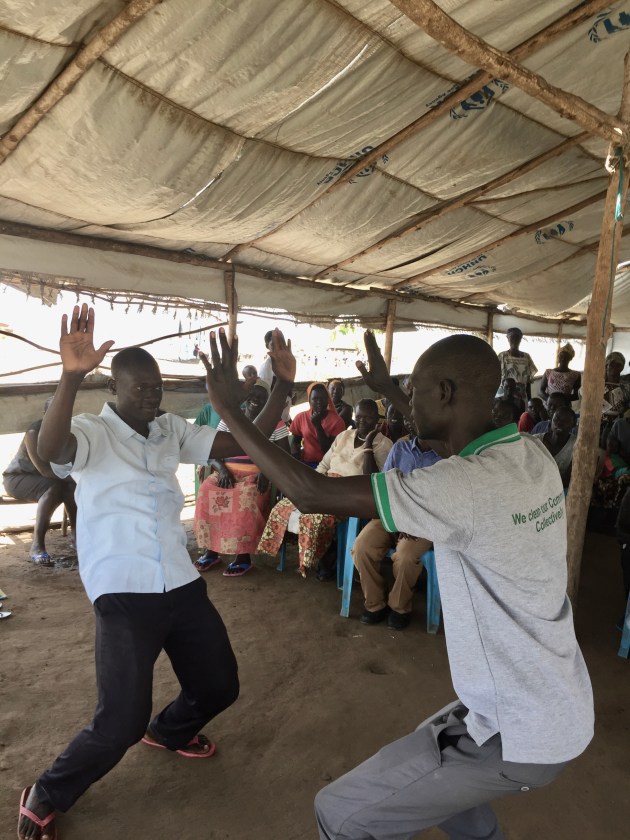
As there are few resources on the settlement or money to purchase them, we focused on games that can be played without materials or using locally available materials. We made rhythms by participating in sound exercises using clapping and clicking games. Parents then worked in partners to do a mirroring activity (one was the leader, the other the mirror so the actions of the leader had to be copied simultaneously to imitate a reflection).

C517DB3B-D2DD-4D97-94FB-714EF77CB2A8_1_201_a

Read the rest of this entry »

6 Comments »

Coming and going, ups and downs

I arrived back in Yumbe on Wednesday evening after an eventful few days in Kampala. The immigration office refused to extend my tourist visa as my work visa was being processed. Although I didn’t have all the required original documents with me, colleagues at VSO sent me back to the office to claim my work visa. As VSO is a charity and doesn’t pay from work visas, there was a delay in the issuing process. However, I was the first of all the VSO international volunteers in Uganda to have the  work permit stamped into my passport. I believe others are now following a well trodden path to the immigration office to get their work visas after my success.

The next important job involved updating the registration of my Ugandan SIM card. Mobile phones are absolutely essential in Uganda (and other countries in Africa) because this enables access the internet, WhatsApp for messaging, video and phone calls, social media and most importantly MONEY. I have a mobile money account where VSO deposits my monthly allowance and money to fund the activities I run on the settlement. It is an incredible system whereby it’s possible to withdraw money from kiosks located in even the most remote locations. You can also send money to other people, pay utility bills  and OTT. This is a tax levied on the use of social media and can be paid daily, weekly or monthly depending on frequency of use. I’ve taken to carrying my mobile phone around in my money belt as losing this essential piece of kit would be such a nightmare. However, I’ve since discovered that losing access to the SIM is equally horrific.

My tourist visa expired today and something must have gone wrong with the registration of my work visa as my SIM is not working. My first visit was to the MTN service office in Yumbe where they said re-registering would solve the problem. It took forty-eight hours to get this done the first time, so I’m not confident of a quick result. Now I’m using the internet connection at the hotel to try to resolve the situation. Fortunately, MTN is good at responding to direct messages on Twitter – this is a relief as I obviously can’t contact them by phone. While I’m waiting for a response, I sit in reception at the hotel (the only good place for internet access) and type this post.

The drive back from Kampala to Yumbe was long even with sealed roads most of the way. My driver took a wrong turning at the final stage and we ended up at the border with South Sudan. The photo below shows the crossing point and reinforces the idea that country borders are arbitrary – this view of South Sudan looks exactly the same was the rest of West Nile in Uganda.

IMG_4968

I arrived at my accommodation to find no water and no power. The lack of consistent supply is ongoing in Yumbe. I’m so used to the shortages that I’m now overjoyed to find water and electricity available rather than getting ratty when they’re not. Sleeping without a fan is the worst but it’s amazing how it’s possible to get used to things. I now drip sweat all night as well as all day!

Read the rest of this entry »

7 Comments »

Would you believe it?

I am in Kampala again as a result of a ‘would you believe it?’ moment. On Friday I travelled to Gulu because I needed to extend my tourist visa to provide cover until my work permit is issued. I was told renewal was a simple process, all I had to do was turn up at the office, produce my passport and pay a fee. After a six-hour drive from Yumbe, I went straight to the immigration office. I had heard from fellow volunteers based in Gulu that it had taken them five hours to acquire the necessary renewal. I wasn’t too worried because if I failed to get the stamp issued that day, I could always go back on Monday. But oh no. The immigration officer was away at a meeting.  He also had meetings scheduled for Tuesday and Wednesday so was unlikely to report at the Gulu office until Thursday! Back in Yumbe there’s a busy week ahead scheduled including an important visit from the VSO project manager on Thursday. “Is there anywhere else I can get the visa extended?” I asked. By this time, I was starting to panic. I absolutely need to have a valid visa otherwise I could face a fine or imprisonment! ‘Go to Kampala,’ came the reply.

After another seven-hour drive I am now in the capital. It’s good to be back. I know my way around the Tank Hill Road area well and the cooler climate in Kampala means I can sleep under a blanket for a change. I even have a balcony to enjoy the view of Lake Victoria.

IMG_4958

The only (slightly) troublesome thing about Kampala is mosquitoes. I have been very impressed that my regime involving the daily application of mosquito repellent and the wearing of socks, long sleeves and trousers in the evening has worked well. Other measures include sleeping under a mosquito net (and taking anti malarials) which have kept me safe. But, there’s no protection while taking a shower and one crafty mosquito managed to get me twice on the thigh. These bites have turned into huge, red welts and even antihistamines can’t stop the itching. I’m so glad that getting bitten by a mosquito is a rare occurrence. It was one of the things I worried about before leaving home, but with a rigorous routine, there really is nothing to be fear. Would you believe it?

Read the rest of this entry »

2 Comments »