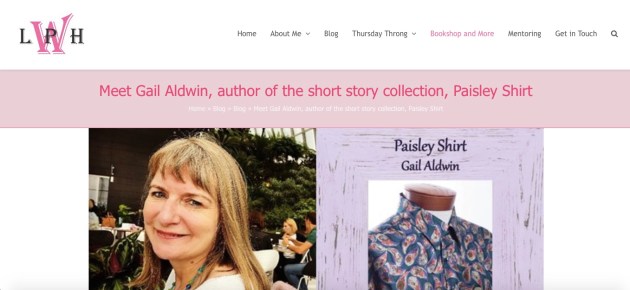
I’m over on Linda Parkinson-Hardman’s blog today answering a range of questions including:
- Are there occupational hazards to being a writer?
and
- How do you remain sane while working?
Why not pop over and take a look at my answers? Click here.
I’m over on Linda Parkinson-Hardman’s blog today answering a range of questions including:
and
Why not pop over and take a look at my answers? Click here.
Shawls designed in a pattern commonly known in Britain as paisley were by the 1850s an indispensable item of Victorian women’s wear. They were a marker of respectability as shown by the character of Esther in Elizabeth Gaskell’s Mary Barton, who dispenses with her prostitute’s attire to find a shawl at a pawnbrokers which is considered suitable attire. Poor women wore paisley shawls made from wool or cotton while hand woven shawls from Kashmir made from ‘several grades of hair from two or more species of Asian goat’ (Suzanne Daly, 246) were the preference of the prosperous middle classes.

In another novel by Elizabeth Gaskell North and South, shawls and scarves from India are inherited or handed down. Mrs Shaw gives her collection to her daughter Edith but due to her slight stature, Edith prefers to use them as picnic blankets. It is on Margaret that a shawl suits “as an empress wears her drapery”. Preference for handcrafted goods leaves Margaret at odds with Mr Thornton but by the end of the novel Margaret inherits land and marries him.

As paisley shawls are included in great classic work, why not include paisley print in contemporary fiction? Read my story ‘Paisley Shirt’ included in the collection of the same name to find out about its influence in my writing. Click here for more information on Amazon or if delivery times are off putting, try the Book Depository.
I am delighted to be on Maria Donovan‘s blog today sharing my strategies and techniques for writing flash fiction. Maria is an experienced writer of short fiction with two collections to her name: Pumping up Napoleon and Tea for Mr Dead. I was absolutely delighted when Maria agreed to endorse Paisley Shirt by describing my flash fiction as ‘sensitive, surprising, unnerving, tender and crucial’.

Maria’s debut novel The Chicken Soup Murder has recently been published. It is narrated by eleven-year-old Michael who shares his experiences of family, community, loss and integration in a story which involves a suspected murder. It’s a beautifully crafted novel and well worth reading.
Do pop over to Maria’s blog to find out more about how I approach the writing of short fiction.
I am delighted to have a poem published on Words for the Wild. This platform for new writing has been organised by Amanda Oosthuizen and Louise Taylor in response to the threat of development on the remaining pockets of countryside in urban Eastleigh. Amanda and Louise urge all writers to celebrate the countryside through stories and poetry thereby demonstrating the value of green spaces in order to help protect them for future generations.

My poem “Glimpses” is beautifully presented on the website – it’s thrilling to see my work mounted so evocatively. And I’m chuffed to find my poem alongside the work of other writers I respect such as Claire Fuller, Calum Kerr and Amanda Saint.
Do pop over to Words for the Wild and take a look. I hope you enjoy “Glimpses”.
Following my recent discovery that paisley print pattern originates in Kashmir, I hunted out purchases I made while visiting the area in 1981. I was a passenger on a Top Deck overland trip from London to Kathmandu. We travelled on a converted Lodekka bus which had a kitchen area downstairs and sleeping accommodation up.


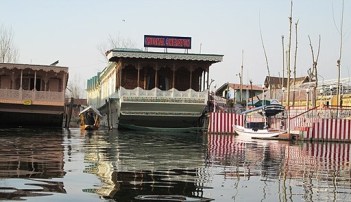
For the journey to Kashmir we took local transport and stayed in luxurious houseboats on Dal Lake in Srinagar.
My purchases from Kashmir include a carpet which sits in front of the hearth in our Dorset home. I paid a deposit and it was dispatched to my parents when they settled the balance and collected it after a wrangle with customs. (I was delightfully unaware of all this – having a fun time in Australia.)

A jacket, which I’m self-conscious of wearing due to the real fur trimming.

And a set of tables which travelled from Kashmir to Australia and then onto Papua New Guinea before furnishing various homes in the UK.

The carved finish of leaf patterns on these tables is close to being a paisley style pattern. Unlike Paisley Shirt my collection of short fiction, these are not available to purchase on Amazon! (If wishing to obtain my collection, please ignore the warning that the book is out of stock and place an order anyway – it will be sent to you given time.)
I never quite understood why I went on such a spending spree in Kashmir. I blame the tea which I now realise must have been laced with hash. You can find the low-down on the overland experience from Trevor Carroll in his book Crossing Continents with Top Deck.
Enjoy!
Feedback from my recent post about the history of paisley print (you can read it here), directed me to the tradition of the Dorset feather stitchery. This is an embroidery stitch that was originally used to decorate rural workers’ smocks. The pattern uses feather stitch, buttonhole stitch, chain stitch and fly stitch to create a pattern similar to the droplet shaped motif found in paisley patterns.
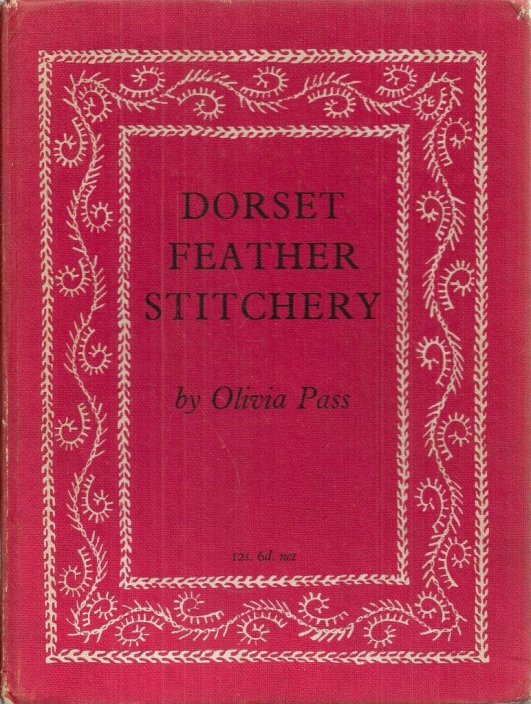
Background to the development of this embroidery style can be found in a book written by Dorset woman Olivia Pass, published in 1957. Even from the cover design, the border shows remarkable similarity to paisley patterns.
It is delightful as the writer of a short fiction collection titled Paisley Shirt to find the design incorporated into local Dorset craft. There are examples of Dorset Feather Stitchery in the Bridport Museum or you might wish to read Olivia’s book. Like my collection Paisley Shirt it is possible to purchase Dorset Feather Stitchery on Amazon.
I’m over on Kathy Sharp‘s blog today, sharing my experiences as a writer in Dorset. Why not pop over and have a read? Or you might like to check out “Watered Down” a quirky story by Kathy which is published on CafeLit.
Here are all the current titles in the short fiction series published by Chapeltown Books. A group of good looking covers with enticing stories inside.


My collection Paisley Shirt is available as a Kindle Edition through Amazon and paperback copies can now be purchased from all good bookshops. Recommended bookshops in Dorset include Serendip, Lyme Regis; The Book Shop, Bridport; Winstone’s, Sherborne; Gullivers, Wimborne Minster; Westbourne Book Shop, Bournemouth; and Waterstones, Dorchester.
4* and 5* reviews of Paisley Shirt can be found on goodreads. If you do decide to purchase a copy of Paisley Shirt, further reviews are very welcome.
Very pleased to say that the Kindle Edition of Paisley Shirt is now available to download from Amazon. The paperback will follow shortly and I’ll be giving details of my book launch then.

I’m delighted to be in good company at Chapeltown Books with other short fiction writers who have publications in the same series. Here is the cover for Badlands,a collection by Alyson Faye which includes short fiction inspired by ghost stories, old movies, derelict buildings and real life issues.

And another by Allison Symes, From Light to Dark and Back Again a collection of very short stories to suit every mood.

I’m very much looking forward to the publication of Amanda Huggin’s collection Brightly Coloured Horses. The cover image is also by Amanda, what creative talent!

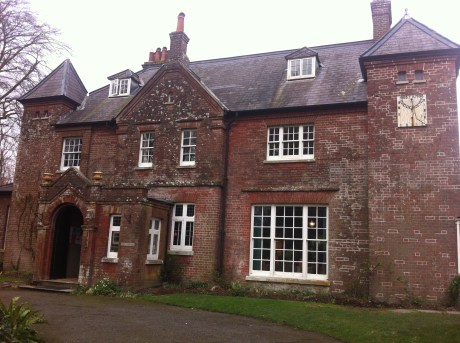
Thomas Hardy designed and lived in Max Gate, situated on the outskirts of Dorchester, from 1885 until his death in 1928. When we first moved to the county town, the house was occupied by tenants and you could only access two of the ground floor rooms. Over time, the National Trust have opened more of the rooms including the attic rooms where Emma, Hardy’s first wife withdrew to.
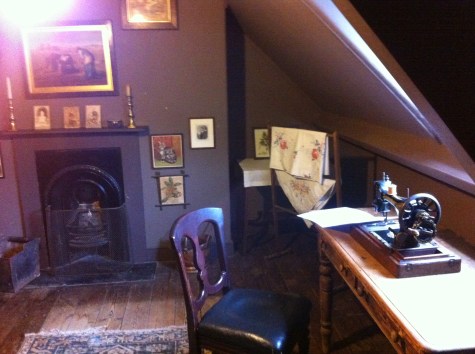
Emma’s boudoir in the attic at Max Gate
Emma started to use the rooms as a daytime retreat, but by 1899 she decided to move her bedroom up there, too. She described her space as a ‘sweet refuge and solace’. It’s strange to think of Hardy working at this desk directly beneath Emma’s rooms.
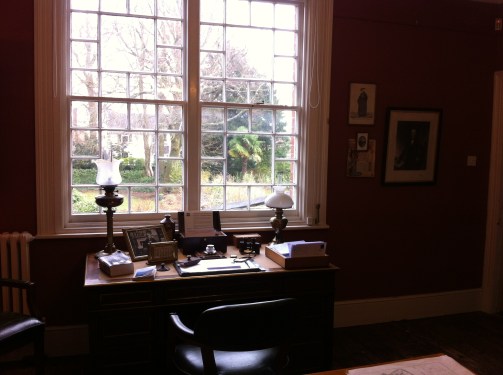
Thomas Hardy’s first floor study
In his study at the house, Hardy wrote Tess of the d’Urbervilles, Jude the Obscure and The Mayor of Casterbridge and much of his poetry.
Very little of the furniture in the house belonged to Hardy because his second wife, Florence, sold everything upon his death. Therefore, the contents of each room is there to recreate the atmosphere that might have existed. As such, this is one of the few National Trust properties I’ve been to where visitors are encouraged to take a seat and enjoy the warmth of the fire in the lounge.
Use of the toilet, however, is not allowed (although there are loos for public use).
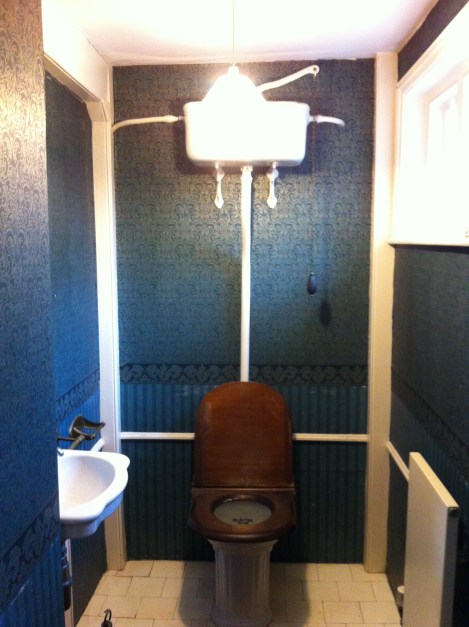
Max Gate is well worth visiting for anyone staying in or passing through Dorchester.


