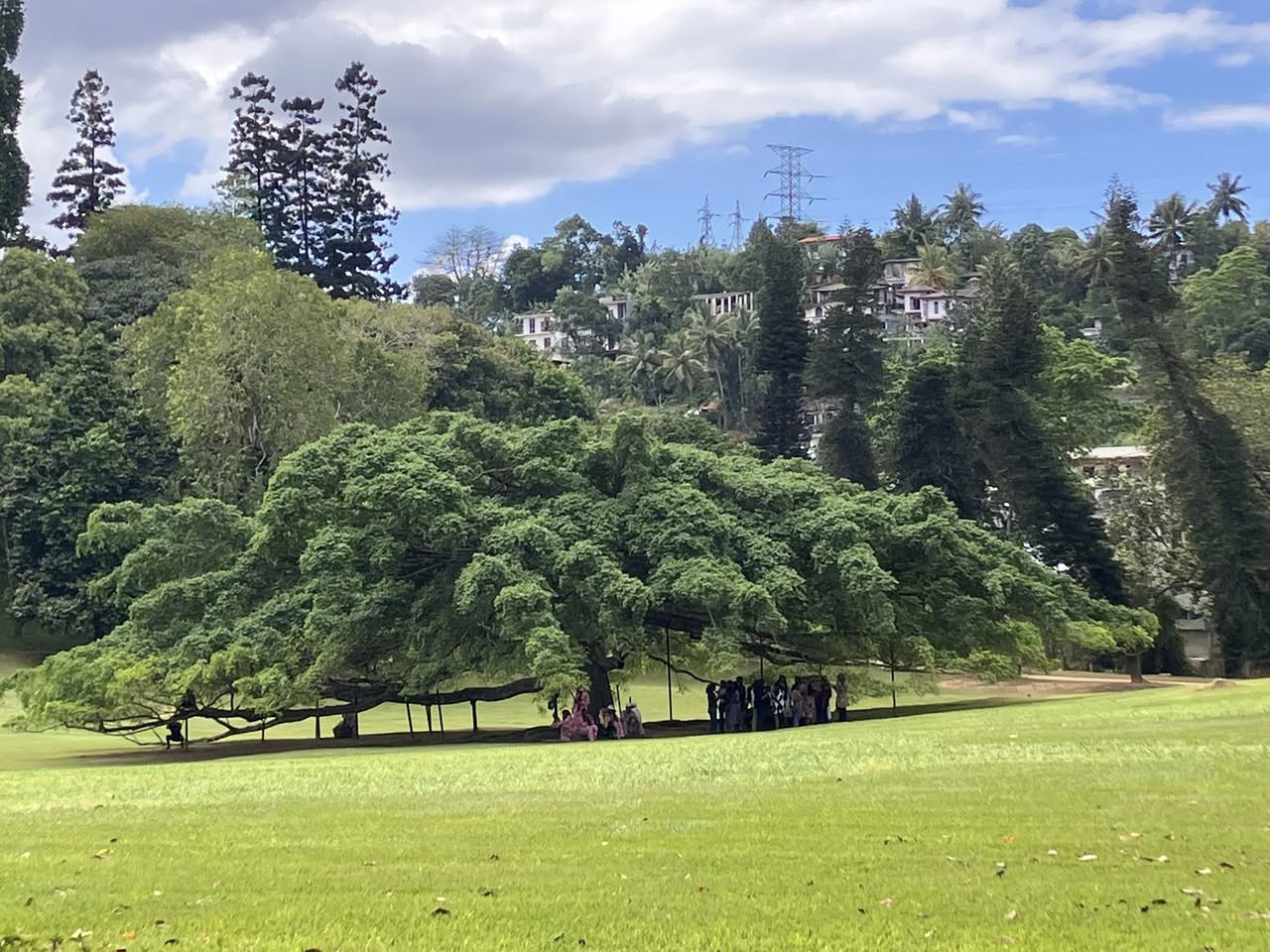
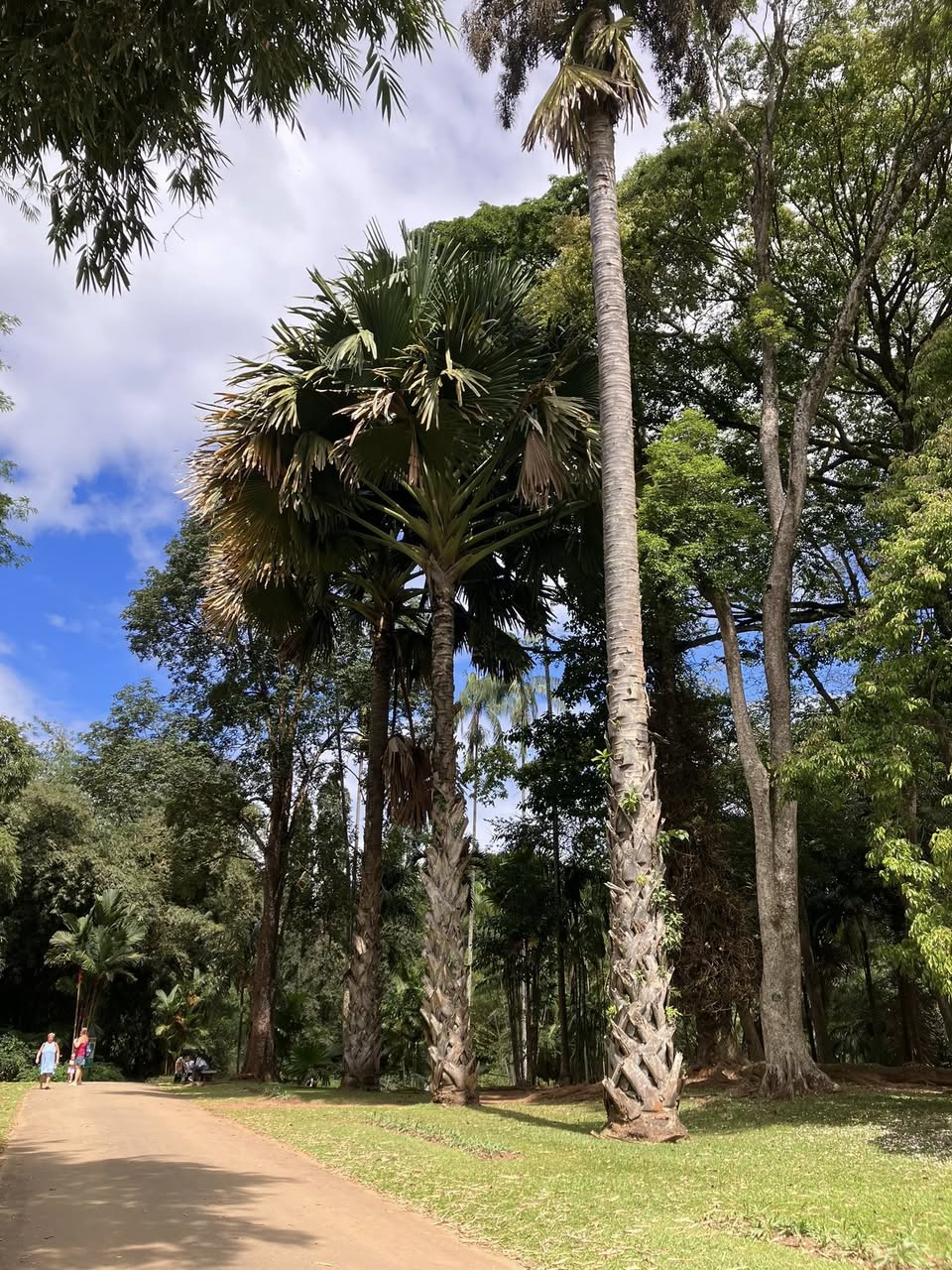
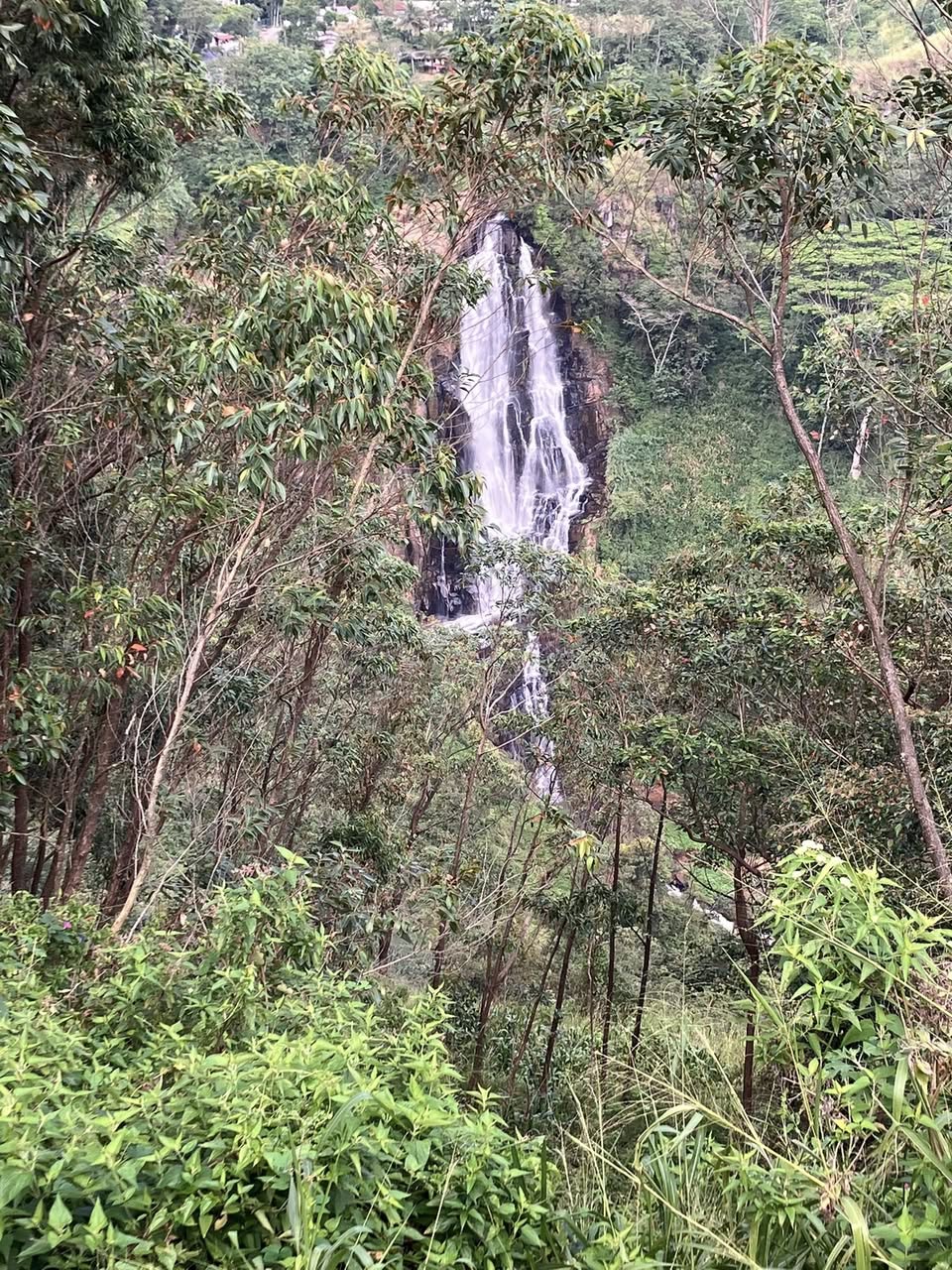
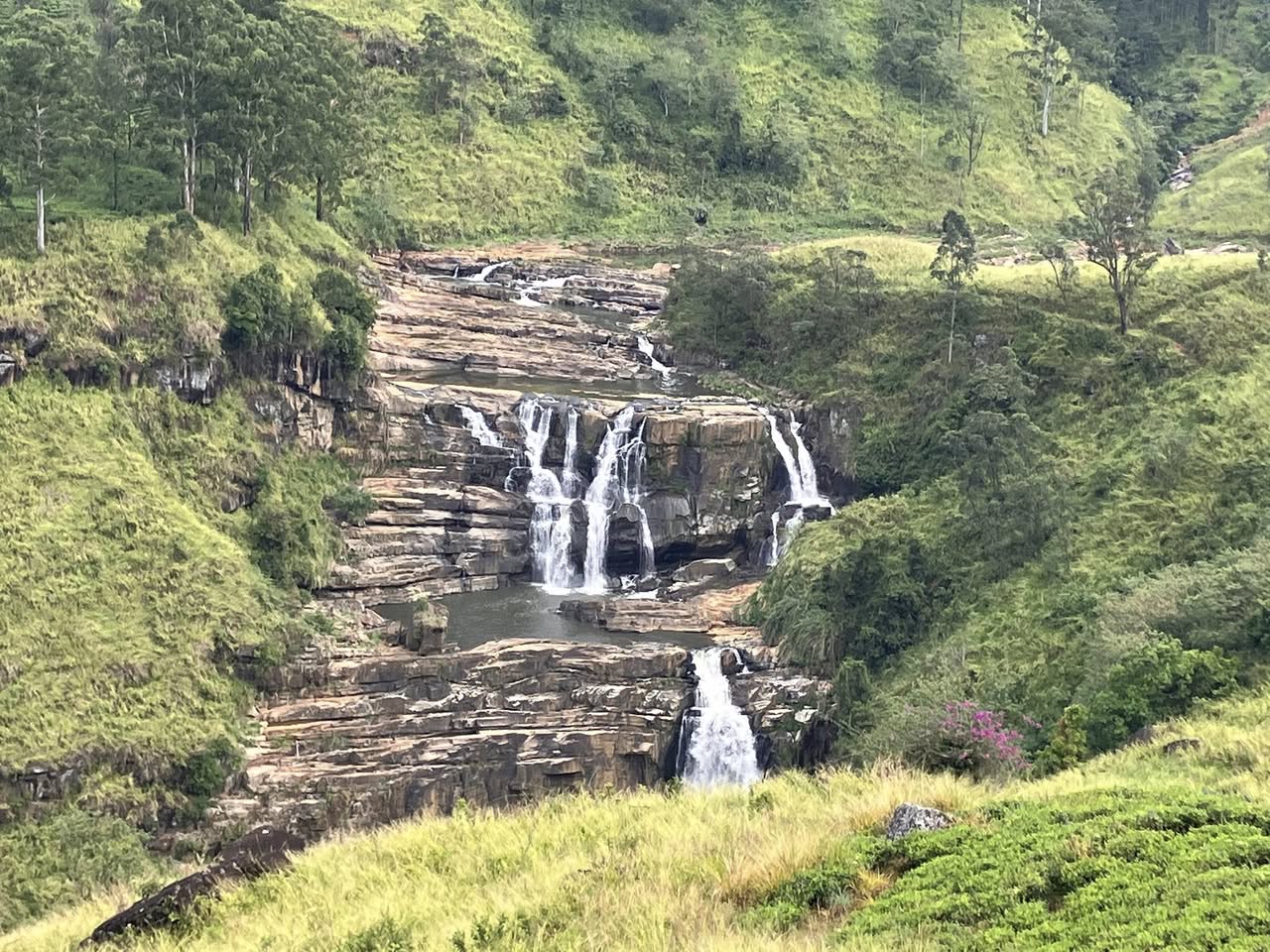
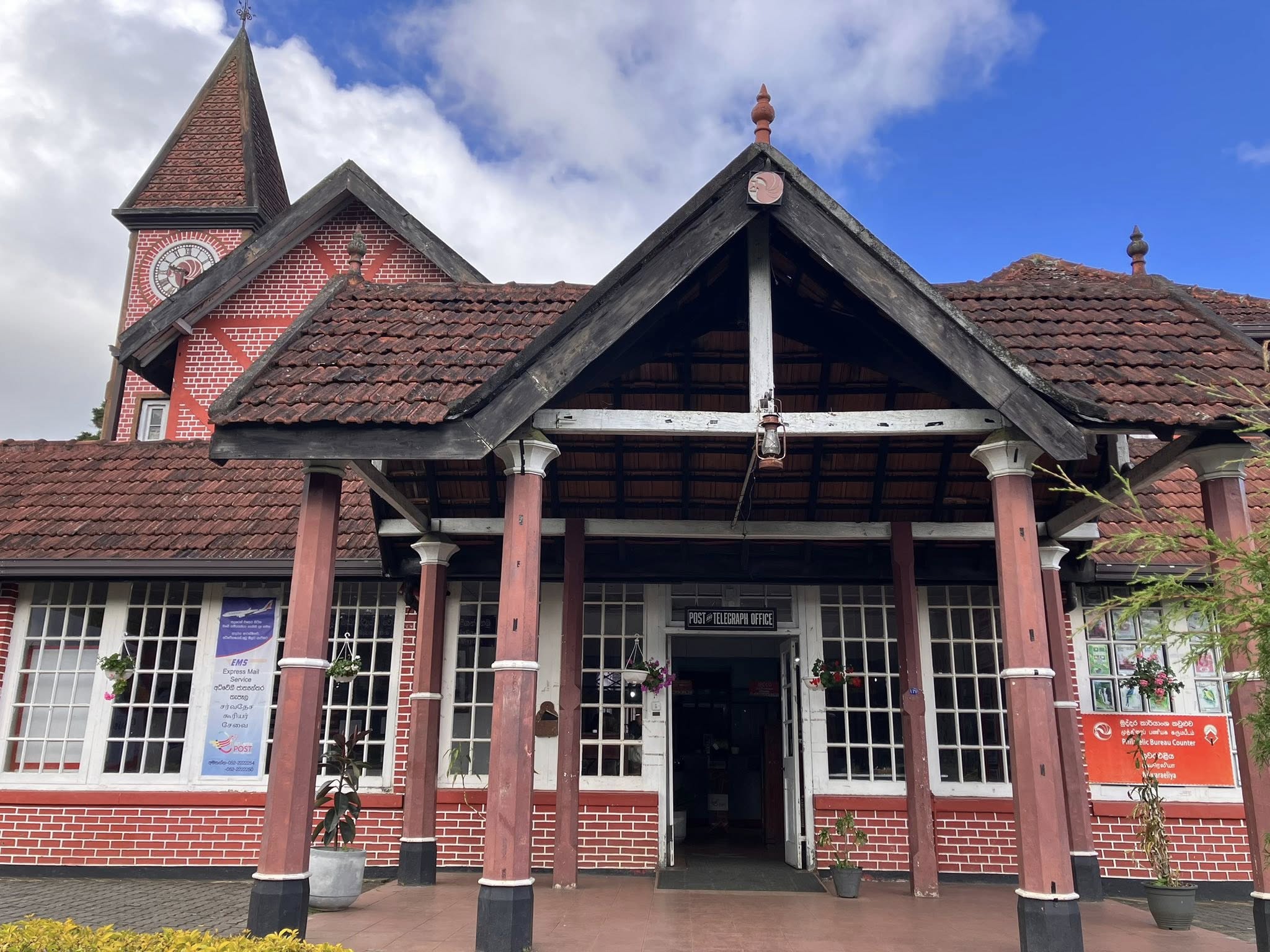
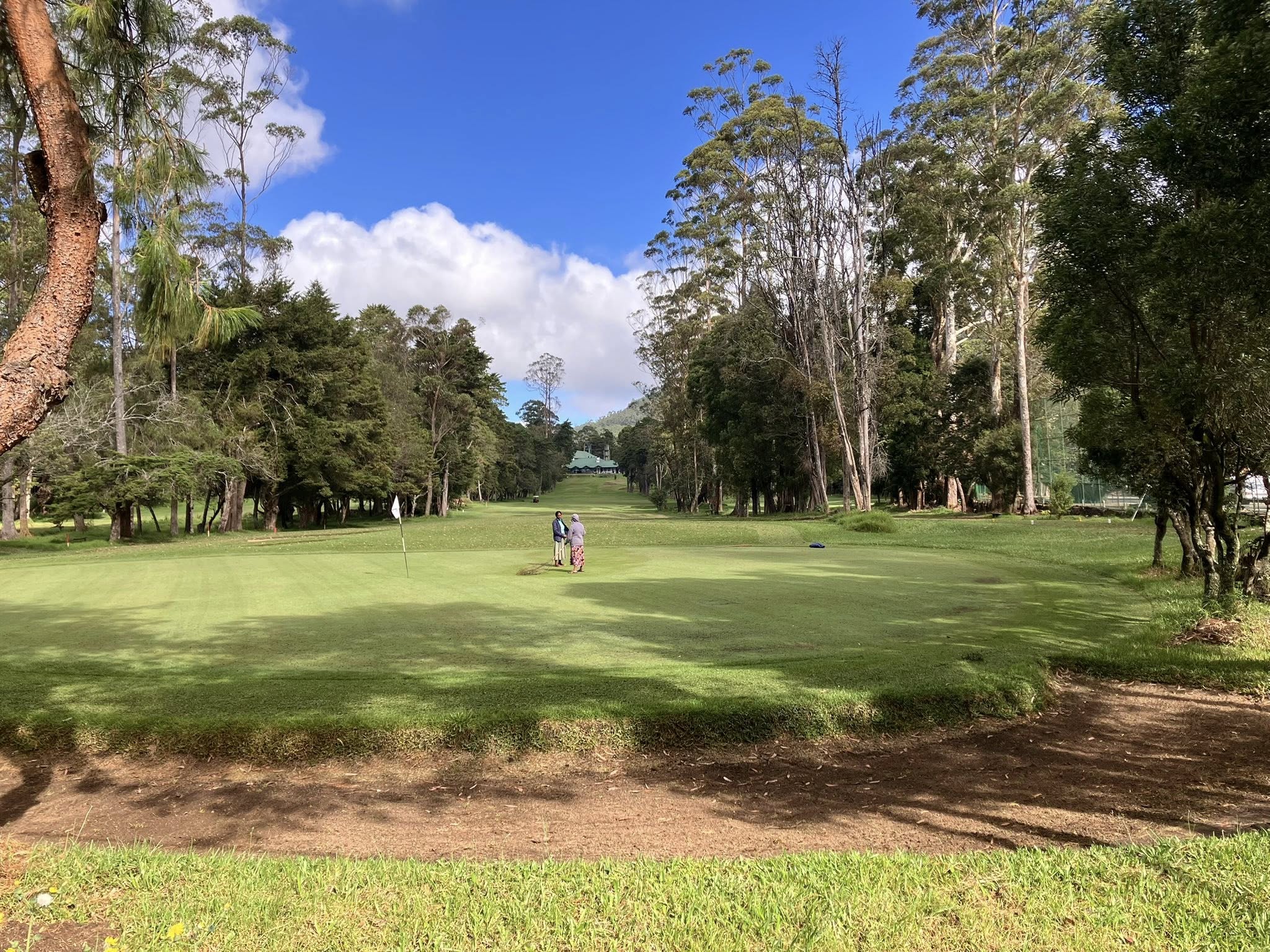
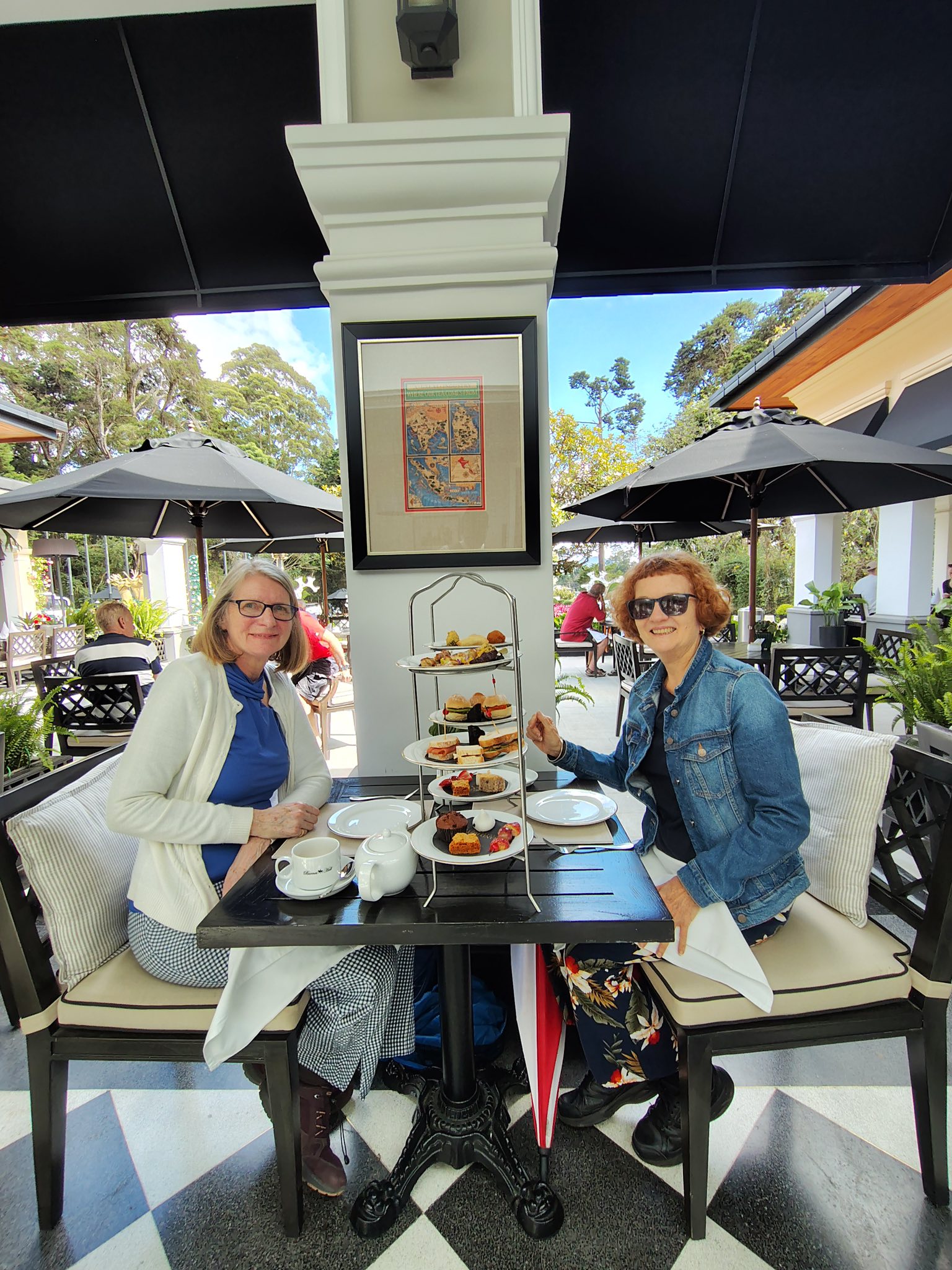
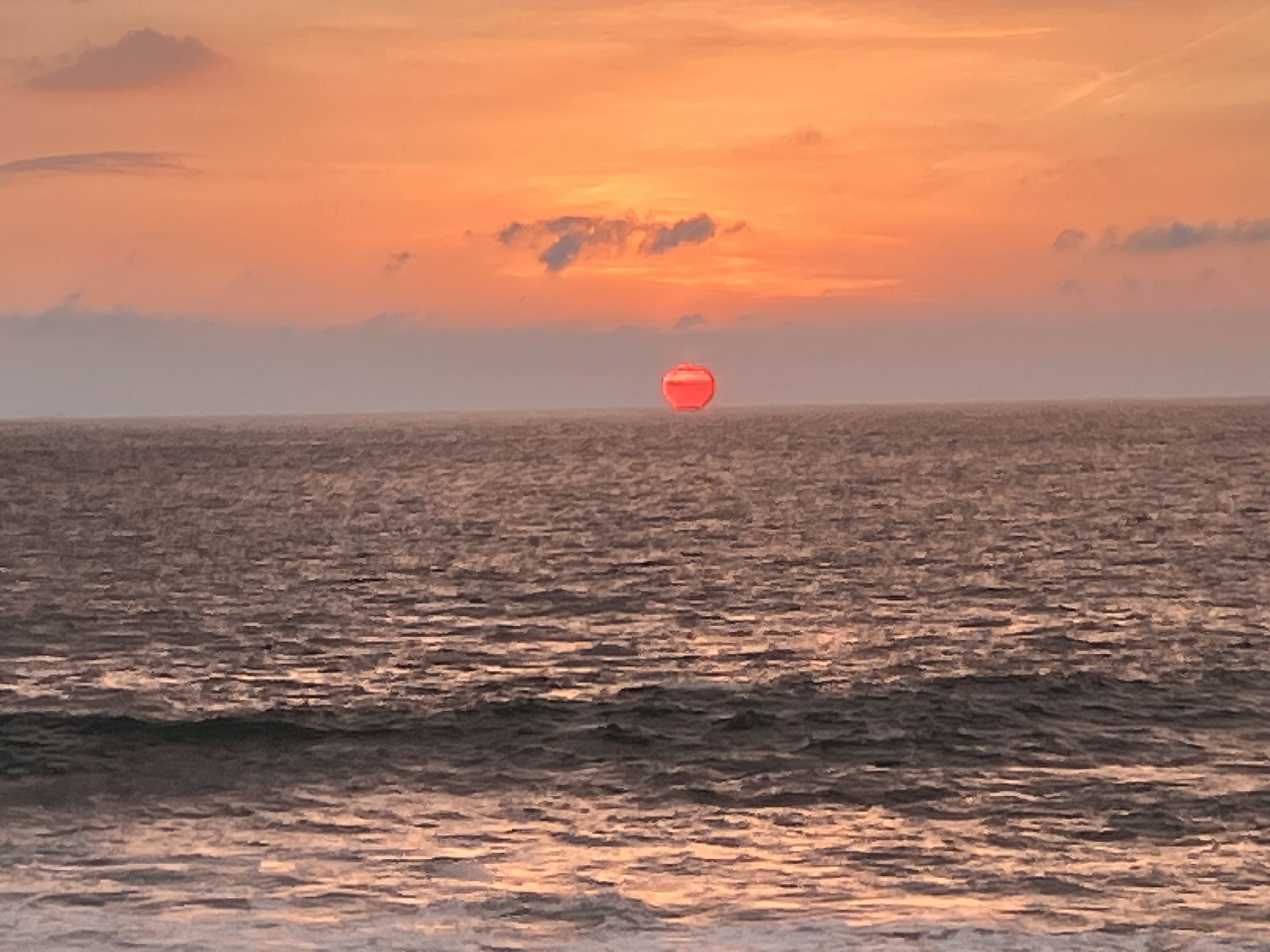
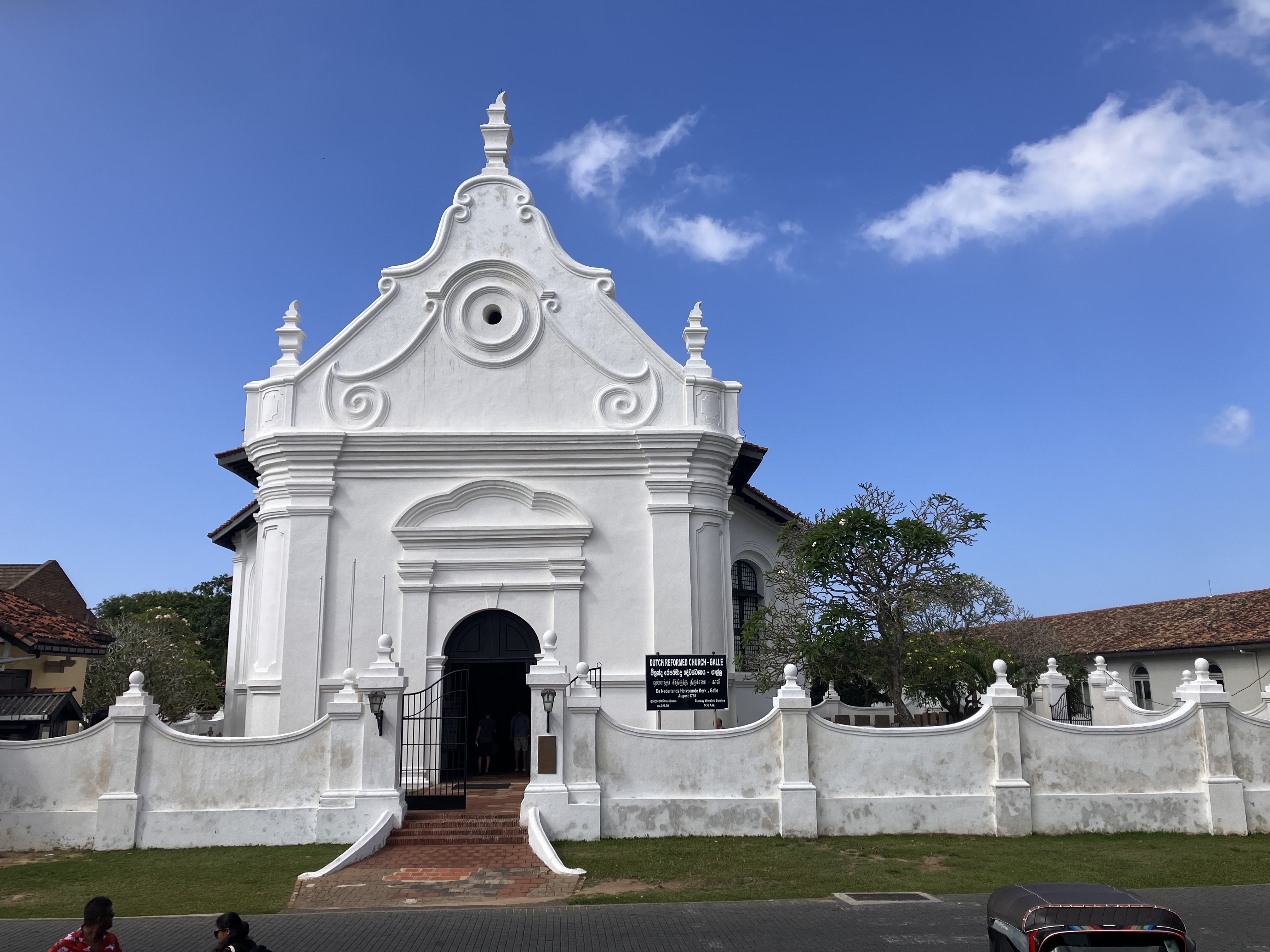
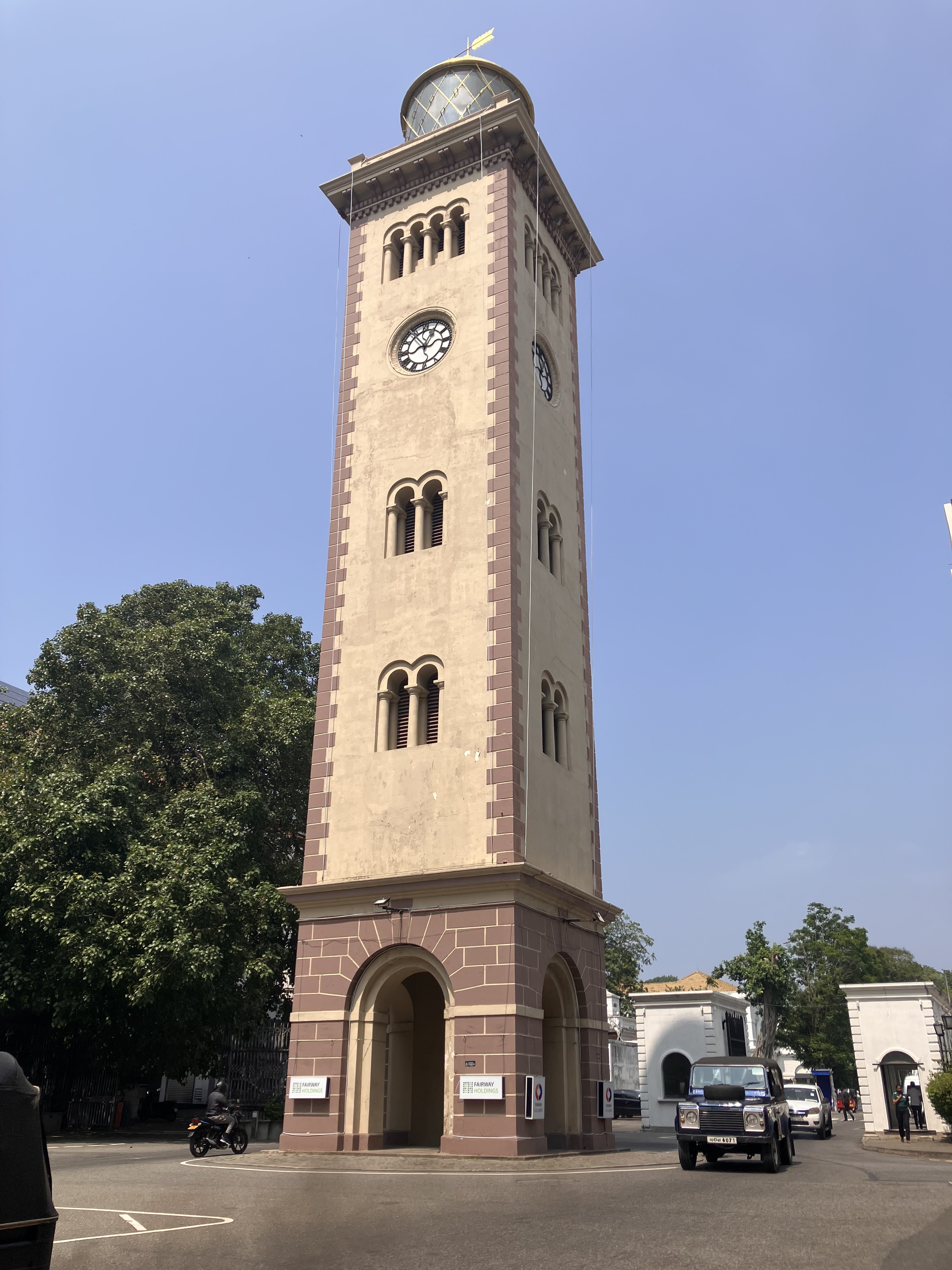
A flight from Sydney returned us to the UK on Wednesday 10 December. Although we’re still suffering from jet lag with some very early starts to the day, it’s good to look back on our experiences. You may remember, I used AI to help refine our itinerary and wrote about it here. The first two weeks involved a road trip of the North Island following a figure of eight around Auckland and for the second leg, we joined a cruise. This took us to ports on the North and South Islands plus stops in Hobart, Melbourne and Sydney.
Here are the highlights:
Auckland
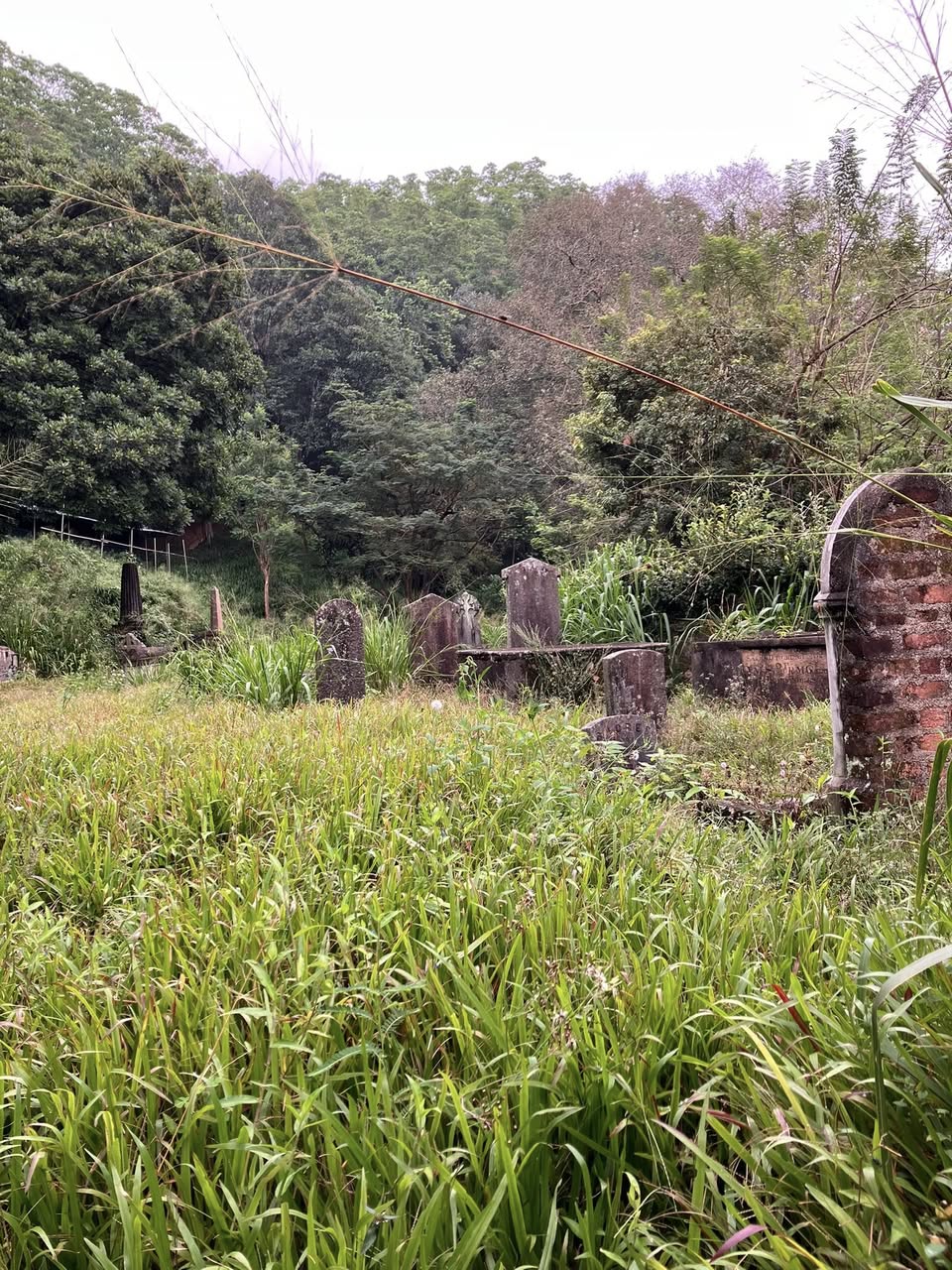
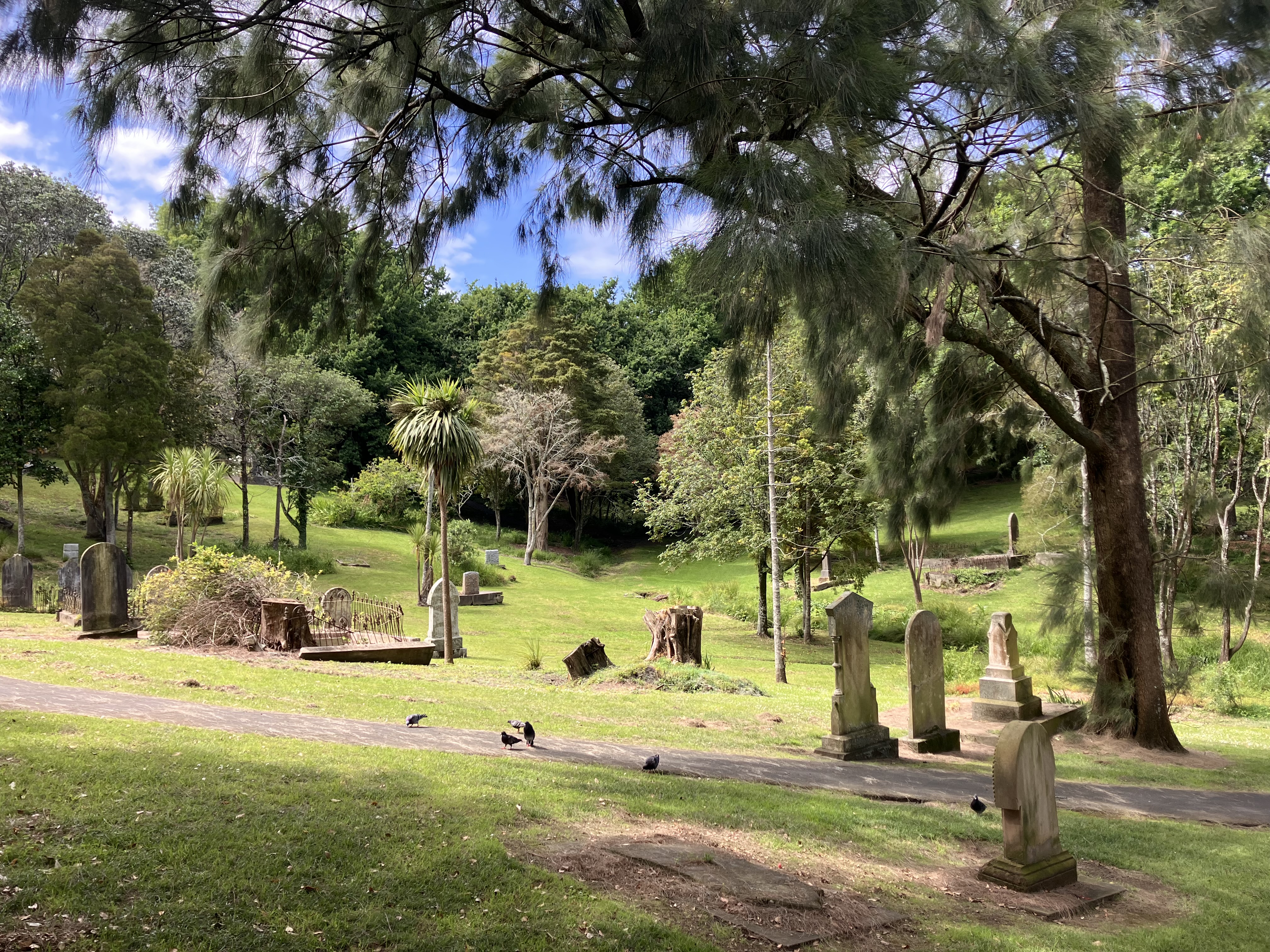
A day trip to Waiheke Island in the Hauraki Gulf, just off AucklandSymonds St cemetery, the first in Auckland
Bay of Islands
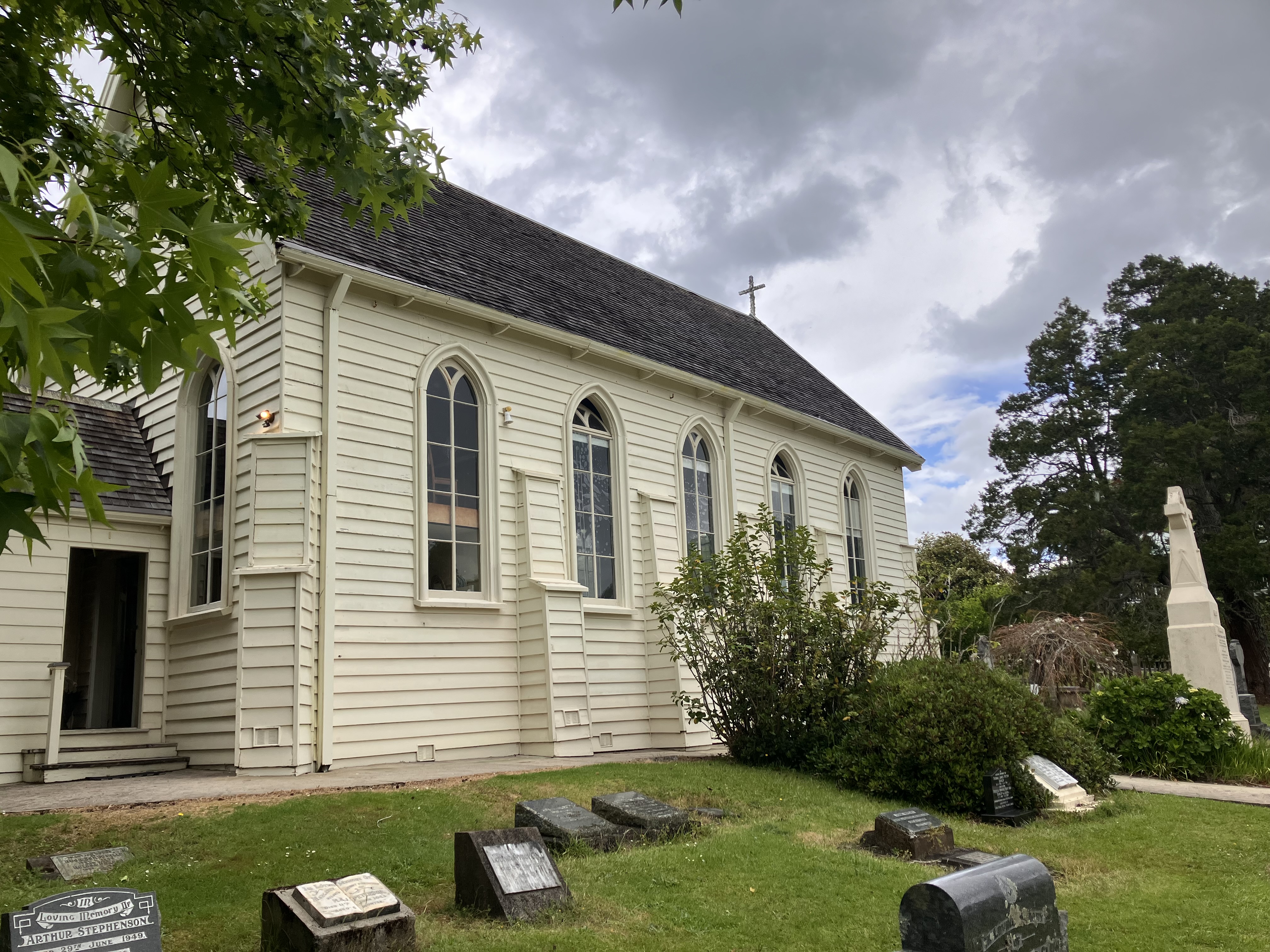
Whangārei FallsChurch at Russell, a ferry ride from Paihia where we were based for three nightsTrip along Ninety Mile Beach which also acts as a national highway. Cape Reinga where the Pacific and the Tasman Sea collide
We also visited the Waitangi Treaty Grounds where papers were signed in 1840 which form the basis of relationships with Māori people.
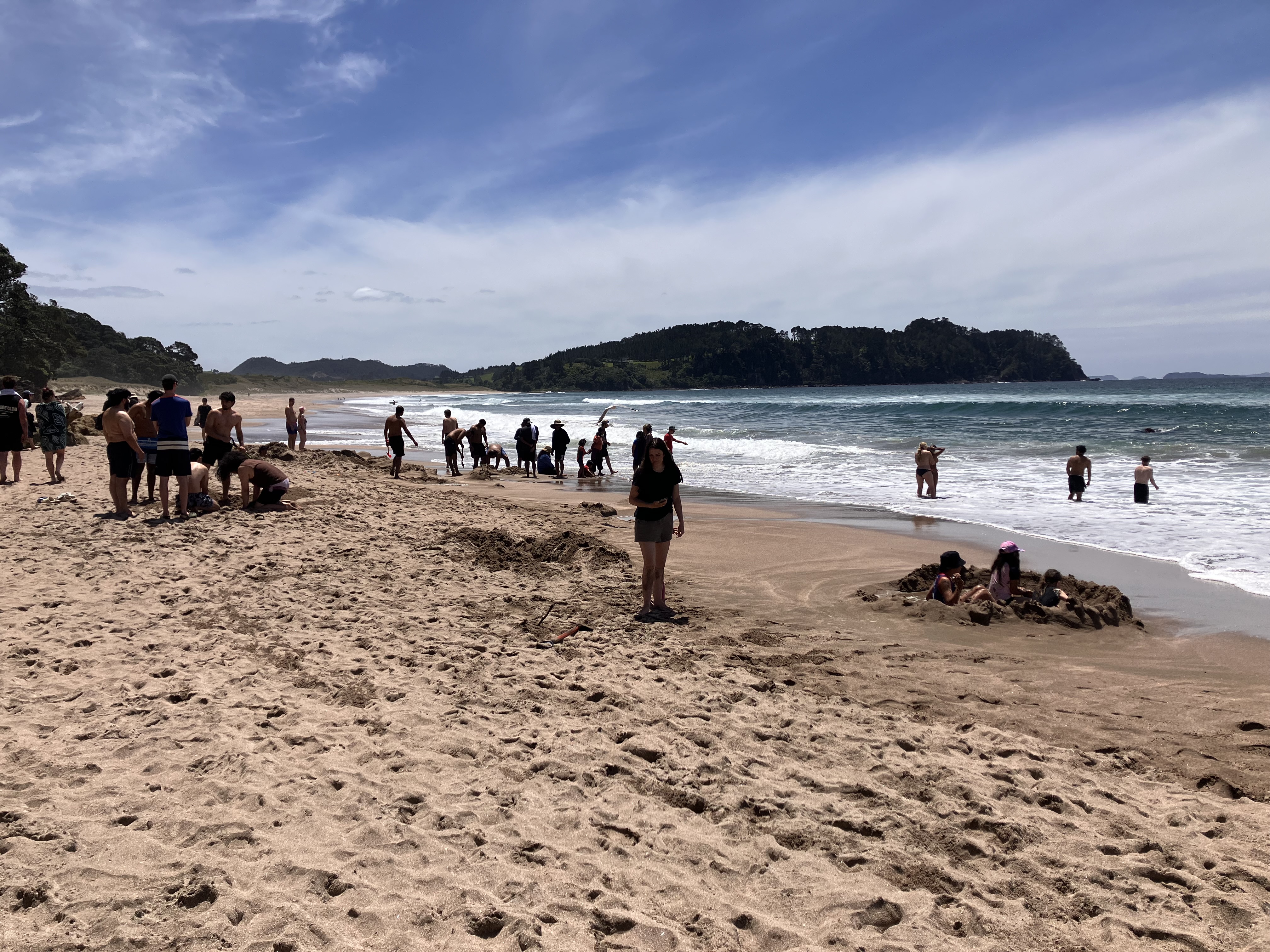
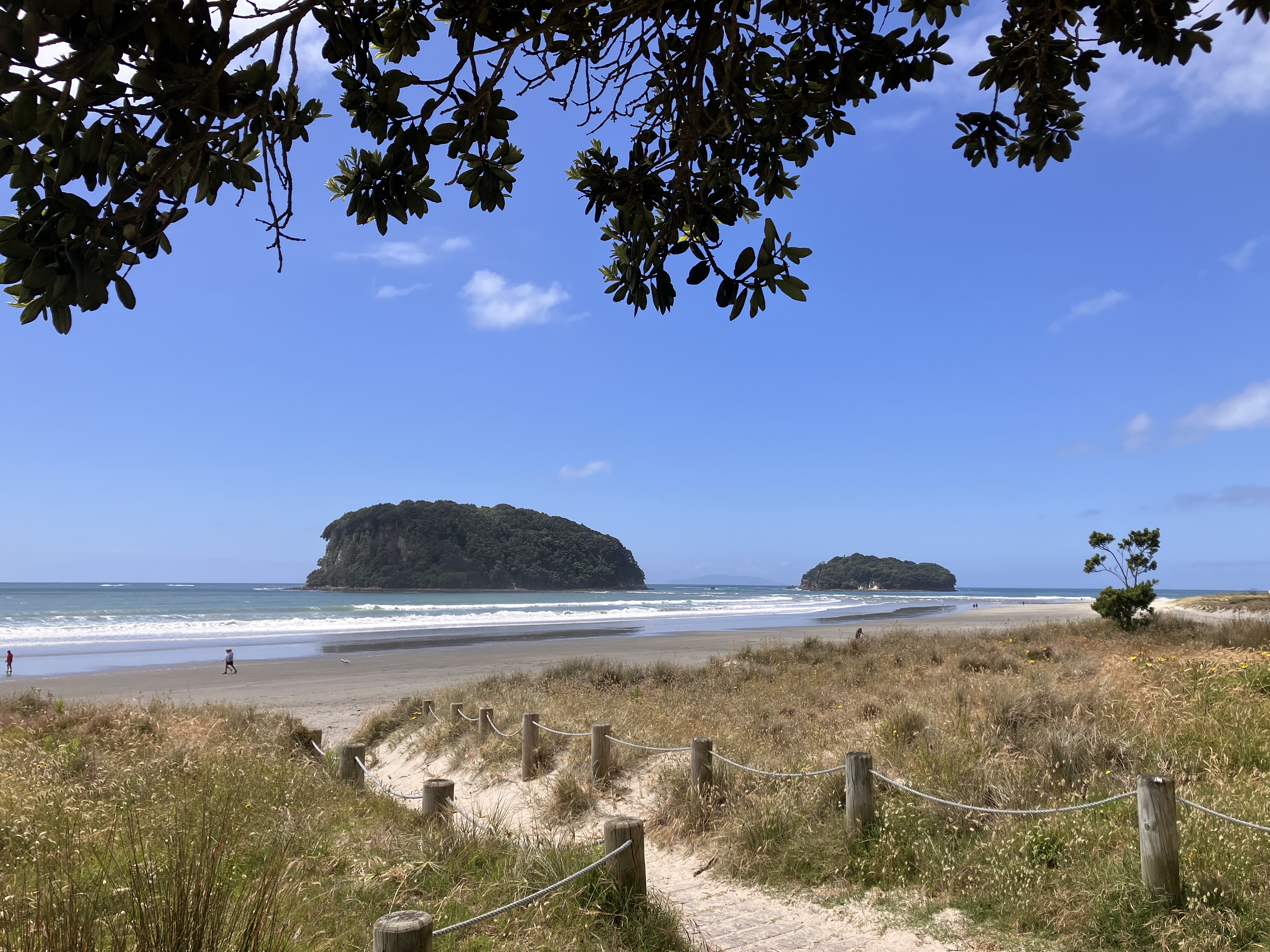
Coromandel Peninsula has some lovely beaches including Hot Water Beach where people sit in puddles to feel the warmth.
I received an email from SME News in June this year saying The Writer is a Lonely Hunter had been nominated in the Southern Enterprise Awards 2025 . The nomination was based on my ‘impactful storytelling and dedication to community engagement through writing’. I looked into the organisation and decided to proceed. A couple of months later, I was told that following merit-led research and evaluation my blog had been recognised as the deserving recipient of the Best Literary Writing Blog Award 2025.
My sixteen-month-old grandson has impetigo (an infectious bacterial skin infection) which he caught at nursery but he isn’t allowed to return there until 7–10 days after starting a course of antibiotics. As a result, we’ve covered some of the emergency childcare needs. It’s great to be helpful and looking after our grandson is always a lot of fun. He’s started talking much more and points his index finger when out in his buggy and calls out words like car, truck, bus and dog. We’ve spent a lot of time building towers with plastic cups (which are immediately knocked down) and stirring pretend porridge which is always too hot or too cold.
I was delighted to receive a review copy of The Blue of You, the latest work by talented author Amanda Huggins, published by Northodox Press. The novella is a joy to read, and I thoroughly recommend it to you. Here’s my five-star review:
The setting of a village on the NE coast of England in The Blue of You is integral to the story where some members of the close-knit community hold secrets and others break them. The novella works as a mystery where I found myself wondering which characters were trustworthy. Layers of narrative reveal Janey Shaw’s personal history as she becomes empowered to address issues of unresolved grief. The writing is immersive and rich with symbolism. This is another triumph for the author who has a strong track record of producing high quality writing.
AI systems are trained on existing written material and therefore authors are anxious about having the copyright of their work infringed. It’s large corporations that gain most from the introduction of AI and the big profits that can result. Professional writers whose median income fell to £7000 in 2022 are right to be concerned. There are also reports of AI generated stories flooding open submission windows causing more headaches. You can read about the Society of Authors response to AI here. Keeping all this in mind, are there any positives?
I’ve had my friend Cathie staying with me for the past month and we’ve done lots of exciting things. Here are a few of them…
We went to see The Crucible at The Globe on a very hot afternoon. The £5 ticket meant standing for the duration which wasn’t too bad when the shade finally reached the spot where we were perched against a wall. It was one of several great plays we’ve seen this summer – others were The Great Gatsby and The Stereophonics.
Following a post on the London Writer’s Salon noticeboard for members, I contacted the librarian at HMP High Down about delivering a flash fiction workshop. It piqued my interest to see how a workshop would be received by male inmates at the prison. High Down is a category C men’s training/resettlement prison which is why staff are interested the role volunteers can play in rehabilitation. Notable inmates at High Down have included Gary Glitter and former England cricketer Chris Lewis. The prison is situated close to Belmont in Surrey where I lived as a child from the age of two until eight years. Our neighbour was employed as a gardener when the site was know as Banstead Asylum, a psychiatric hospital. After gaining my shorthand and typing qualifications when young, I worked there as a temporary secretary. With this history, I was curious to see how things had changed.
As a former teacher, I’ve discovered I’m entitled to join Boundless an experiences club that helps those who work or have worked in the public sector to make the most of their free time. It does this by offering savings on events and a variety of free benefits. The club was established in 1923 by Frank Edwards who set about bringing people together to share adventures. Nowadays, the £40 membership offers free entry into Kew Gardens and (for an additional fee) several royal palaces including the Tower of London and Hampton Court. To make the most of our membership, David and I visited Kew Gardens last week which is a train ride away from our flat in South West London. We explored a section of the grounds and enjoyed the temperate house. We also took a stroll along the treetop walkway which offered fantastic views over the London skyline.
I’ve been having a good clear out and was hoping a local museum would accept a donation of artefacts from Papua New Guinea. Here are some of the things I’ve kept in storage since leaving the country in 1984.
kina shellpenis gourdbilum bagcoins from 1936sepik mask
Unfortunately, the museum turned down the donation because they wanted items from before independence in 1975. A dealer offered me £3 for each of the coins (I have 13 in total) but I turned him down. An auction house I approached wasn’t interested in this metal picture by Waki Waikali (see below) even though other works by the artist have sold internationally. I still enjoy the image of a highland tribesman in ceremonial dress so I’ll hang onto it for a bit longer. According to the auction house, much artwork from Papua New Guinea has yet to find a market.
After last year’s walk along some of the Caminho Português da Costa where we covered stretches of the coastal path from Porto to Santiago de Compostela, (I mentioned it here), we were excited to return to Portugal for the more traditional central route. David and I were keen to complete the 250km journey but intended to take it slowly by setting aside three weeks. It just so happened that we were also invited to celebrate a friend’s sixtieth birthday in Lisbon, so that decided the date of travel.
On 16 September we set off from Porto and this coincided with the spread of wild fires that sent a thick layer of smoke over the city and beyond. This resulted in atmospheric photographs including this one taken on the way to San Pedro de Rates.
Following a few days of dry weather, the rain started. We donned our raincoats and made the best of things, stopping for a photo beside this medieval bridge.
We stayed one night in the delightful town of Ponte de Lima where the alburgue (hostel) accommodated sixty people in 3 dormitories. This is the view of the the town from where we stayed.
I’ve always wanted to visit Braga, the third largest city in Portugal. We took a couple of days off and caught a bus there where we found the centre was full of charming facades and flowers.
Rain accompanied us over the border into Spain and for many of the following days.
When we veered off the Caminho Português Central to follow the Varient Espiritual we were unprepared for the torrential rain which turned the medieval paths into waterfalls. These weren’t easy to negotiate while wearing a backpack. We came to realise that a pilgrimage has to have an element of endurance. Each evening we’d check the weather forecast for the following day and the distance we needed to cover. I preferred to get up at dawn and walk for two hours in light rain before the heavier deluge arrived. It made me realise who goal-driven I am, determined to reach our destination. And although walking in the rain is a challenge, I continued to enjoy the freedom of the mind that the journey provided.
The Varient Espiritual begins in Pontevedra and follows a path around the coast where the pretty seaside village of Combarro is situated. We stayed there for a couple of nights and enjoyed a delicious seafood dinner.
At Vilanova de Arousa we caught a boat along the River Ulla to Padrón which is traditionally believed to be the last leg of the journey that brought the remains of the apostle Saint James from Jerusalem to Spain. Obviously we enjoyed a plate of pimientos de Padrón while we were there … and dried our clothes on a radiator in a cosy flat with central heating.
Although the walk from Padrón to Santiago is only 25km we eked this out over two days. During the final stretch, we waded streams with no hope of keeping our boots dry and finally picked up a couple of ponchos. Evidence of our flattering attire can be seen in this photo which was taken upon reaching the cathedral in Santiago.
In spite of the challenges of our journey, we talked about undertaking another camino. We may well try a leg starting from the north of Lisbon with the aim of reaching Porto. Going all the way to Santiago again is less appealing due to the number of other people on the final stages. At Tui, two paths converge and some people start their pilgrimage upon reaching the south of Galicia. Although it was lovely to have company while walking, there were times when the route just felt too busy.
Have you ever thought about walking the camino or have you undertaken one? Do let me know in the comments.