the writer is a lonely hunter

writing by Gail Aldwin and other authors

A splendid story slam in Shaftesbury

I wrote an earlier post promoting the story slam in Shaftesbury here and I’m now delighted to share with you details of this great event.  Organised by  Jennifer Oliver and Jennifer Bell who run Storyslingers a creative writing group held at the Shaftesbury Arts Centre, the story slam offered the chance for writers to read their work to an audience and gain feedback.  Five writers put their names forward for the competitive element of the evening, and five others took the microphone to showcase their work.

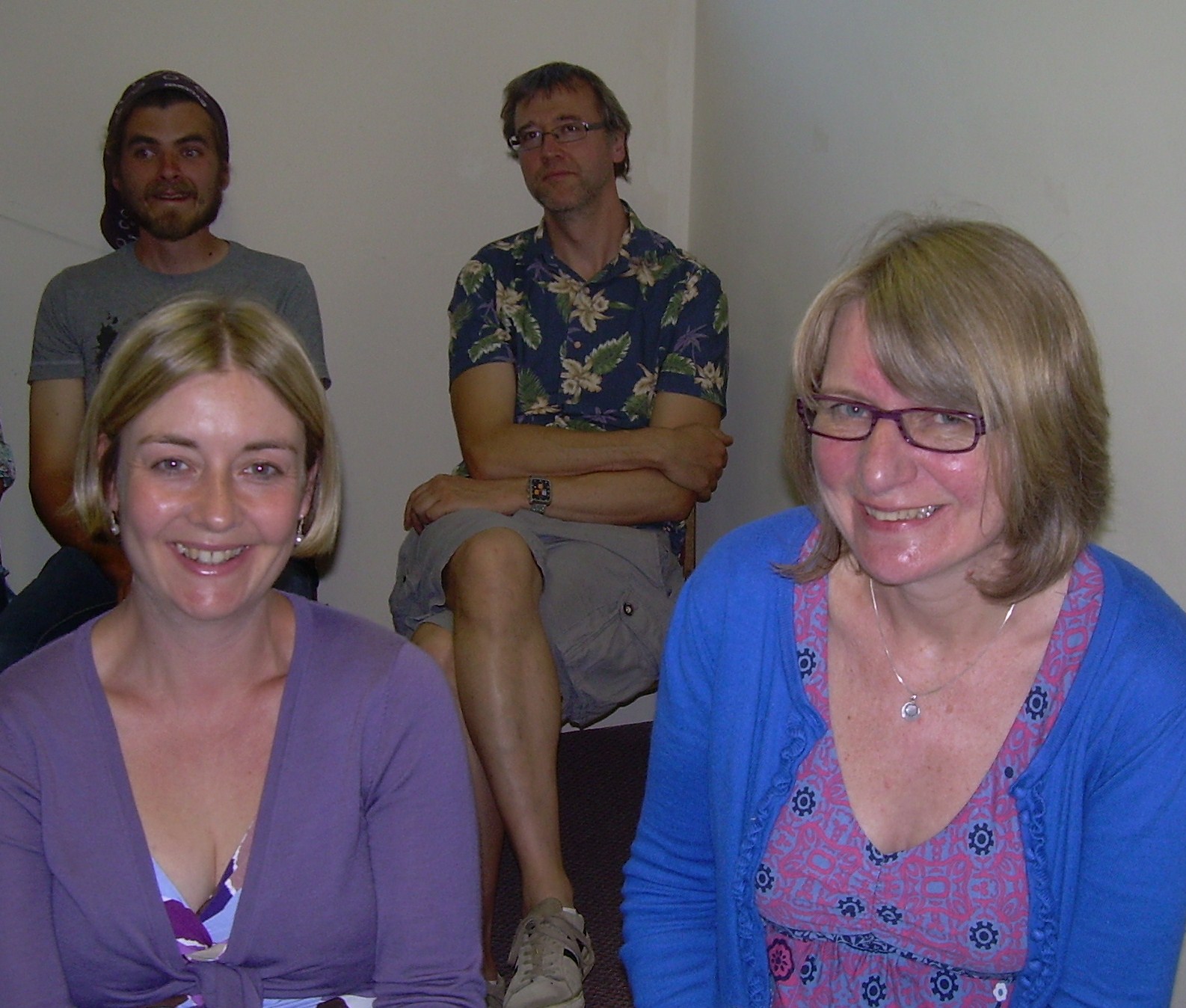
The judging panel comprised Allie Spencer author of romantic comedy novels including Summer Loving and Summer Nights and myself (recently awarded first prize in the Winchester Writers’ Conference ‘Slim Volume, Small Edition’ competition).

Allie Spencer (left) and Gail Aldwin (right)

I was thrilled to be invited to judge the event and I’d love to see more story slams taking place across the county. Allie was a great person to deliberate with in finding the winner and runner-up, particularly as the standard of all the stories was very high. We finally agreed that James Broomfield’s story should win due to its extraordinary content (about a man trying to find his brotherhood in North Devon by experimenting with smoking beard trimmings).  Technically the writing was superb with a strong and unique voice.  Runner up came Andy Hamilton’s ‘Stage Fright’ a classic ugly duckling scenario told in a fresh way.

Read the rest of this entry »

4 Comments »

Story Slam in Shaftesbury, North Dorset

In the tradition of a poetry slam, where poetry is recited, a story slam encourages prose writers to take the stage and read their work.  Events are informal and fun, with feedback from judges and applause from the audience.  The idea is to enjoy sharing stories from a range of genres with a wider audience and prizes are awarded.  In July, Storyslingers in Shaftesbury are holding their first story slam event and would be very pleased to have you join them.

6 Comments »

A visit to Gullivers Bookshop, Wimborne Minster

This is the first in a series of posts about independent bookshops in Dorset. Once a month I attend a writing group in Wimborne led by poet, writer and teacher, Sarah Barr (you can find out more about the Wimborne Writers’ Group here). Last week I took the opportunity to visit Gullivers Bookshop, a family owned business in the centre of the market town run by Malcolm and Anne Angel and their daughter Jane with their son and his wife.

As I went into the shop, Malcolm was in the throes of  dismantling the window display that celebrated Dorset Art Weeks from 26 May – 10 June, which comprised a collection of papier-mache heads featuring characters from books. With another community event approaching, it was time for a change. To celebrate 20 years of Bookstart, Gullivers is hosting a Busy Bear Party on 22 June and the new display will feature a teddy bears’ reading group.  This engagement with the community is a feature of the bookshop that has been in Wimborne for over 40 years.

The shop feels bright and airy, well-stocked but not cluttered and an easy place to spend time. Displays by the entrance feature the latest fiction titles with further books on the shelves. There’s an area dedicated to Dorset’s people, places and culture and support for local authors (for a comprehensive list of publications click here). Thought has gone into organising the areas in an accessible way, for example, the young adult books have been positioned in a corner, away from the desk and the children’s section, to encourage self-conscious teenagers to browse.

The children’s section is delightful, decorated with mobiles and balloons. There’s Lego to play with and books for younger children displayed on shelves at just the right height. Children are welcome to chatter and play while choosing books, some saying that they ‘love the smell of the bookshop’.

Read the rest of this entry »

8 Comments »

A cultural couple of days

I spent a couple of days in Surrey last week with Sue, a friend I met at an Arvon course in 2010 and she introduced me to Carol last year, when we were together for a weekend in Cornwall.  Sue is a fantastic host, cooking delicious meals and making us feel very welcome.  You can find out more about Carol by visiting her blog Scribbling in the Margins.

In spite of the wet weather, we spent the whole of one day at the Weald and Downland Open Air Museum. Here buildings of historical merit have been relocated to form a fascinating ‘village’ that includes a medieval hall-house, a tudor kitchen, a toll house, and a working watermill.  For those who are interested in historical writing, the musuem is holding an event in August titled Historical Fiction Day where Emma Darwin, Maria McCann and Alison Weir are offering input.  There’s also a short story competition that you can enter.

And if that competition doesn’t interest you, why not think about entering the Historical Novel Society short story competition?

Read the rest of this entry »

11 Comments »

Flash Fiction at a Readers’ and Writers’ event in Dorset

The Exchange at Sturminster Newton was a busy place on Saturday with workshops and talks by authors and a good chance to meet and chat with other readers and writers. I finally got to meet fellow blogger Patsy Collins who has recently won a competition to have her first novel published.  Watch this space for more details of her book titled ‘Escape to the Country’.

Patrick Gale

I loved reading Notes from an exhibition by Patrick Gale and opted to join his workshop on flash fiction. I was interested when he said that a character’s back story from a novel can make an excellent piece of flash. This was reassuring as several of my latest attempts have been just that.

Patrick was also keen to promote entry into the Bridport Prize ( he is the judge for the flash fiction and short story categories) and

Read the rest of this entry »

11 Comments »

New Writers’ Scheme

TS Manipulation

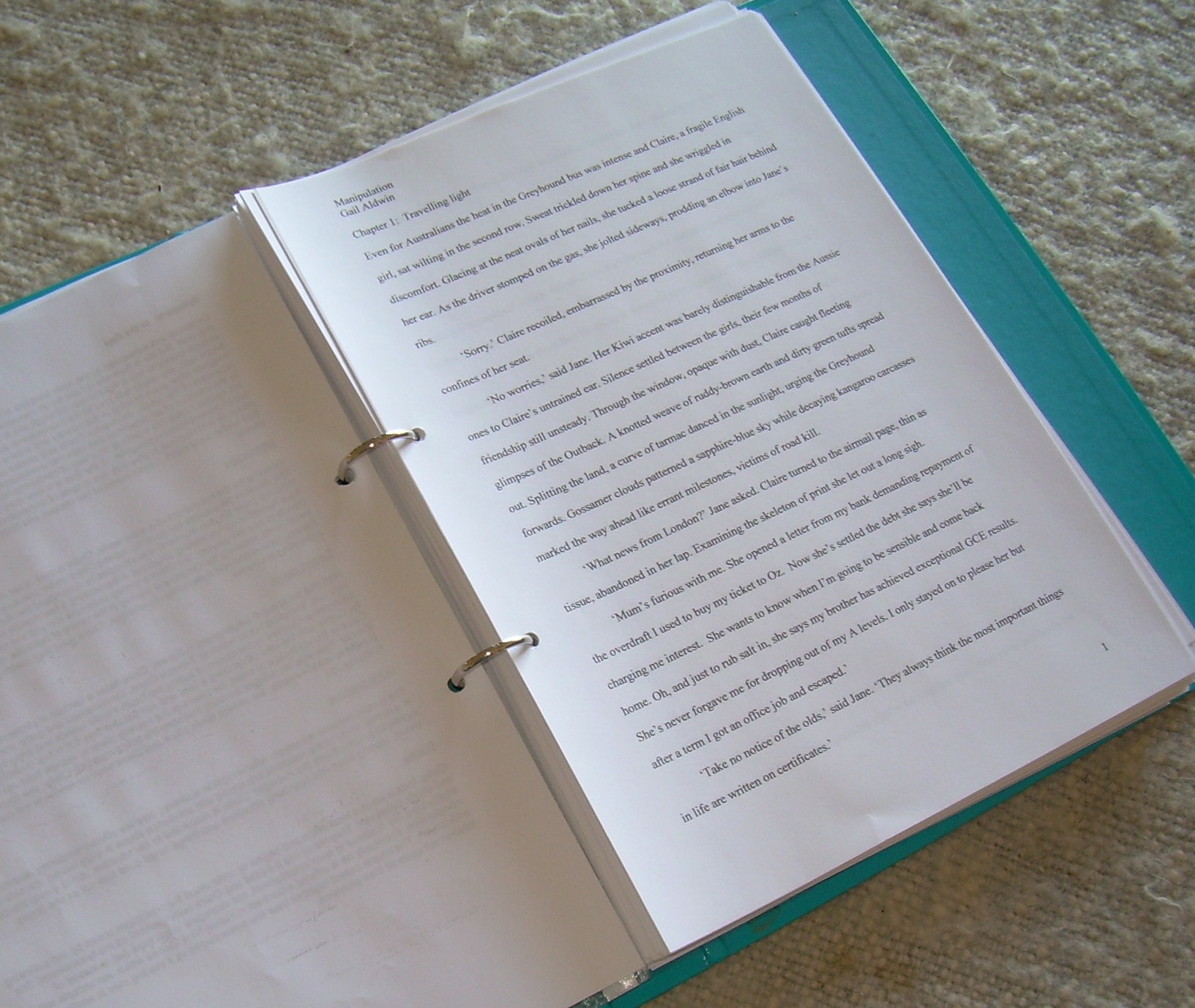
I was at my desk during the early hours of 2 January to ensure that my email application for a place on the New Writers’ Scheme run by the Romantic Novelists’ Association was accepted. The scheme is oversubscribed every year, so now that I have my confirmation pack, I finally feel like a member. My task until the end of August is to redraft the manuscript of my first novel ready for assessment.

Manipulation has been languishing in a drawer while I’ve been occupied with other writing and it’s been reassuring to return to the characters I first created in 2009. (Further details of the story can be found under the ‘manuscripts’ tab.) I have much work to do as feedback from critical friends has identified weaknesses:

  • the language of the novel needs to be more adventurous
  • the characters and the romance require sympathetic attention
  • the location (Outback Australia) should be fully explored

When the RNA receive my manuscript, a reader will be appointed to review the entire work and it may be referred to a second reader, as a possible pathway to publication. However, it’s more likely that the work will be returned with suggestions for further improvements. Should this happen, Katie Fforde, President of the RNA, advises against feeling downcast for too long and to make the most of the guidance offered. She says, ‘a rule of thumb is, if your reader thinks something needs changing it probably does’.

Criticism is sometimes hard to accept and tenacity is required to remain focused and confident that you have the skills to improve the work to a publishable standard. Gruelling though it may be, critical reviews often provide the right advice to move your writing onto the next level. If you’re interested in receiving support for a novel that you’re working on, (it doesn’t have to be romance, as with the RNA scheme) it may be worth entering the Adventures in Fiction competition where the winner of the Spotlight First Page will be offered a mentoring package and other input and support. You’ll have to be quick as the deadline is 14 February 2012 and the cost is £16.

2 Comments »

Interview with Louisa Adjoa Parker

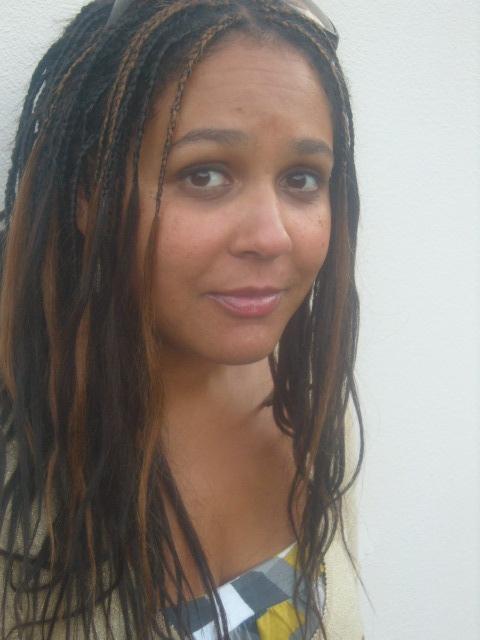
Louisa is a writer, poet and Arts Project Co-ordinator who has lived in the West Country since she was 13. Her first poetry collection, Salt-sweat and Tears was published by Cinnamon Press to critical acclaim in 2007. She has also written a book and exhibition about the history of African and Caribbean people in Dorset over the past 400 years, both entitled Dorset’s Hidden Histories. Louisa has recently worked on a project using images and stories to celebrate multi-ethnic Dorset. Funded by Arts Council England and Dorset County Council, the exhibition and book is called All Different, All Dorset was launched in September 2011. Louisa is passionate about equality and the Arts, and hopes to inspire people from a range of backgrounds to become interested in writing.  

Let’s start with your writing journey

I wrote a few adventure stories when I was about six, which my mum said were like Enid Blyton books and I still have a poem written at that time. When I was a teenager I kept a diary for three years and wrote about everything that happened to me. As an adult, I turned to letter writing to try to sort out problems with relationships. In 2002, I went to Exeter University to complete the degree I’d started with the Open University, and I began writing poetry alongside the essays and coursework. I was encouraged by Selima Hill and I had a poem published in a magazine. Getting published was exciting and encouraged me to write more. I realised I had a lot to say about being dual heritage and growing up in white communities. My Dad is Ghanaian and came to England in the late 60s for education and he met and married my mum and had three children with her. We lived in Yorkshire, Cambridgeshire, and then when my Dad left we moved to Devon. Growing up knowing only the white side of my family was weird. No one wanted to talk about my background. Writing helped me to explore unresolved issues around my identity. It helped me come to terms with some of the things that had happened, racism and domestic violence.

What inspires you to write now?

Lots of different things, but I usually write about emotional and difficult subject matter, like relationships and parenting. When I’m writing poetry ideas come to me. For example, I read a newspaper article about a young girl who left her dead baby in a railway station bin and I wrote a poem about it that was shortlisted for the Bridport Prize in 2010.

How does writing prose compare to writing poetry?

I research and write non-fiction books relating to Black History but I always look for the story in whatever I write. I’ve started my first novel which came from a seed of an idea but I find novel writing more challenging than poetry because of the length and the need to navigate the story in my head. Activating the imagination in a novel is a different process to describing an event through poetry. Poetry leaps into my mind through an idea or image, but the novel takes more working at.

What do you think about writing competitions?

I entered the Cinnamon Press Poetry Competition in 2005 and was long listed. The following year I entered again and had my collection of poetry Salt-sweat and Tears published as the prize. Now, I enter competitions occasionally, but it’s usually dependent on having the time and energy to submit and the money to pay the submission fee. It’s unfortunate that the cost of entry excludes some people. I entered the Mslexia First Novel Competition in 2011 and was longlisted for my novel, The Red Behind Her Eyes. The story is about a teenager who hits back against her stepfather who inflicts violence on the family.

I think it’s worth entering competitions but don’t get too hung up about it. It’s easy to imagine you’ve got a good chance of winning and being discovered, only to be disappointed. I’d encourage people to enter, because it’s good to take part, but have realistic expectations.   

Which authors and poets have most influenced you?

With poetry I was influenced in the early days by Selima Hill. With novels, I’ve read thousands and can’t remember offhand the many writers I love! At the moment I’m working my way through Emma Donoghue’s books. I like crime novels such as those by Ruth Rendell which, although aren’t great works of literature, tell a good story. I am often drawn to the darker side of life through fiction. I like writing that’s authentic, that doesn’t have to use big words to say what needs to be said. Literature doesn’t need big words – I think this excludes some readers. I do relate to black/dual heritage writers as I can understand their experiences. I love Jackie Kay’s work, fiction and poetry. Other poets I admire include John Siddique, Moniza Alvi, Linton Kwesi Johnson, Helen Dunmore, Catherine Smith, Julia Copus and many many more. I am quite fussy about both poetry and prose, and it has to somehow grab me, draw me in and really say something to me or I can’t be bothered to read it.

What tips do you have for new writers?

Keep writing, even if you think it’s rubbish. Share your work with other writers, in person or on-line. Sometimes I get family members to read my work but it’s better to get people who write to comment on your work. Read widely – you’ll get inspired by different writing styles and stories. If you read, you’ll find out what’s being published, what’s topical and how your writing compares. Keep writing because the process is important – you’ll develop skills by practising.  

Thank you, Louisa

2 Comments »

Clever Titles

I love clever titles but because  copyright law means titles cannot be protected (except in the case of sequels, like Harry Potter) it can be confusing!   Take Lost in Translation which is the title of a Hollywood film and a delightful book by Eva Hoffman

Eva’s family survive the Holocaust by hiding in the Ukraine. When she’s 13, the family leave Cracow and emigrate to Canada where Eva learns about the importance of language and identity.  The autobiography is subtitled: A life in a new language, and one of my favourite references is where Eva describes words in English, the new language she learns, as being like pearls on her tongue. 

Of course there are similarities between the  film and the book, for example, the sense of isolation when living in a a new country. However, the film is set in Tokyo and follows the development of a relationship between the two main characters (played by Bill Murphy and Scarlett Johansson) making the film part comedy, part romance. 

Another clever title I like is Foreign Bodies with novels variously written by Amanda Craig, Cynthia Ozick and Candy Neubert (with another list of authors using the title Foreign Body).  My favourite title is I Know Why The Caged Bird Sings which is the  first volume of Maya Angelou‘s autobiography.  A clever title that is unlikely to be copied.

If you’re interested in entering a competition to work the name of a fruit into a spoof film title, please see Circalit to enter by Twitter.  Good luck!

Leave a comment »