How did I source a publisher? What do I love about flash fiction? What are my other writing projects? Tracy Fells at The Literary Pig invited me to share some of my writing experiences. Do pop over and have a read. Click here.

How did I source a publisher? What do I love about flash fiction? What are my other writing projects? Tracy Fells at The Literary Pig invited me to share some of my writing experiences. Do pop over and have a read. Click here.

authors events flash fiction interview Reading short stories views visits writing
I’m delighted to welcome fellow Chapeltown Books author Mandy Huggins to The Writer is a Lonely Hunter. She is a prolific writer whose name appears frequently as a winner or runner-up in a range of competitions and her stories are widely published on websites and in print anthologies. Brightly Coloured Horses, her collection of flash fiction has received rave reviews and I’m keen to learn more about Mandy.
What do you do for a day job? How does working in a different context affect your writing?
I work in engineering, so it’s a completely different world to writing. I enjoy getting out and talking to people every day, and writing is a solitary pursuit, so it actually makes for a good mix. The only real way my day job affects my writing is by severely restricting the time I have to actually write! I have a half hour walk to work, which is useful thinking time, so I’m often jotting down notes as soon as I arrive.
You’re widely known as the writer Mandy Huggins, but you’re also called Amanda and Troutie McFish. How are your different personas distinguished?
Troutie McFish is a nickname that was given to me by a colleague when I lived in London, and it became my Twitter handle and blog name long before I was promoting my writing. It always raises a smile when I tell people my email address!
I recently made a decision to use the name Amanda for my forthcoming short story collection, Separated From the Sea. All my family, friends and work colleagues know me as Mandy, but it feels like the right moment in my writing career to start using my full name as my author name. I just hope I don’t confuse everyone!
You’ve enjoyed considerable success with travel writing and short fiction. Do you think there is elitism attached to different types of writing?
Yes, sadly I think there is elitism attached to different types of writing, and genre fiction such as horror and fantasy is often perceived to be less ‘worthy’ than contemporary literary fiction. However, I think things have changed in the poetry world. The new wave of performance poets has led to a sudden upsurge in sales of poetry collections, and I think this is one form of writing that is becoming much less elitist.
Do you have ambition to be published in any particular journal or anthology? Where are your favourite places to be published? Do you have any recommendations for platforms to seek publication or particular resources?
I dream of having a short story published in The New Yorker, and it would be lovely to be included in Salt’s Best British Short Stories. However, I’m lucky to have been published in an interesting mix of journals, websites, newspapers and anthologies, and I’m grateful to every editor that has ever liked my work enough to have me!
The main resources I use for competition listings and publication opportunities are the Competition Guide supplement that comes twice-yearly with Writing Magazine, Mslexia’s Indie Press Guide, and the writer Paul Mcveigh’s wonderful blog.
Do you ever get jealous of the success of other writers?
No, not at all. I’m always delighted when writers I know are published or win an award.
Brightly Coloured Horses, your newly published collection of flash fiction has consistently received 5* reviews. What were the challenges in putting the collection together?
I selected the stories I wanted to include in Brightly Coloured Horses from around 50 pieces of flash fiction I’ve written in the last five years or so. In the end it wasn’t that difficult to choose. The 27 stories that made it were the ones that just seemed to fit together naturally as a cohesive collection. I’m a very slow writer, and a lot of work had already gone into honing every story.
What’s next for you, Mandy?
I’m thrilled to say that I have another book coming out in June – my first full-length short story collection, Separated From the Sea. I’m currently working on the final edits with Amanda Saint at Retreat West Books, and the cover reveal is imminent! Two books coming out in the same year is wonderful, but it’s not for the faint-hearted! The promotional side of things is hard work and time-consuming, as you know, and I’m finding I have no time left over to write anything new. The third book could be a long way off!
Thank you for joining me on The Writer is a Lonely Hunter, Mandy. What an exciting year you have ahead.
Twitter: https://twitter.com/troutiemcfish
Blog: http://troutiemcfishtales.blogspot.co.uk/
Amazon: https://www.amazon.co.uk/Brightly-Coloured-Horses-Mandy-Huggins/dp/1910542199
authors blogs flash fiction interview Reading short stories visits writing

I’m over on Linda Parkinson-Hardman’s blog today answering a range of questions including:
and
Why not pop over and take a look at my answers? Click here.
authors blogs flash fiction interview Reading short stories writing
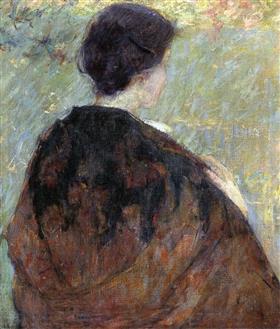
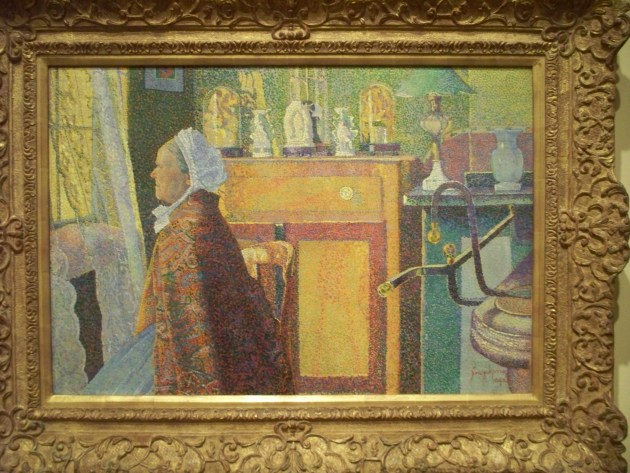
In the style of Marina Sofia’s Friday Fun Reading Women post, I have collected images of women in paintings wearing paisley pattern shawls. These shawls became popular in the nineteenth century when mass production of the design (which originated in Kashmir) started in Norwich and then Paisley in Scotland. Thus paisley shawls became an exotic, must-have garment that became a marker of respectability. Although popular in Britain, the shawls were widely available in Europe, too.

Paisley Shawl by Robert Lewis Reid (1862-1929)

Sunday Afternoon by George Morren (1868-1941)

Portrait of a Young Lady by Eduard Friedrich Leybold (1798-1879)

Irish colleen wearing green plaid shawl (1890)

Will you go out with me Fido? by Alfred Stevens (1823-1906)
If these images have pricked your curiosity about the place of paisley pattern in the arts, why not read the story in my collection Paisley Shirt which was inspired by this design?
flash fiction short stories writing
Shawls designed in a pattern commonly known in Britain as paisley were by the 1850s an indispensable item of Victorian women’s wear. They were a marker of respectability as shown by the character of Esther in Elizabeth Gaskell’s Mary Barton, who dispenses with her prostitute’s attire to find a shawl at a pawnbrokers which is considered suitable attire. Poor women wore paisley shawls made from wool or cotton while hand woven shawls from Kashmir made from ‘several grades of hair from two or more species of Asian goat’ (Suzanne Daly, 246) were the preference of the prosperous middle classes.

In another novel by Elizabeth Gaskell North and South, shawls and scarves from India are inherited or handed down. Mrs Shaw gives her collection to her daughter Edith but due to her slight stature, Edith prefers to use them as picnic blankets. It is on Margaret that a shawl suits “as an empress wears her drapery”. Preference for handcrafted goods leaves Margaret at odds with Mr Thornton but by the end of the novel Margaret inherits land and marries him.

As paisley shawls are included in great classic work, why not include paisley print in contemporary fiction? Read my story ‘Paisley Shirt’ included in the collection of the same name to find out about its influence in my writing. Click here for more information on Amazon or if delivery times are off putting, try the Book Depository.
It’s funny how the publication and marketing of Paisley Shirt has brought back a range of memories. As the original paisley pattern came from Kashmir, I have been investigating ways to share the experience of travelling the overland with you. The journey I took was back in 1981 when I travelled from London to Kathmandu on a converted double decker. The buses called Snot and Tadpoles followed the route together and I am still in touch with friends I made during that trip.

Clouds on Dal Lake, Kashmir
Recently the courier on Tadpoles, Doug Foskett posted footage from the journey on Vimeo. You can see images from Kashmir in 1981 at 2:15 and I can be seen at 4:29 wearing denim dungarees. (We frequently had to walk during hazardous sections of the journey to lighten the load on the bus.)
If you’re planning to purchase a paperback copy of Paisley Shirt, I have recently been informed by Amazon that the expected dispatch dates has moved forward to between 7 and 30 March. Not too long to wait!
Enjoy!
I am delighted to be on Maria Donovan‘s blog today sharing my strategies and techniques for writing flash fiction. Maria is an experienced writer of short fiction with two collections to her name: Pumping up Napoleon and Tea for Mr Dead. I was absolutely delighted when Maria agreed to endorse Paisley Shirt by describing my flash fiction as ‘sensitive, surprising, unnerving, tender and crucial’.

Maria’s debut novel The Chicken Soup Murder has recently been published. It is narrated by eleven-year-old Michael who shares his experiences of family, community, loss and integration in a story which involves a suspected murder. It’s a beautifully crafted novel and well worth reading.
Do pop over to Maria’s blog to find out more about how I approach the writing of short fiction.
authors blogs Dorset flash fiction Reading Recommendations short stories writing
As early as last summer, the arrival of Dippy to Dorchester was celebrated with special planting in Borough Gardens.

Now the famous Diplodocus skeleton cast from the Natural History Museum is touring the country. Bringing Dippy home is the rationale for the exhibition’s first stop in Dorchester, Dorset. It’s close to the Jurassic Coast and birthplace of palaeontology.

Dippy stretches the length of the beautiful Victorian gallery at Dorset County Museum and the first floor gallery provides a wonderful opportunity to get really close to the exhibit.
Fun facts about Dippy:
Species Name: Diplodocus carnegii (meaning double-beam)
Length: 21.3m Width: 4.3m Height: 4.25
Number of Bones: 292
Age: 156-145 million years
Fossil location: North America, 1878
Entry to the museum to see Dippy is free and Dippy is on display until 7 May 2018. Well worth seeing! More information and ticket availability can be found on the Dorset Country Museum website.
For those living further afield, Dippy continues the tour by visiting:
I am delighted to have a poem published on Words for the Wild. This platform for new writing has been organised by Amanda Oosthuizen and Louise Taylor in response to the threat of development on the remaining pockets of countryside in urban Eastleigh. Amanda and Louise urge all writers to celebrate the countryside through stories and poetry thereby demonstrating the value of green spaces in order to help protect them for future generations.

My poem “Glimpses” is beautifully presented on the website – it’s thrilling to see my work mounted so evocatively. And I’m chuffed to find my poem alongside the work of other writers I respect such as Claire Fuller, Calum Kerr and Amanda Saint.
Do pop over to Words for the Wild and take a look. I hope you enjoy “Glimpses”.
authors blogs flash fiction poetry short stories visits writing