the writer is a lonely hunter

writing by Gail Aldwin and other authors

Spring writing workshops

I’ve been invited to deliver several flash fiction workshops in the coming months and I’m delighted at the prospect. To give you an idea of what I’ll be covering, please see the outline below:

Flash fiction, keeping it short

Everyday lives are packed with tasks and activities that leave little time for reading or writing at length.  Flash fiction has the ability to fit into the breaks and provides satisfying stories with all the elements of a longer piece of fiction.  ‘Keeping it short’ is an interactive workshop that explores opportunities to incorporate flash fiction into your creative life and will use examples to share:

  • Flash fiction at its best
  • Starting points for writing flash fiction
  • Ideas about the definition of flash fiction
  • Websites and journals that publish flash fiction enabling writers to reach a wider audience

What do you think?  Have I got all the bases covered?

7 Comments »

What is flash fiction?

A friend recently left a comment on my blog, asking for a definition of flash fiction.  While I flippantly said it’s fiction usually written in less an 500 words, it did occur to me that further elaboration may be appropriate.  So, although there isn’t an agreed definition, I hope you get the flavour of flash fiction from the following.

Flash fiction provides a window into the experiences of others, short enough to digest in one sitting.  Frenetic lifestyles make short fiction relevant and accessible. It offers bite-size pieces of fiction that are satisfying and a relief from the grind of everyday life. The length of the work is short, anything up to 500 words (or 1000 words in USA) constitutes flash fiction.

Frequently written in one go, flash fiction can be completed from start to finish in one sitting, allowing the writing to burst with energy.  Prompts such as images, single words, or a line of poetry may stimulate the writing. Others suggest that flash fiction is a distilled version of a longer story and includes all the necessary parts such as characters, plot, dialogue and theme but these are presented by suggestion rather than written in detail. The chinks in the writing leave room for the reader’s imagination.

Sitting alongside short stories and novels flash fiction does not attempt to replace them. The brevity of flash fiction is one of its charms and because it can be drafted within a short timescale, it’s a useful tool for honing writing skills.

Do you agree? Please leave a comment!

4 Comments »

Lit Up! event: a life in writing

Along with writing friends Sarah Scally and  Fiona Murphy, I spent an excellent day on Saturday at Bournemouth Library learning how to make a living from writing.  That is, how to fund your writing through grant applications, residencies and commissions.  The workshop was organised by Lit Up! and provided practical advice, presentations and talks by poet Andrew McMillan and project organiser Amy Mason.

Andrew McMillan and Amy Mason

Andrew McMillan and Amy Mason

By the end of the day, I’d made several new Twitter friends, generated fresh ideas for projects and came away with inspiration for new pieces of creative writing. The event more than lived up to its billing, a unique day full of tips on putting together bids, planning and executing successful writing sessions. Thank you very much Amy and Andrew for sharing inside information on how to get the most from the Arts Council.

Top tips included

  • subscribing to Arts Jobs  for regular updates on paid and unpaid writing opportunities
  • using the language of the brief to frame your application for residencies and writing opportunities (refer to target audience, outcomes etc)
  • drawing upon help from others to support your application, for example, references from other writers, project coordinators etc
  • Seek advice and support from the Arts Council. The Relationship Manager for the south-west is kate.offord@artscouncil.org.uk
  • the importance of tangible outcomes from writing sessions and workshops such as a celebration event or production of a pamphlet of work

By drawing on the ideas from the day, and combining these with the experience I’ve gained from workshop delivery at conferences and writing groups, I now feel much more confident in designing and seeking funding for my own literary writing project.  The only trouble is having the time to map this out.  My full-time work commitment is likely to go on until the end of August but with redundancy possible, I may be well be poring over my notes before too long.

Which skills would you like to develop for a life in writing?

8 Comments »

Cue for a story…

I’m taking a break from working on the romantic comedy I completed before Christmas. I thought that if I give it until the end of January, I’ll have had enough time to return to it afresh. Meanwhile, I’m developing on a few short stories and flash fiction to keep my creative mind active. So far this year, I’ve entered five competitions and have stories lined up to enter a couple more. The spreadsheet is filling up and although I know most of the stories will bounce back, if I revise and resubmit, there is a chance of publication and maybe even a prize.

Ideas for fiction come to me from life. I seem to be writing quite a lot about families at present, with my sixteen-year-old son providing the stimulus.  Little things get lodged in my mind. Take Saturday, for example, he says to me:  That’s a stupid rule, Mum. Why do I have to unload the whole dishwasher when I only need one cup?

Right, down to work…

6 Comments »

#Fridayflash: Your Life

Your Life is a 250-word story included in Four Buses.

‘Your life’ll be unrecognisable in a few hours,’ the midwife smiled. Kirsty sucked on the mouthpiece, the gas and air made her eyes glassy. Limp stands of hair framed her face and her cheeks were flushed.

‘No it won’t.’ Jez tossed the golfing magazine onto the bed and paced around the room. ‘The baby’ll fit into our lifestyle.’

‘You might find that difficult.’ The midwife read her watch as she took Kirsty’s pulse. ‘Babies don’t come to order. Yours may not sleep, the baby might be a reluctant feeder or plagued by colic.’

‘I doubt it.’ Jez opened the overnight bag which was stuffed with scented candles, massage oil, and world music CDs.  He dug to the bottom and pulled out a zip-bag containing nuts. Tucking into the almonds, he realised he’d missed breakfast in the rush and already it was past lunchtime. He made an excuse to slip out of the room, then headed for the canteen.

Kirsty was dozing when he returned so he tiptoed to the armchair. The broadsheet rustled as he folded the pages and she opened her eyes.

‘They’ve given me an epidural to help with the pain,’ she said.

‘You’re doing brilliantly.’ Jez took her hand and traced the lines on her palm with his finger. ‘I’m so proud of you. I love you, darling.’

‘You’ll love me even more when I give you a son.’

‘Indeed,’ said Jez. ‘Only make it quick, there’s a drinks party starting at six.’

23 Comments »

Update: Bookshops in Dorset

books-441866_1920

Following my tour of independent bookshops a few years ago, I thought it was time for an update.  I’ve honoured each bookshop with a ‘best of’ category, hoping this might tempt you to visit.

Best of bookshops for atmosphere: Serendip, Lyme Regis

Situated in the seaside town, this bookshop is a must for all visitors.  Once inside, the atmosphere tempts you to linger, with great lighting and eclectic background music.  Step further into the shop and you’ll find seating for comfortable book-browsing.

Best of bookshops for location: The Book Shop, Bridport


Directly opposite Buckey Doo Square, where the weekly market sprawls across the pavement, you’ll find Book Shop. Right at the heart of the town, Book Shop does what it says on the sign, sells books to customers in a knowledgable, straightforward and efficient manner.

Best of bookshops with a bonus: Winstone’s, Sherborne

This is one of the largest bookshops I’ve come across, double fronted with a generous children’s section. The shop is easy to navigate and has staff on hand to answer queries. As a bonus, Winstone’s also sells  delicious coffee.

Best of bookshops with friendly staff: Gullivers, Wimborne Minster

Close to the Minster, Gullivers is a family run business, committed to community involvement. The staff are enthusiastic about their role in promoting reading with families and children and organise book-related events such as the Wimborne Literary Festival.

Best of bookshops for quirky stock: Black Pug Books, Wimborne Minster

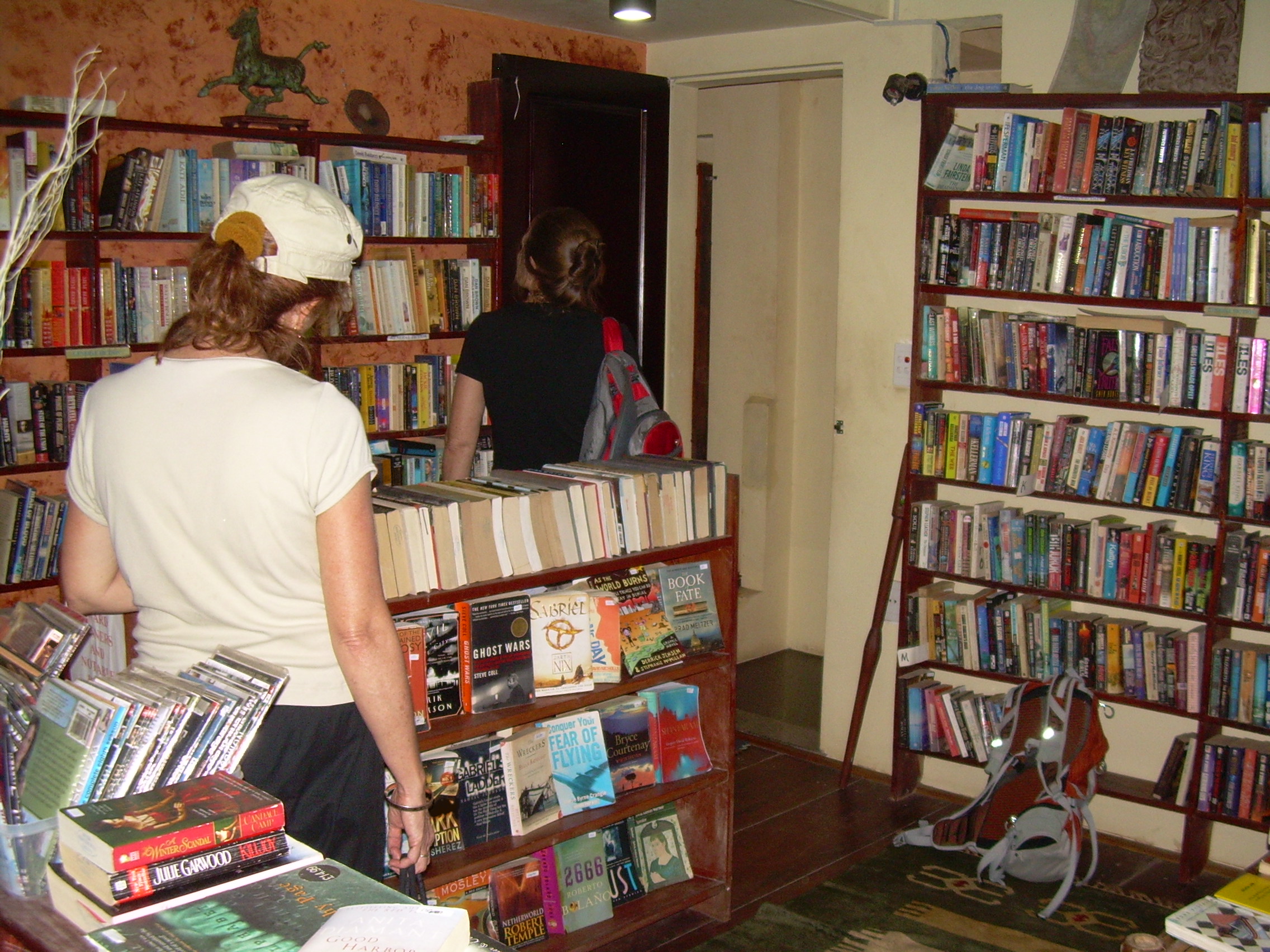
This bookshop sells ‘loved and used books’ and is well worth a visit.  Occupying the front room of Victoria Sturgess’s house, you’ll soon feel at home there, poring over the shelves.

Best of Bookshop I’m planning to visit: Westbourne Book Shop, Bournemouth

Owned by the Angel family who also run Gullivers in Wimborne, this shop provides a good excuse to visit Bournemouth (as if you need one). There’s also the Westbourne Book Binge to look forward to in 2018.

Best of Dorchester: Waterstones

Staff at Waterstones in Dorchester are amazingly helpful and the manager, Jan Jaggard, is generous in supporting workshops delivered by the Dorset Writers’ Network.  There will be a flash fiction workshop hosted at Waterstones on 13 May 2018. Click here for more details.

With all these shops selling a range of high quality literature, it’s no wonder the county is full of people interested in books, reading and writing.

4 Comments »

Black Pug Books, Wimborne

Victoria Sturgess, in the bookshop

Victoria Sturgess, in the bookshop

Black Pug Books has been open in Wimborne every Thursday, Friday and Saturday since October 2012. As a newcomer to the town, Victoria Sturgess has made her mark on the popular thoroughfare by opening a bookshop full of ‘loved and used books’ at 24 West Borough. Sitting in Victoria’s front room, it is a pleasure to be surrounded by a hand chosen collection of out-of-print books. The shelves groan at the sheer weight of choice and I was delighted to purchase ‘An Outpost in Papua’ by Arthur Kent Chignell an account of missionary work in the early 1900s.  Anything written about Papua New Guinea interests me, owing to my experience of living in Wabag, Enga Province during the 1980s.

wimborne 002Victoria has always wanted to run a book shop and began purchasing books that would form the stock three years ago.  Paperbacks are a sideline (along with LPs, cigarette cards and magazines) and these are displayed in a wheelbarrow that is set outside the front door whenever the shop is open.  Victoria encourages customers to knock on the door to gain access outside normal opening hours or you can telephone ahead for special visiting arrangements.

Read the rest of this entry »

2 Comments »

The Next Big Thing: Paula’s Secret

I’ve admired the short stories and flash fiction written by Angela Williams under the name of Susan Carey for sometime time now.  Like me, Angela’s work has featured on the 1000 words website and her story was chosen for inclusion in the National Flash Fiction Day e-anthology for 2012. Angela lives in Amsterdam, and is a member of Writers Abroad. When she shared information about the group’s annual anthology on her blog, it gave me a chance to think back to my expatriate days in Papua New Guinea and I submitted a story that was accepted for publication in ‘Foreign Encounters’.  I was delighted when she tagged me in ‘The Next Big Thing’ blog chain and I answer the questions below:

What is the working title of your next book?

My latest novel started life as ‘First Time Mums’ but then graduated to the new working title of ‘Paula’s Secret’.

Where did the idea come from for the book?

I started work on this manuscript during the summer of 2012.  I’d written a couple of pieces of flash fiction about those first few months after childbirth, when relationships shift to give priority to the baby and I thought there was mileage in the idea.

What genre does your book fall under?

It’s a romantic comedy and I’m new to this genre. I met Allie Spencer at a story slam in Shaftesbury and when I read a couple of her books and some others, I thought I’d like to give it a try.

Which actors would you choose to play the part of your characters in a movie rendition?

Paula is the main character, previously dotty about her dog but once Baby Boo arrives, she refocuses her attention. She’s juxtaposed with her best friend Kirsty, who is also a new mother and struggling to use the same methods that brought her success in the workplace to become a model parent.  It’s the different approaches to parenting that bring humour to the novel and I guess Ann Hathaway would be a good lead.

What is the one sentence synopsis of your book?

Kirsty struggles to make the most of family life with her new-born and when Paula won’t reveal who is the father of her baby, Kirsty decides that bringing her best friend’s family together is her next priority.

Will your book be self-published or represented by an agency?

I won a competition during 2012 to have sixty copies of my fiction collection ‘Four Buses printed, so I know all about the rewards and pitfalls of self publishing. It may sound mad but getting the book into print isn’t my priority at the moment. I’m much more concerned with getting the writing to the best possible standard.

How long did it take you to write the first draft of the manuscript?

The first draft took five months and it’s currently in a drawer waiting for me to gather my wits and tackle it again.  I’m planning to begin the rewriting at the end of January, then I’ll be going full pelt ready to submit a decent draft to the Romantic Novelists’ Association’s New Writers’ Scheme at the end of August.

What other books would you compare this story to within your genre?

I haven’t read many books written about new mothers although when I was researching titles I came across one or two.  ‘The Hand that First Held Mine’ by Maggie O’Farrell is a good example of how the arrival of a baby casts light into the shadows of personal experience. But I can’t begin to compare ‘Paula’s Secret’ to such an accomplished novel and it’s not in the same genre, anyway.

Who or what inspired you to write this book?

Getting positive comments on the short stories and flash fiction that I’ve written has encouraged me to try writing with strong themes, on a bigger scale.

What else about the book might pique the reader’s interest?

Floosie the Husky-cross dog has a significant role in the story!

I’d like to tag a wonderful writer of historical fiction, Carol McGrath, who is hugely knowledgeable about the medieval period. She’s a great on-line friend, tweeting early in the mornings and her blog Scribbling in the Margins, provides posts from all over the world. I’ve been lucky enough to spend time with Carol during a writing retreat in Cornwall and another which she hosted in Portugal. Carol is an attentive listener and when I share my writing, her feedback is erudite. She’s a great companion, story-teller and adventurer. I can’t wait to read her first novel, which she wrote while undertaking post-graduate studies at the Royal Holloway University. ‘The Handfasted Wife’ will be published in 2013.


8 Comments »

#Friday Flash: You never know

At the Winchester Writers’ Conference in July 2012, I won first place in the ‘Slim Volume, Short Edition’ competition. The prize gave me the opportunity to have sixty copies of Four Buses printed.  This is a collection of short stories and flash fiction and the piece below comes from this book.  For further information about Four Buses, please click here.

You never know

Taking a break from pruning roses, I sit on the wall and study the street. The windows of the terraced houses stare over the cars parked bumper to bumper in the residential bays. The bloke that lives two doors along is washing his car, and he nods at me while he sloshes a bucket of clean water over, indicating that the job is done. A bee sounds in my ear then heads for the jasmine bush. I take off my gloves and enjoy the spring sunshine that chases over my arms.

Joel turns the corner into the street, his hair is a mass of dark curls and he’s clutching a large, rectangular object. I dread to think what he’s bought at the car-boot sale this week. Other kids spend their pocket money on sweets, but Joel’s into collecting. He thinks he’ll unearth a treasure that no-one else has spotted. I blame my mother: they spend too much time watching antique shows on afternoon TV when Joel’s supposed to be doing homework. But I can’t complain, she offers the childcare for love not money.

He’s got the edge of the painting balanced on his trainer and with each step he moves a little closer to home. I cross the road to help him, and he lets me take one end. It’s heavy, the frame is chipped and the canvass spotted with mould. We rest it against the wall and I take a step back to admire his purchase.

‘Hmm, is it a ship?’ I ask.

‘It’s a sailing boat out on a wild sea. There are waves blasting against the hull. See the mast leaning? It’s likely to be a painting of the Cutty Sark or some other important vessel.’

‘How do you know that?’

‘Look at the frame.’ He points to the place where a label displays the artist’s name. ‘He’s got to be important with a name like War Wick.’ I laugh – Joel hasn’t learnt how to pronounce Warwick – and he stares at me accusingly.

‘That’s a giant-sized purchase you’ve made this week.’

‘I know.’ He widens his eyes giving a flash of blue and smiles. ‘I was lucky to get it.’

‘How much did it cost?’

‘Two pounds,’ he says. ‘A man tried to buy if off me once the deal was done. That must mean it’s a worth something. He offered me a fiver but I’d said he’d have to go higher than that.’

‘Are you sure he wasn’t being kind? Didn’t want you to be out of pocket with a dud?’

‘I don’t think so.’ His shoulders hunch and I wish I’d never shared my suspicion. ‘I thought we could put it in the lounge. It’s got a wire to hang it by and everything.’

I’m thrown by Joel’s suggestion. There’s no way I’m ruining the wallpaper to display that monstrosity.

‘Wouldn’t it be better in your room? I mean it is your special purchase after all.’

‘No.’ He stares at the painting. ‘I want to share it with you, Mum.’

‘You’re right, darling.’ I swallow my objections. ‘Perhaps we can find a place for it in the hall. Important paintings are usually hung above the stairs.’

‘D’you really think it’s important?’

‘It could be.’ I choke on my lies. ‘You never know.’

‘You’re right.’ He nods his head. ‘You never know.’

7 Comments »

Bored with Boxing Day? Read a little bit more about PNG

For those of you still wondering what on earth the artefact below is used for, let me put you out of your misery.  It is not a drinking vessel or a hearing aid, but a piece of clothing.

penis gourd

A penis gourd is worn amongst the male members of tribes in the Highlands of Papua New Guinea. It is secured by the rattan loop and worn in an upright position without other clothing.  While it is frequently assumed that the wearer is making a sexual display it is more usual for Highlanders to simply wear the penis gourd to cover themselves.

One of my other treasures from Papua New Guinea is my bilum bag. This is a netted bag which is made from imported wool that is twisted into twine.  The colours make this type of bag more sought after than the tradition ones made from woven plant reed. Each bilum has a long strap that is worn by women across the forehead to enable the carrying of heavy loads balanced over the back.  Depending on the design, bilums also make useful baby carriers.

Read the rest of this entry »

Leave a comment »