the writer is a lonely hunter

writing by Gail Aldwin and other authors

Introducing Danielle Maisano and her novel ‘The Ardent Witness’

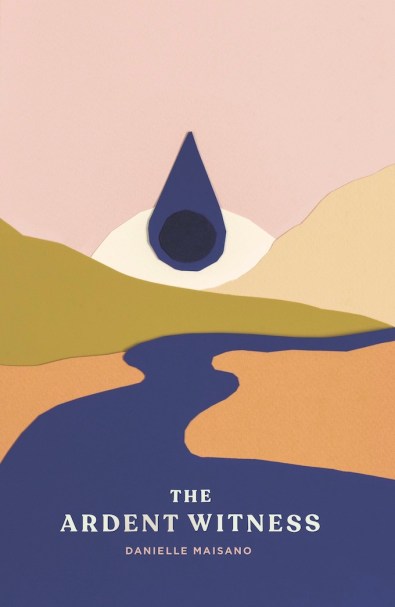
I am really pleased to welcome Danielle Maisano to The Writer is a Lonely Hunter. She is also a Victorina Press author with a debut novel The Ardent Witness to be released on 9 March 2019. It is available to purchase here.

cover-small

I was lucky to receive a copy of the novel ahead of publication and really enjoyed reading it. Here’s a short review of the book:

Danielle Maisano’s The Ardent Witness is a character-driven novel set in Togo where the exuberance and camaraderie between young volunteers is shared and in Detroit (before and after the placement) where Lily’s personal development is explored. I particularly enjoyed the chapters set in Togo which included the frustrations, challenges and triumphs of trying to make a difference to the lives of people in a developing country. When tragedy hits, Lily reflects upon her own actions and her resolve to make a success of her placement is strengthened. This is a worthy debut novel. Thank you to Danielle for introducing me to Togo, a country I knew very little about.

And now, here is Danielle who has agreed to answer a few questions.

Photo B&W

Why did you decide to write a book, Danielle?

I don’t really think I decided to write a book, I just sort of started doing it. As I mention in my author’s note, I honestly never thought I would write about my experiences in Togo. I always wanted to write a novel but I never thought it would be about that. But when I moved to London after having spent my two years in a tiny village in Togo, I felt a bit lost. I was so homesick for the life I had left there. So I began to write about it and it was therapeutic. A way to remember. At first, I wrote about things as they had actually happened, but then I began to see a different story taking place.  Which sort of leads to your next question…

What is the inspiration behind your novel?

I moved to London to study International Relations at the School of Oriental and African Studies and as I was becoming more educated in things like historical materialism, dependency theory and heterodox economic models a lot of what I experienced in Togo was beginning to make more sense to me. So I wanted to find a way to write about what I was learning theoretically in a more human form, connecting it to what I had experienced as a development worker by writing a novel.

How did you decide on the title?

I took the title from an English translation of a poem by Pablo Neruda entitled “It Means Shadows” and I do think it sort of sums up the motif of the story –

“Let what I am, then, be in some place and in every time,

an established and assured and ardent witness,

carefully destroying himself and preserving himself incessantly,

clearly insistent upon his original duty.”

The narrator, Lily, is constantly looking for ways to do something meaningful with her life. She is young and idealistic and believes that she can make a difference in the world but she is struggling to find a way to do so. I don’t want to give too much away, but in the end I think she chooses a path that sort of embodies this sentiment. To be an ardent witness. It is both active and passive at the same time. To have a passion for life, morals, an ethical code, to want to do good, but at the same time to accept the fact that you may not always have the ability to change things, to right every injustice. But there is a power in seeing and sharing what you have seen. I think that, in a sense, is the duty and desire of every writer, artist, or poet. It’s what drives them to create.

Do you have a day job? If so, how does working in a different context affect your writing?

When I started seriously writing the book, I had just finished my studies at SOAS and I was looking for work so I had a lot of time to write. Then, in the year that followed I did an internship at an NGO, which was part-time. I worked in a coffee shop and also did a bit of freelance writing. So my schedule was much more flexible than doing a 9-5 job and that was really when I completed most of the first draft. When I finally did find a full-time job at a homeless charity in North London, that was a very unproductive time in regards to the book. Luckily, after about a year there, my husband and I decided to take off and spend some time with my family in the US and then his family in Chile. We were gone for about 8 months and that was an amazing time because I was able to really focus on nothing else but the book. If I hadn’t had that time I would probably still be writing it. Working  9-5 thing is very difficult when you are also trying to do something creative. But then, when I was looking for work, I also had a lot of guilt that I had so much time to write when I should be working or looking for work. Chile was different because that time had been specifically set aside to write and I was very fortunate to have had that, plus a very encouraging and supportive partner. Since returning to London, I’ve been able to do part-time and freelance work which I find the most conducive to writing but I realize it’s really a privilege to be able to have that option, one I still sometimes feel very undeserving of. But then again, I guess there will always be reasons or excuses not to write and half of the job is overcoming them.

Are the names of characters important to you? How did you choose them?

Well, a lot of the names of American characters were just names that were always floating in my head, like Sonia and Lily. They were always sort of these archetypical characters that I had named some time ago that were waiting to pop up in my writing. The names for the Togolese characters were more sentimental. Like the character of Fati, there was a little girl that lived near me, she was only about one or two years old when I moved there and her name was Fatima and everyone called her Fati. Her brother brought her over almost every day, we played together and she would cry when it was time to leave. She was the sweetest little girl and I will always wonder what her life is like now. I wonder if she remembers me? Am I some weird sort of memory to her? Also the name Gladys, there was a young girl I knew who was from Ghana and I could see she was very isolated and alone and some of the other girls made fun of her for not speaking French well and I felt a sort of connection to her. We were both outsiders. So in the book, there is a connection there.

What were the challenges in writing The Ardent Witness?

Basically the main challenge was just to keep going. Having the confidence to finish what I started and believe that no matter what came of it, it was worth doing. I think that was the hardest part in the end.

What’s next for you, Danielle?

I think I may have started writing my next novel. I guess only time will tell.

You can find out more about Danielle by visiting her website. You can also find her on Twitter and Facebook.


5 Comments »

Heads up: new publication

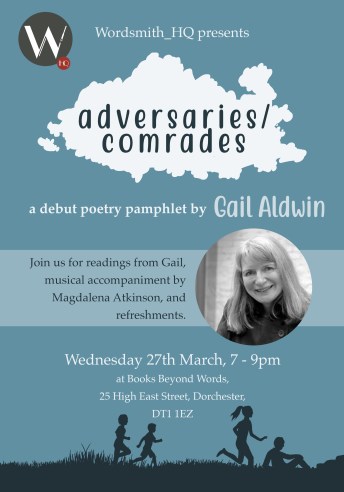
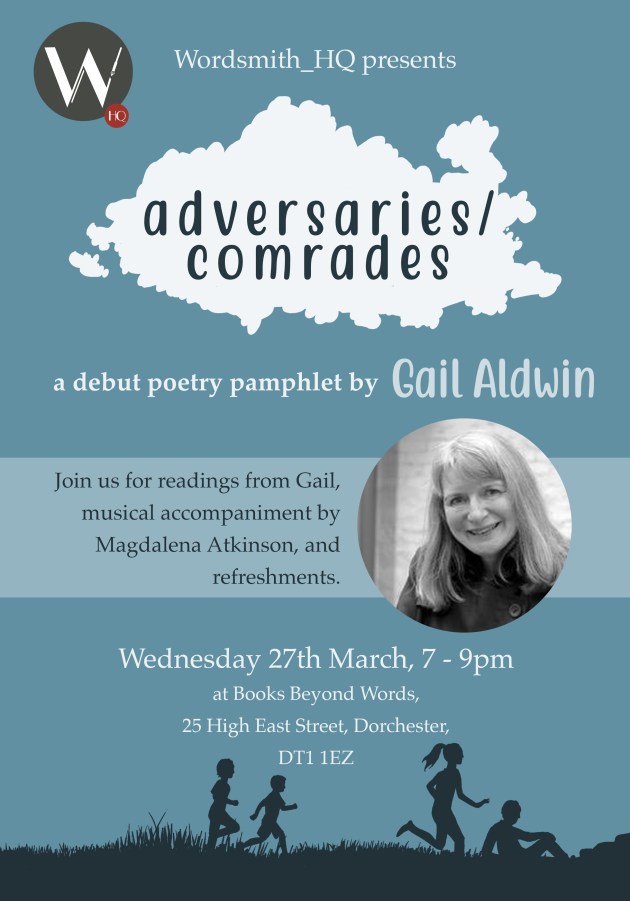
I am delighted to share the news that my debut poetry pamphlet will be published in March 2019. Last summer I entered a competition inviting submissions of poetry on the theme of siblings and I was thrilled to be judged joint winner with Rachel Lewis. My pamphlet is titled adversaries/comrades and includes a range of forms from prose poetry to pattern poetry all based on the relationships between siblings.

Wordsmith_HQ have done a wonderful job in creating the pamphlet and designing the cover.

FINAL COVER gail aldwin

The cover image is taken from a photo of children playing in Maumbury Rings, the Neolithic henge situated to the south of Dorchester. Every August bank holiday there is a wonderful day of music held at Maumbury Rings where picnickers enjoy a range of bands. This has become my favourite day of the year in the county town, so I am very pleased with the cover design.

Rachel’s poetry pamphlet is titled Three Degrees of Separation and explores issues about love, family, and survival in the face of mental ill-health. You can read more about the pamphlet and details of the pamphlet launch here

The launch of my poetry pamphlet will take place on Wednesday 27 March 2019, 7–9pm at Books Beyond Words in Dorchester. Please register your interested in attending here. I’m very pleased Magdalena Atkinson will be offering musical accompaniment at the event. It should be a lovely evening…do come along.

adversaries-comradesPOSTER


2 Comments »

The FABULOUS wider writing community

It was Nina Killham who first recommended I read The Deep End of the Ocean by Jacquelyn Mitchard. This is the debut work by a novelists who has gone on to write ten further books for adults plus others for the young adults and the children’s markets. As a first novel, The Deep End of the Ocean gained much attention and acclaim and was the first title chosen for Oprah’s Book Club in 1996. It is a powerful novel, full of suspense as the protagonist, mother to a missing boy, struggles to come to terms with what’s happened. It’s a very moving story that teaches about resilience and compassion in circumstances that are a nightmare to every parent.

5161

As there are parallels between my novel The String Games and Jacquelyn’s work (in terms of a focus on a lost child) I decided to get in touch with Jacquelyn through the contact page of her website. Imagine my surprise when minutes later a reply from this best-selling author popped into my inbox. Jacquelyn kindly agreed to  read my novel with a view to offering an endorsement. Although delighted with this response, I did feel rather impertinent even asking. As a child, my Grandma frequently used the reprimand ‘askers don’t get’ whenever me or my siblings became demanding. But if my Grandpa was within earshot he’d pipe up ‘don’t ask – don’t want’. This memory of my grandparents convinces me there is no harm in asking.

Read the rest of this entry »

1 Comment »

The FABULOUS wider writing community

2912227101_1ff7a935d8_m

Credit: Grafik Mekanik, Flickr

My novel The String Games will be published by Victorina Press in May 2019. It is a psychological drama that focuses on the legacy of loss for the protagonist when her four-year-old brother is abducted and murdered during a family holiday in France. The cover is being designed by Fiona Zechmeister and it is exciting to be part of the process from initial ideas to the final product. One of my roles has been to secure endorsements for the novel to support with marketing and promoting the book. From a study of novels which use child characters and child protagonists, I drew up a list of authors to approach. For my blogs each week this December, I will focus on the authors who have kindly offered their support. 

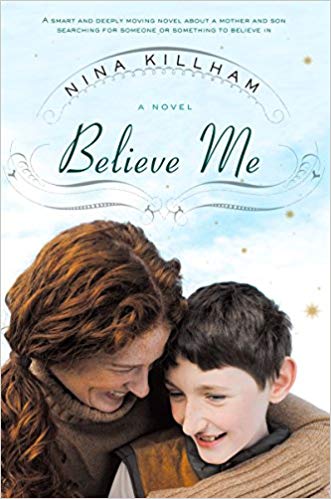
Nina Killham came back to me quickly with a positive response to my request. Nina is the author of three novels including Believe Me which is a wonderful book with a thirteen-year-old narrator called Nic. It is a funny and moving story about a boy who challenges his mother, an astrophysicist and atheist, by turning to the Bible for ways to understand contemporary life.

51t1Yfe-KBL._SX329_BO1,204,203,200_

I was first in touch with Nina a few years ago when she offer to give feedback on the first three chapters of a novel and the synopsis as a donation to the Authors for Refugees charity auction. I was lucky to win the lot and benefitted greatly from Nina’s feedback. We stayed in touch and she recommended several further novels for me to read so that I could learn how published authors develop stories around child characters. It was at Nina’s suggestion that I read Out Stealing Horses by Per Petterson. This is a great book that considers the lifelong repercussions from the accidental death of a child.

Without further ado, please let me unveil Nina’s full endorsement of The String Games:

Gail Aldwin excels at creating characters you care about. The String Games, her story of a child lost on a holiday to France, avoids melodrama and leaves the reader hoping the best for her characters as they move beyond the last page.

I’d like to thank Nina for her support, encouragement and of course, that lovely endorsement.

If you can’t wait until May to read my novel, you could always dip into my short fiction collection Paisley Shirt which is available from Waterstones in Dorchester and Bridport, The Bookshop in Bridport, Gullivers in Wimborne and Serendip in Lyme Regis.


2 Comments »

Blog Tour: F J Morris, This Is (Not About) David Bowie

I was delighted to meet F J Morris in Bristol where she shared one of her fabulous stories with an attentive audience. I’d seen Freya’s name on many competition announcements for winners and attached to stories in quality journals, so it was a real treat to attend the reading. She is a great supporter of flash fiction and assisted the organisers of the first flash fiction festival in 2017. Now, I’m thrilled she has agreed to join me on The Writer is a Lonely Hunter, to celebrate the launch of her debut collection of flash fiction. With the intriguing title This Is (Not About) David Bowie, the imaginatively presented collection contains thought-provoking stories that gave me the chance to take another look at modern life, and rethink a thing or two. Shrinking Giants was one of my favourite pieces, full of poignancy yet with an ending that gives hope.


Thank you for joining me, Freya and congratulations on your new publication. Here are the questions I’ve posed which I think will be of interest to readers and writers.

Do you write with your audience in mind? Who is your ideal reader?

My ideal reader is one that is living. I was going to say a human being, but to be honest, I’m not even that fussed what they identify as. I grew up in an old mining town on the outskirts of Bristol where my mum grew up. People didn’t really read. And so I’ve been asking myself a lot of big questions about fiction and why we should bother. Why should people read?

There are a lot of studies out that that explain how art helps us to understand ourselves and humanity better. Artists deal in feelings better than any other discipline. In the days we live in, it’s so important that we recognise the importance of feelings and how they influence us. Society doesn’t encourage us to be okay with them. They’re considered second-rate. But they have such a big influence on us. I read a study once that a judge’s decisions became more harsh depending on the time of day and his eating patterns (ie – if he’s hangry then you’ve no hope in hell). So it doesn’t matter how smart you are, or how aware you are, your feelings are more in control of you than you know.

We are not machines. We are not products. So I think it’s vital that we value artists, and that artists recognise their own worth, their own power. What people are consuming right now is influencing them in ways they don’t even realise. And we need to write, sing, dance, paint our way out of it. We need a new story to tell ourselves. Stories that have peace, hope, joy, magic. Stories that make you glad to be alive. Stories that bring us together. But ultimately, we need more people reading, and that’s a challenge I’m interested in taking on. So I guess they’re the ones I want to reach out to.

What do you hope readers will take away from your collection? 

That anything is possible. That we are the writers of our own story. That we can be who we really are. A few people have read my collection and told me which stories were their favourites, and what I love the most is that they all chose different ones. I really wanted to cover a range of people, a spectrum of identities, ages, genders, backgrounds – that felt true to Bowie, and what he stood for. I wanted the collection to reflect his essence. Bowie in himself is a powerful idea. He reached out to everyone who didn’t fit in, and it turns out, that’s a hell of a lot of people. Like many, he gave me permission to be as outrageous as I wanted. He allowed me to take risks. To be true to myself. I hope people reading my collection will feel that too.

Can you describe the process of putting together a flash collection?

The initial idea only came when someone asked me to write a collection. I had wanted to put one together for a while. But every theme or idea I had to string a bunch of stories together ran out of juice. It was like being in a labyrinth, thinking you’re on the right track, only to find myself at another dead end.

Then Bowie died. It was like watching an explosion. A supernova. A massive star had collapsed at the end of its life, and it sent out these ripples, this burst of energy. His impact on people spilled out. David Bowie was more than a person. He was a feeling. He was an idea. So that’s when lightning struck, and I saw my way through the labyrinth.

But that was just the beginning. There were a whole host of obstacles and riddles to work through after the first draft. The journey to publication was not straight or easy, but the extra time helped me to develop it more. There were a lot of stories that fell short of what I wanted so I ditched them. And then I put the rest together into a larger narrative structured by David Bowie quotes. I wanted people to feel like there was a bigger picture, a journey to go on, but that element came later.

Do you have a favourite flash and what was the inspiration for writing it?

Slush puppies (there’s a reading of it here): it’s about hidden love between two school girls. I wrote it in a Bristolian accent, so I have to read it in one. And it has a sort of musical quality to it. I wanted to write it in such a way that when you read it, you could feel the build-up and overflowing passion.

My stories are a bit like Frankenstein’s monster – some of the story was inspired by something that happened to friends when I was growing up, some of it is my imagination, and a fair bit has been harvested from different poems I wrote when I was in love. This one does it all. It takes me back in so many ways. Nostalgia is a powerful thing, and so is love.

Congratulations on your new appointment as Assistant Editor for fiction at Bare Fiction. What does this role involve?

Cheers! At the moment its: reading, reading, reading. Then deciding with the editor and team, which stories we think should be published. Robert does a wonderful job running the magazine, and his aspirations are amazing, so I can’t wait to help him achieve them. Plans and aspirations are a foot – so watch this space!

Do you have any favourite writing resources you would like to share with readers of The Writer is a Lonely Hunter?

Oh there are lots! When I read Orwell’s ‘Why I write’ in my twenties that basically became my mantra. I try to avoid writing to show off skills or knowledge. I remember a time when I was eight and I learnt this new word and was so excited to use it. But when I finally did, and nobody understood it, I realised how pointless it was. I felt the embarrassment of those around me, and how they withdrew. You lose people when you make them feel stupid – they disengage. So reading Orwell, made me consciously think about what sort of writer I wanted to be.

I’m always telling people to use the ‘Hemingway editor’ website. I’m going to use it on this interview. It helps me to be an editor to myself and to clean up my sentences. Then there’s Grammarly and Scrivener for the tools that make life easier.

What are your future plans?

To write. I know how that sounds. But it’s a constant fight with myself. I started to write a new novel called Burning down the house a few months ago, but with all the fiddling about, I’ve lost track of spending time on it. I want to write scripts, and make this app, and do another collection… So that’s my problem. Too many things, too many ideas, not enough writing.

What in insightful interview! Thank you, Freya. This is (not about) David Bowie is published by Retreat West Books and is currently on pre-order with Amazon. If anyone is in Bristol on 27 September at 7pm and would like to attend the book launch of This is (not about) David Bowie, your invitation is here.
Leave a comment »

The String Games has found a good home

I’m delighted to share the news that my contemporary novel The String Games has been accepted for publication by the lovely people at Victorina Press. It’s been a long journey to reach this point which has involved all sorts of creative and academic diversions. Little did I know that when I started writing the novel, I would end up being awarded a PhD in creative writing!

513px-Cats-cradle.svg

The String Games tells the story of the abduction and murder of a boy from the viewpoint of his older sister. Rather than a crime novel, The String Games focuses on the legacy of loss for the protagonist, as she moves from childhood to the teenage years and into adulthood. This three-part structure is rather like a triptych in that it allows the protagonist to look back on her younger self and struggle to recognise the child she once was. It is by engaging with her personal history that Imogen is able to address issues of unresolved grief and integrate the loss of her brother.

Here is the opening page to prick your curiosity:

2013

An idea strikes. Imogen turns around on the stairs wanting to hurry back, but strangers stand like prongs. She battles through to reach the office where she jostles for projects and promotions. Heaving the door open, she sprints to her desk. Heads turn but Imogen ignores her colleagues. Her fingers slip on the keyboard and she has to retype the password. Breath churns from deep in her lungs and her heart beats like a hammer. Why didn’t she think of this before? Turning the screen, she doesn’t want anyone to see what’s she’s doing.It’s a private matter. While she waits for the homepage to load, she glances through the rain-stained window and onto the Thames. Water rucked like a crinkled cloth brings to mind a recurring image from her childhood. A little boy with wet hair shivers, wearing only his trunks. She wants to reach for him, press her arms around his shoulders, draw Josh into a hug. A big sister should keep her brother safe.

Typing his name will bring up the usual lilac lettering that tells Imogen she’s used the same search term time and again. Her stomach clenches and is knotted like a ball of string. Gathering confidence she enters the name of the girl she used to be into the search bar: Nim Mashard. Clasping her hands, she waits to see whether this will locate new information about Josh’s case.

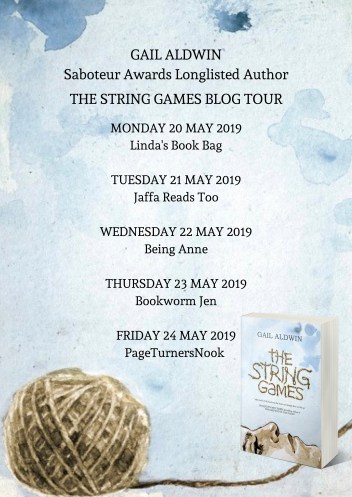
The String Games will be published in May 2019 and I look forward to working with Victorina Press to make this novel the best it can be.

4 Comments »

Walking the Camino Inglés

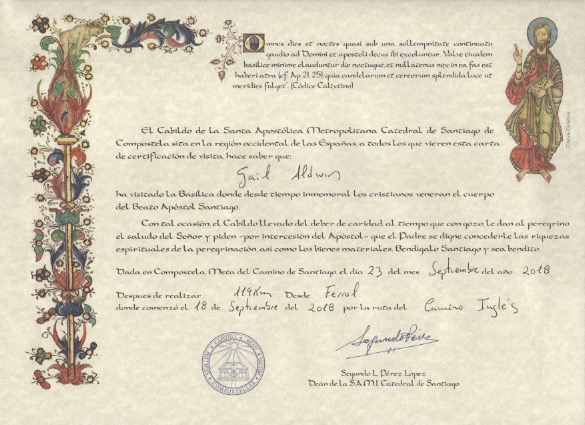
David and I set out to walk the Camino Inglés. The route starts in Ferrol and continues southwards to Santiago de Compostela in the centre of Galicia. Distances covered on foot over 100km are considered proper pilgrimages so I was entitled to claim my Compostela at the end.
Scan 5
We completed the journey in five days and stayed in a variety of places including bunk beds at an albergue (overnight accommodation to assist pilgrims on their way) and a number of hostels. There were probably about thirty others completing the same journey each day and we got to meet some fascinating people. Each day had its challenges:
Day One: Ferrol to Pontedueme
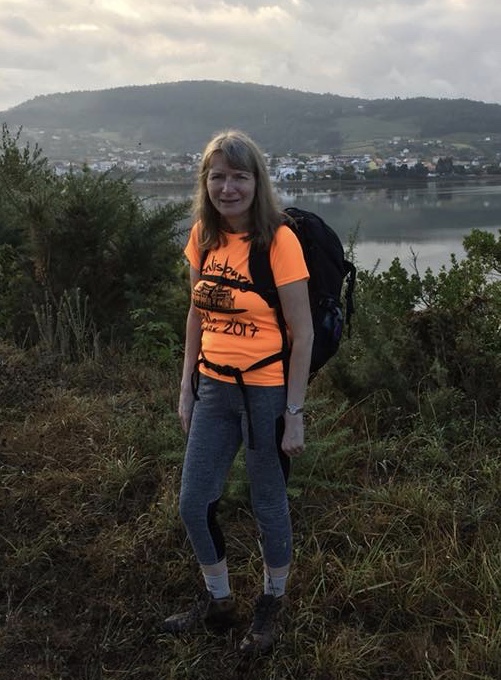
I wasn’t expecting to complete the whole 29km of this leg as many split the journey into two parts by stopping at Neda. But, as we were making such good progress we pressed on. Here I am with my ample backpack.
fullsizeoutput_1b77
Day Two: Pontedueme to Betanzos
Only 19.5km seemed a doddle after the first day but the image below identifies the challenges of steep inclines and descents. I felt absolutely dreadful on arriving n Betanzos and made sure I packed dried fruit and nuts for the next day to keep me going.
Day Three: Betanzos to Bruma
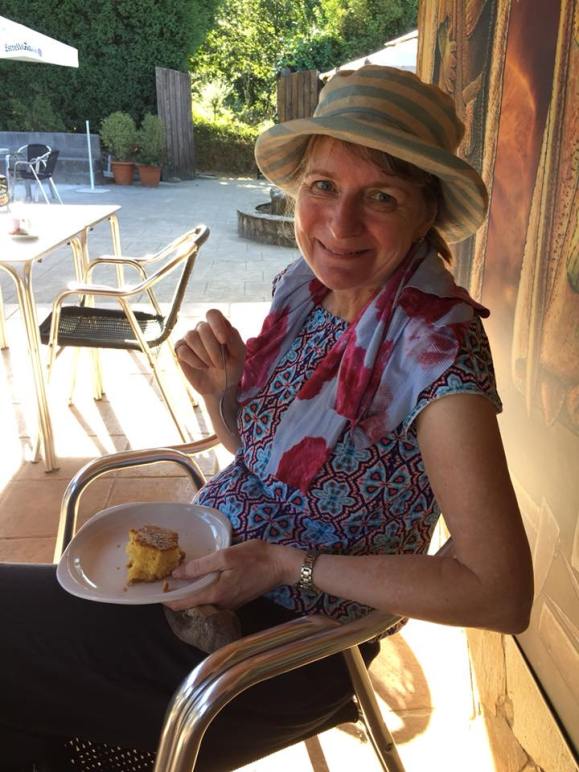
Faced with 29km, I off loaded some of the heavier items in my backpack onto David. I then suffered a backpack malfunction because I hadn’t packed it properly and the frame was digging into my back. Once that was sorted I was ready for cake!
42157374_10212554572165870_3734687184444194816_n
I seemed to build stamina on this leg of the journey but acquired blisters!
Day Four: Bruma to Sigüeiro
24km, mainly downhill. Easy walking in the drizzle. More blisters.
Day Five: Sigüeiro to Santiago
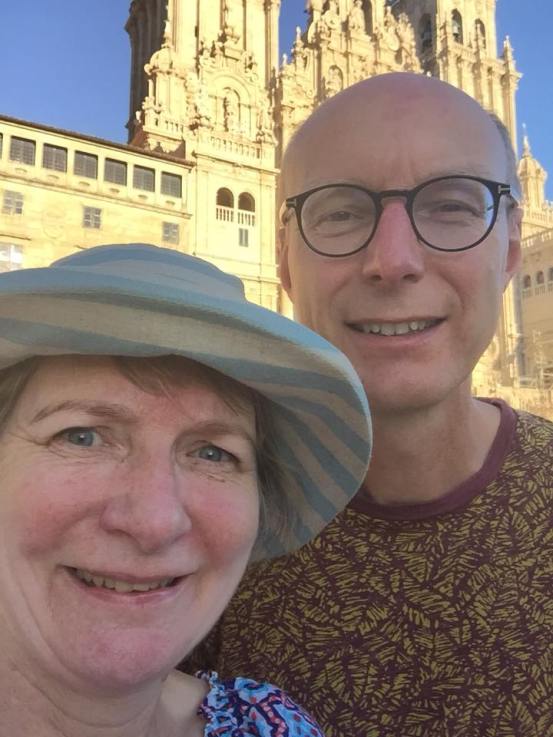
Only 16m and an easy walk to our destination.
42342615_10212573651042830_1123966458594852864_n
What did I discover from this camino?
  • I can walk several days in a row with a pack on my back
  • walking long distances is a great way to test the body and free the mind
  • it’s possible to meet the most surprising people in out of the way places

Would I do it again?

Absolutely!

4 Comments »