the writer is a lonely hunter

writing by Gail Aldwin and other authors

How many pens does a writer need?

No wonder my handbag was feeling a little heavier than usual. When I turfed out the contents I found the following lurking at the bottom:

Pens

Bearing in mind that I can only use one pen at a time, there surely is no need to lug around FIFTEEN! And what a motley assortment of biros! I may have to purchase a rather more distinguished writing implement once my redundancy pay comes through. Any suggestions for a posh brand?

In the meantime, I have a task to complete for 21 July when I will be returning to the Bridport Arts Centre for the second part of a two-day writing course delivered by Paul Dodgson. The first session included the following:

  • a warm up exercise: write about an incident that happened within the last year. Take turns to give your name and the first line of your writing. Does the writing contain a hook that makes others want to know more?
  • discussion about what a short story should include
  • writing task: tear a sheet of paper into four rectangles. Write a first name, a family name, an incident and a lie on each piece. Redistribute the papers and use your collection to create a character and the first part of a story.
  • This story forms the basis for a longer piece of writing that will provide material for the next workshop
  • Short stories shared included: A painful case, James Joyce (Dubliners); Birds of America, Lorrie Moore; The Turning, Tim Winton; Fat, Raymond Carver

I very much look forward to the next workshop and thank Paul for a wonderful day of literary stimulation, lots of laughter, fun and sharing.

2 Comments »

Best of CafeLit 2012

Product DetailsWhen I received an email on New Year’s Day from Debz Hobbs-Wyatt saying that my story The Shallows had been included in The Best of CafeLit 2012, I was delighted. Now I’m looking forward to receiving my copy of the anthology which is available through Amazon. The ezine CafeLit is a fantastic place to submit stories up to 3,000 words. Each year Debz selects 15 of the stories she’s most enjoyed for inclusion in a trade book and contributors receive a share of the profits.

I’m really pleased to see my work appear alongside that of Patsy Collins. Patsy has had considerable success in having her stories published in women’s magazines and now has a number of print and ebooks available. She writes regular blog posts which are well worth reading and you can find the link to her blog here.

Interestingly, Patsy was made redundant earlier in the year and I’m taking inspiration from the writing she’s undertaken since she’s been liberated from paid employment. In the meantime, the date of my dismissal through redundancy approaches and I’m making plans for a refocused future. When everything is confirmed, I’ll let you know more.


9 Comments »

Pen Pals, a reminiscence project in Purbeck

A new project titled Pen Pals will be offered in Purbeck by members of the Dorset Writers’ Network. The project has received funding from Dorset Community Foundation and will be delivered in three care settings for older people. The aim of the project is to offer creative and enjoyable learning experiences for older people by drawing upon memories. Volunteers will be trained to work with older people and will help in recording personal stories. Session facilitators Helen Pizzey and Pat Yonwin are experienced in delivering reminiscence projects and understand the health benefits of encouraging older people to becoming involved with creative arts. A range of prompts and artifacts will be used to engage and interest participants in sharing stories from their personal history.

I am pleased to be involved with this project as a volunteer and look forward to the first of six sessions that will be delivered at Gainsborough Care Home in Swanage. Sessions will be delivered fortnightly from the end of July to October. If you would like further information or are interested in joining the project as a volunteer, you can find further information here. (Scroll down to find the information on Pen Pals.)

Have you been involved with any creative initiatives that support vulnerable groups?

2 Comments »

A week in the Mani

I was fortunate to spend a week at the beginning of June with Sarah Bower and  Carol McGrath at a house that Carol has taken for a year in the Mani area of Greece. Stoupa is a delightful village with a harbor and sandy beaches at the south of the Peloponnese, quite the best spot for a writing retreat owing to the literary connections. A little way along the coast at Kardamyli is the home of Patrick Leigh Fermor, which was bequeathed to the Benaki Museum following his death. Patrick was made an honorary citizen of the village  following his participation in the Cretan Resistance during World War 2. He wrote about the area in his book titled Mani, Travels in the Southern Peloponnese and he is regarded as one of Britain’s greatest travel writers.

Bruce Chatwin is the other notable writer with links to the Mani. He finished writing The Songlines while staying at the Hotel Kalamitsi in 1985. The book records his experiences of traveling in Australia and his ideas about the necessity of walking to human development. For my undergraduate dissertation I wrote about the works of Bruce Chatwin and I’ve always felt that he had a hand in securing me a first-class honours. So, when the opportunity came to visit the place where his ashes are buried, I was delighted.

Most references to where Chatwin’s ashes are buried refer to a tiny, Byzantine church in the mountains above Kardamyli. Some name Exochori as the nearest village and others refer to Chori. Without definite directions, we set off early in our search, visiting several villages situated in the Taygetos mountains that provide the backdrop to the glorious coastal area. The road took us into Chori where there was a white-washed church beside the road. From there we looked across to the golden stones of a church perched amongst olive trees. We found the path that took us alongside residential houses and out onto a grassy strip of land. The view from the church showed the wide expanse of aqua sea and the land spilling down from the mountains. An ideal final resting place for Bruce Chatwin, someone who loved broad horizons.

The church in Chori

The church in Chori

A picture of Bruce marks the spot where his ashes are buried

A picture of Bruce marks the spot where his ashes are buried

After the excitement of this discovery and the time spent absorbing the atmosphere and the wonderful views, we headed for Kardamyli. At a restaurant beside the beach we enjoyed a mezze of salads for lunch.

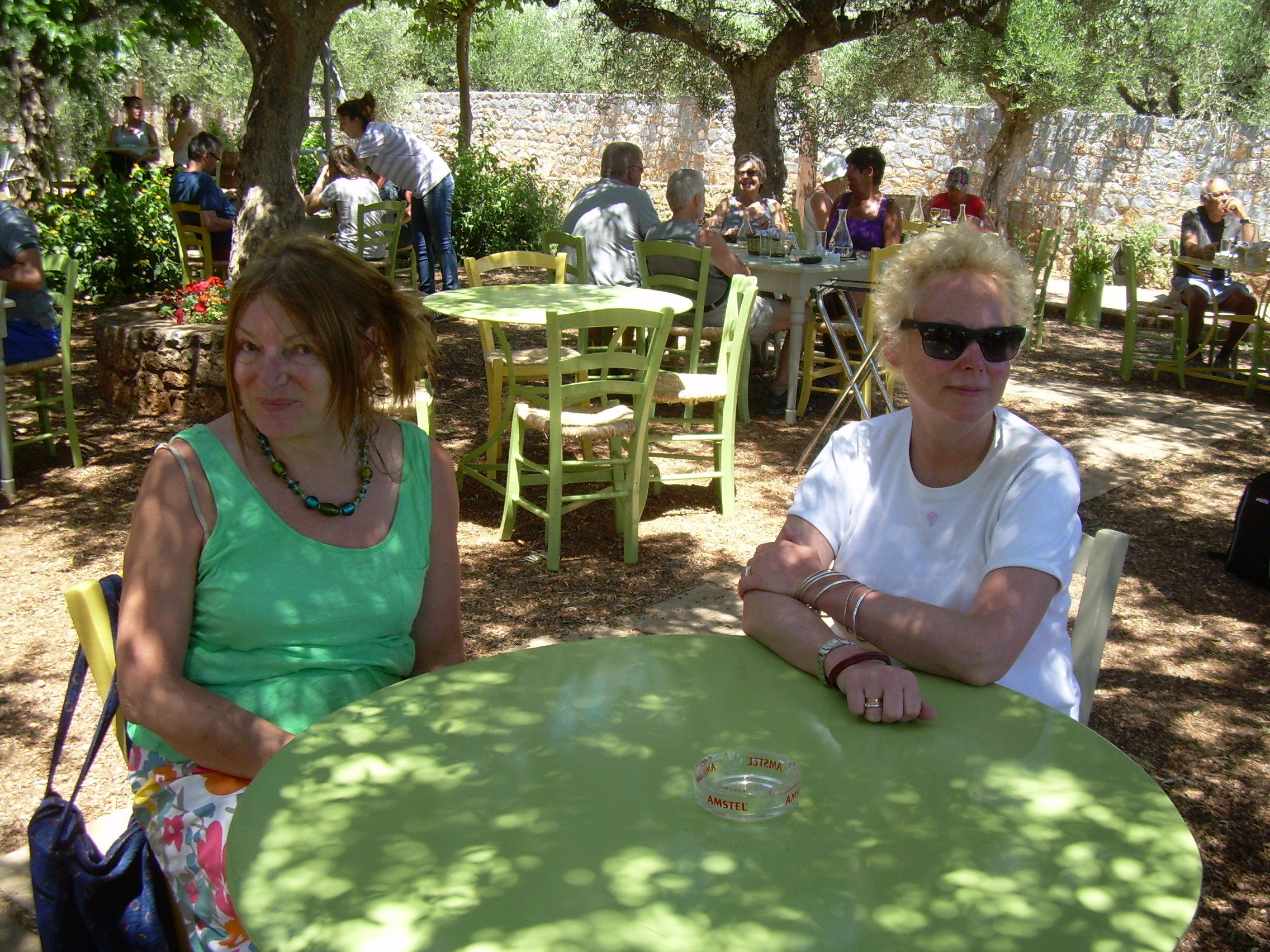
My companions at the restaurant

My companions at the restaurant

Cheers to Carol and Sarah for your great company and a big thank you to Carol for being such a brilliant host.

9 Comments »

The Notebook

Please find The Notebook below, my entry to FLASH MOB 2013. This is a blog competition celebrating International Flash Fiction Day on 22 June. To join the carnival all you have to do is post a previously unpublished piece of flash fiction (300 words or fewer, not including title) to your own blog before the 10 June. Not long to go, so you’d better get cracking! Find more details here.

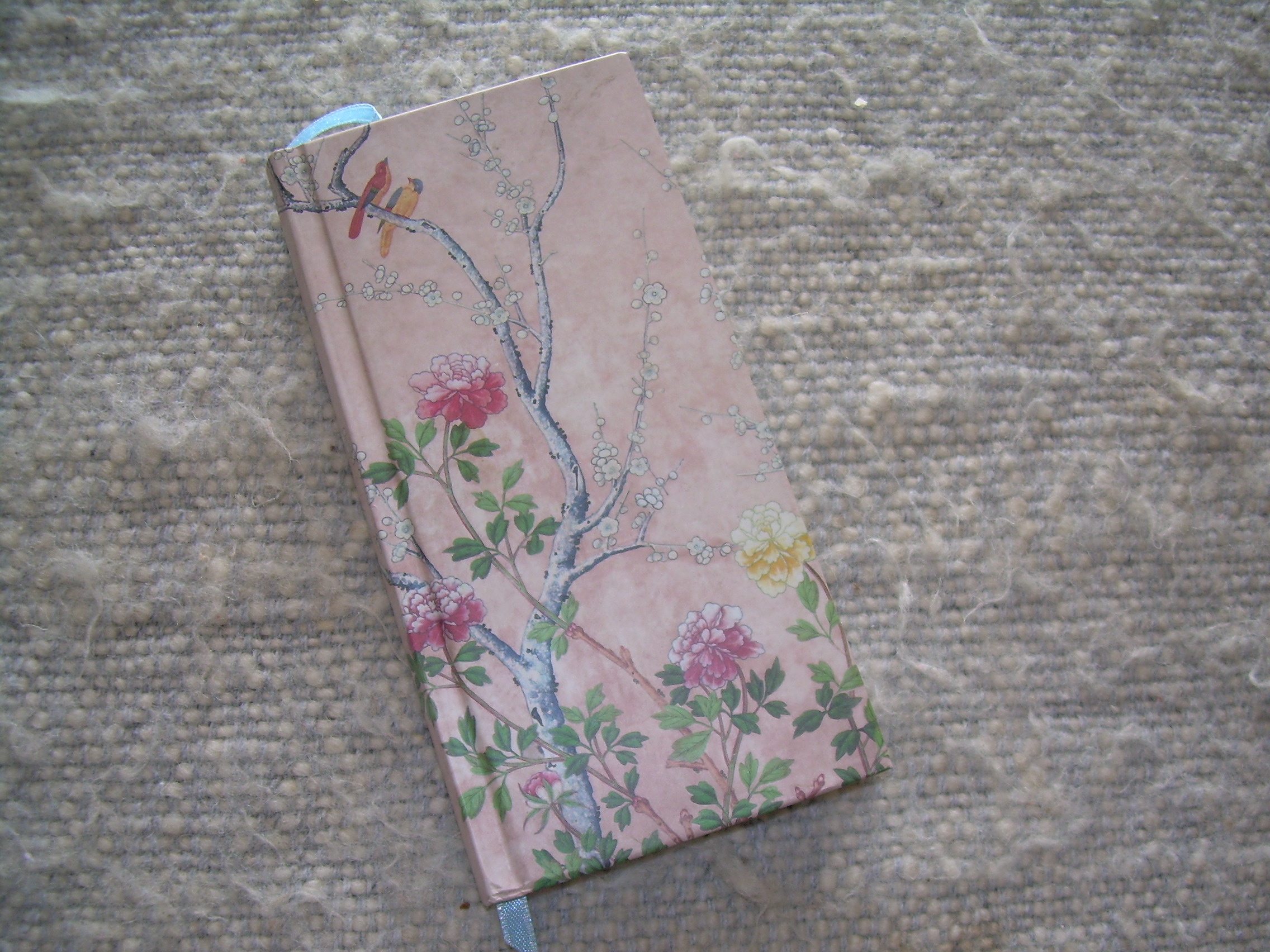
listing books read notebook           The Notebook

            ‘You’ll have another one?’ Paul drained his pint glass and nodded towards Jane’s tumbler containing only water from the melted ice. ‘One more G and T won’t do you any harm.’

            ‘I guess not,’ she said.

            While he was at the bar, Jane took the pad from her handbag and made a note of jobs for the weekend: woollen wash, change sheets, dismantle wardrobe, take to dump.

            ‘What’s that you’re doing?’ He ground the base of her glass against the table and leaned over, trying to read the words.

            ‘It’s to stop me forgetting the one or two things I need to do.’

            ‘You and your lists.’

            ‘Indeed,’ Jane closed the cover.

            Paul weaved his fingers through his fringe and Jane’s spine contracted with a stab of irritation. He’d always worn that ring on his right hand, as if he never was sure about being married. A shaft of light through the stained glass made a kaleidoscope of colours on the carpet, a torch through the fug.

            ‘Of course, if you really had your priorities right, my name would be at the top of your list,’ said Paul.‘That would show you believe in me.’

            ‘I do Paul,’ sighed Jane. ‘You’ll get a job soon enough.’

            ‘I worked 20 years for that firm and what do I get for my loyalty?’

            ‘They made the whole department redundant. It’s not as if they were picking on you.’

            ‘Less of the lecture, Jane.’

            By ten o’clock Paul’s shoulders were hunched and he jabbed Jane’s notebook. ‘Come on then. Put me at the top of the list.’

            Jane took the ballpoint and scrawled across the page: I be-leave-in you, Paul.

            She passed the paper over and he squinted, trying to decipher her writing.

            ‘That’ll do,’ he said.

4 Comments »

Introducing Carol McGrath and The Handfasted Wife

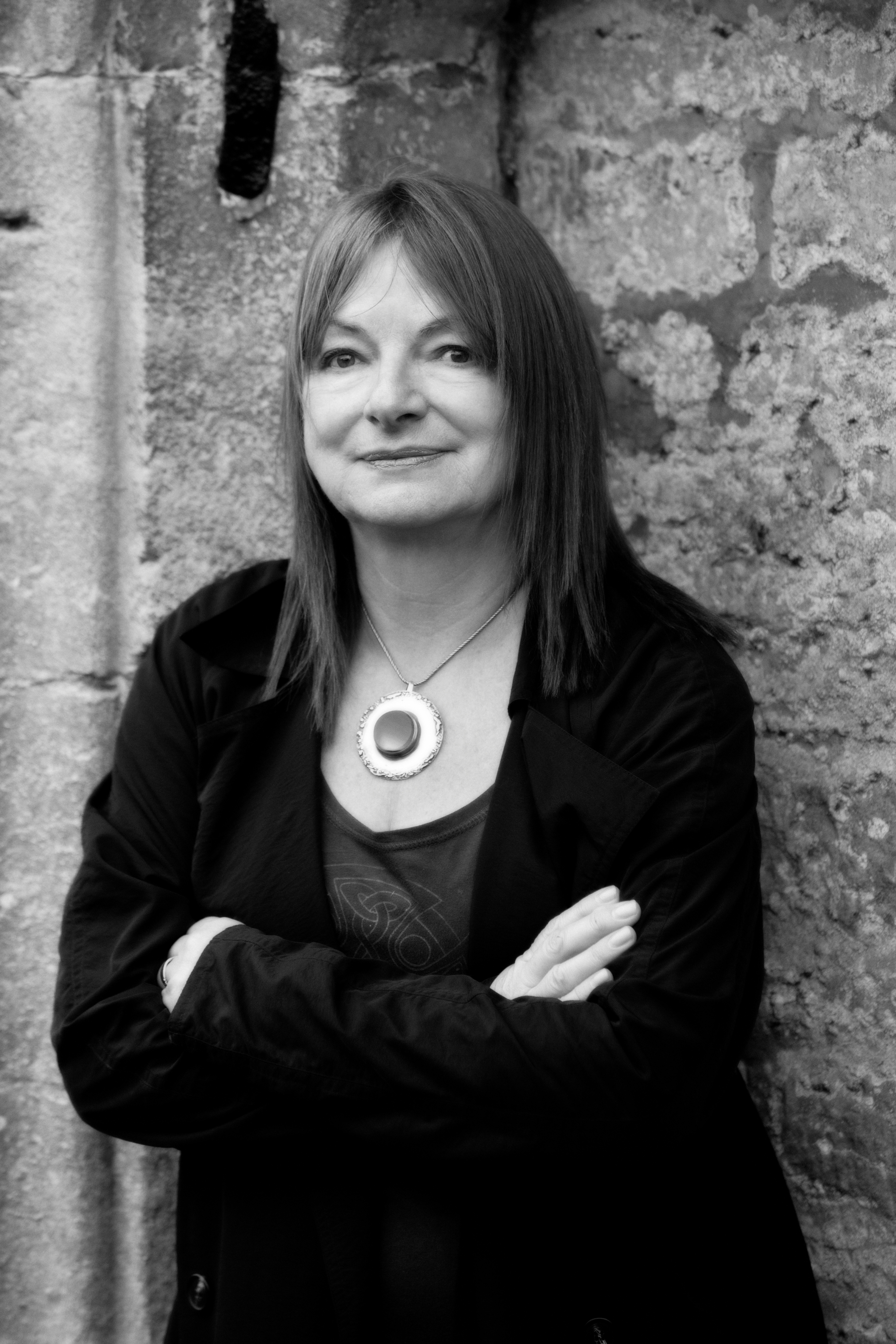
9781909520462_FC (2)C McGrath twitter

Please find below an interview with the talented debut novelist Carol McGrath, author of The Handfasted Wife. The story, although based on research, is an imagined account of the life of Edith (Elditha) Swan-Neck. She is cast aside when Harold becomes King in 1066 but is the only person who can identify his body following the Battle of Hastings. Living amongst invaders, Elditha finds a way to protect her children and seeks a new future. The novel is a wonderfully evocative read, rich and textured, showing a woman’s resilience at a time of much uncertainty.

Welcome to the writer is a lonely hunter, Carol.

Thank you, Gail, for inviting me as a guest on your blog. It is an honour to appear here and to discuss my writing. 

How was your interest in writing awakened?

As a teenager I wrote stories and read voraciously. I was particularly interested in historical fiction and loved Anya Seton’s novels especially Katherine. These were the kind of stories I wanted to write. However, teaching history and having a family delayed my debut novel by years.

Tell us about your studies and how this supported your work

I began with Oxford Continuing Education. I studied for the two-year Diploma in Creative Writing which was delivered by well published tutors for poetry, prose and drama. My final submission on this course was a play about Edith Swan-Neck, Countess Gytha and two monks who came with Edith Swan-Neck to the battlefield at Hastings to recover King Harold’s body. Elditha’s story has haunted me for years. After this successful experience I progressed onto the MA in Creative Writing at Queens University Belfast’s Seamus Heaney Centre. There, I wrote a collection of short stories and a novel set in the Edwardian period. As a result, I was invited onto The Royal Holloway PhD in Creative Writing by Andrew Motion who was the external examiner on my MA. I have graduated at MPhil level. It is, otherwise, a long, long process. My studies enhanced my organisation, enabling me to write with variety and in varying mediums. In fact, I found my voice. However, a good university MA in Creative Writing is more about writing than about publishing your work. I think my MPhil took me further because I researched and wrote an academic thesis about Realism and Romance in Historical Fiction as well as writing a novel. I understand the genre better as a result. However, I would point out that my debut publication resulted from putting my work through a commercial critique with Cornerstones and the Romantic Novelists’ Association New Writers’ Scheme, as well as the university studies.

I love the way you’re able to draw upon the senses in your writing, creating a story with atmosphere and intimacy. What were the challenges in writing The Hand Fasted Wife?

Finding Elditha’s voice was tricky. She lived in a past so distant that there wasn’t much recorded about her. I took what I could glean from research about noble women during this period and then I stood in her shoes. First I wrote into the story using first person. After I felt closer to her, I rewrote the initial chapters in third person narrative. This way I could include the perspectives of Countess Gytha (Harold’s mother) and that of Harold’s sister, Dowager Queen Edith. However, every time Elditha was in a scene, I always reverted to her point of view. That way I remained closer to her, seeing events through her eyes and with her feelings. This enabled me to create the sense of intimacy which is important because it is predominantly her story, and I was sorry to leave her when the book ended. I loved writing this book.

What is your next writing project?

The next book follows the fortunes of Edith Swan-Neck’s daughter, Gunnhild, her elopement from Wilton Abbey and her love for two half-brothers, both important Bretons who came over to England with William of Normandy. The story of Gunnhild and Count Alan of Richmond was recorded in contemporary chronicles. Now that I am fictionalising it, I find it a wonderfully adventurous and romantic story to write.

Which authors do you admire and why?

I read widely and not only Historical Fiction. I enjoy Vanora Bennett because she brings such depth to her historical characterisation and because she writes with delicious descriptive detail. My favourite is The Queen of Silks set during the fifteenth century and about a female London silk merchant. I feel similarly about Hilary Mantel’s Wolf Hall and Bringing Up the Bodies. She is unique as a Historical writer. Her scenes and her dialogue are wonderful. The opening situation in Wolf Hall is unsurpassable in Historical Fiction for its grittiness and the resilience that surfaces in Thomas Cromwell’s personality later and that initially appears in Cromwell as a youth. Importantly, her extensive research is concealed well in her evocation of the period, her character development and in her fabulous depiction of the claustrophobic nature of Tudor court life. Finally, I do enjoy reading the Irish writer Sebastian Barry. His prose is achingly beautiful and On Canaan’s Side is currently one of my top favourite novels. 

Can you offer some tips for yet to be published writers?

The first tip is obvious; write the book you would want to read and write from the heart. Secondly, consider view point carefully early on; make the story ‘character led’ so that a reader cares about what happens to her/him/ them. Third, hone your writing and do not be afraid to redraft. Get the story down in a first draft to achieve flow then work it up or review it all carefully as you write. I do both. Significantly, know where your story will end so that you are clear about where you are heading. I recommend an outline, not necessarily too detailed, because you may find that you deviate from it as you write. Finally, if you can, have readers look at your novel before you submit to agents or publishers.

Thank you very much Carol for sharing your experiences.

If you would like to purchase a copy of  The Handfasted Wife visit Amazon or Accent Press. There is one free apple download of The Handfasted Wife from iTunes for the first lucky person to apply. Use the following code to access this:  XEMRRHEAH7H. It’s well worth popping over to Carol’s blog Scribbling in the Margins where you can find out more about this fascinating period of history and gain further insights into the life and loves of Elditha.

2 Comments »

Things are looking brighter…

University of South WalesI received an email this week confirming that I’ve been accepted onto the Masters in Creative Writing at the University of South Wales. This is a part-time, distance learning, research degree which includes a creative writing project. Although my proposal still has to be passed by the Research Panel, I’m cracking on with ideas for the novel that will accompany the research. I’ll be investigating the child’s voice in adult fiction and putting together a manuscript written from a child’s viewpoint about the abduction of a sibling. I have to say a massive thank you to Carol McGrath who has offered considerable advice and support that has kept me focused and positive throughout the application process.

I am really excited about returning to study. The university only accepts eight students onto the course each year so I am fortunate to be one of them. Previous students include Emma Darwin (click here for Emma’s blog which is well worth a read) and Maria McCann.

Other good news is that I was successful in getting through the interview with an educational charity which will offer me the chance to work with schools on a part-time basis during 2013-14. I’m also building up my contacts with schools to deliver consultancy work and I’ve had some interest in a project that I wish to seek funding from the Arts Council to deliver.  All this activity means I’ve been incredibly busy and writing has taken something of a backseat. Now that I have a little free time, I will work on a piece of flash fiction to submit to the Bridport prize at the end of the month.  Other opportunities you might like to consider include:

What keeps you busy at the minute?

24 Comments »

NEW Dorset Flash Fiction Competition

The Dorset Writers’ Network is running a flash fiction competition to raise funds to support the valuable work they offer in helping isolated writers throughout the county. The first three winners will receive a book or writing related prize.  The best stories will be recorded as a podcast and put on the website. I have been asked to judge the competition, so I’m absolutely thrilled. You can find further details below:

Flash Fiction Competition

New competition from Dorset Writers’ Network, write a story in 300 words. You must include the words: hesitant, string, relative, hand. You can use the words anywhere in the story or in the title. Please make sure that the words make sense in the context of the story. In order to do this, you may wish to add letters to the words, but you can’t take away any of the letters. For example, you can change relative to relatively but not to relation because the ‘v’ and the ‘e’ are missing from the original word. You can check that you’ve included all the words correctly before submission by using the ‘find’ facility. Gail Aldwin will judge the shortlisted entries.

  • Email or post your entry (Sue Ashby, Corner Cottage, Bridge Street, Dorset SP8 5BA; sue@dorsetwritersnetwork.co.uk). Include your name and contact details (address, telephone, email) – but not on your entry. Entries are judged anonymously, so your name and details must be on a separate document.
  • There’s a charge of £5 for entry and you must live or work in Dorset. Make cheques out to Dorset Writers’ Network.
  • You can make more than one entry (£8 for 2 stories, £10 for 3) – there is no limit.
  • A winner and two runners up will be selected.
  • Your work must not have been previously published on-line or in print.
  • The entry must be written by you.
  • Copyright remains with the writer.
  • Maximum length is 300 words.
  • The title is in addition to the 300 words.
  • Your story must not have won or been placed in another competition.
  • Deadline for entries is Friday May 31st 2013. The results will be announced on the DWN website  where the winners will be published.

If you’re a Dorset-based writer, will you have a go at entering this competition?

2 Comments »

Flash fiction workshops in Dorset

Dorset Writers' Network, Winfrith Newburgh Village Hall

Dorset Writers’ Network, Winfrith Newburgh Village Hall

I was delighted to offer two flash fiction workshops locally on Saturday. The first was delivered at a fantastic event in celebration of Dorset Women’s Day, held at the Dorford Centre in Dorchester. The second was in the afternoon, working with some wonderful Dorset writers on behalf of the Dorset Writers’ Network. The content for each workshop varied slightly, but as an overview, I’ve listed some of the activities included.

  • Definition of flash fiction

Not an easy task, but we did our best to come up with a definition by considering the length, the content, the structure, the process and the purpose of writing flash fiction

  • Giving it a go – six word stories

Using models from the famous (Hemmingway and Atwood) and the not so famous (shortlisted entries to Fleeting Magazine’s 2012 competition) a variety of six word stories were shared to inspire participants. The resulting writing ranged from the sexually-charged to the humorous.

  • Keeping it short

Using a piece of paper with a pretty picture prompt (a bit larger than a post-it note) participants produced pieces of flash fiction by drawing on the senses. Something about writing on a small piece of paper seems to focus the mind on careful word selection allowing participants to keep the writing short.

  • Using stereotypes

This is a quick way into writing. Using prompts from the addictive television series ‘Come Dine with Me’ some useful characters sketches were drawn

  • Putting yourself in the shoes of a photograph

By looking at a range of black and white photographs, participants were asked to imagine that they were the photographer and to write a short piece of fiction considering their relationship with the people in the photograph and to think about why the photograph was taken

  • Making an origami book as a form of self publishing

This involved a demonstration and the distribution of a pre-prepared book containing one of my flash fiction stories.  If you want to know how this is done, you’ll have to attend one of my workshops in the future.

A big thank you to everyone who attended the workshops – you were generous in sharing your writing and it was a pleasure working with you. If you would like me to deliver a workshop to your writing group, please get in touch using the ‘contact me’ page.

7 Comments »

Introducing Alison Morton and her debut novel Inceptio

IMG_3173_v_smINCEPTIO_front cover_300dpi_v_sm

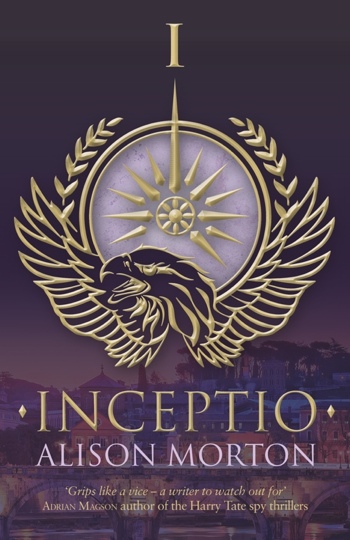
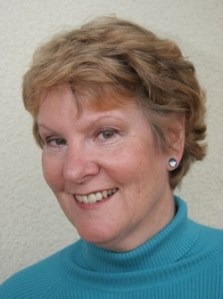
I have great pleasure in welcoming Alison Morton to my blog. We met during a writers’ retreat in Portugal last year and I was hugely impressed by the quality of Alison’s writing and her commitment to see her novel in print. I’m delighted to say that INCEPTIO, Alison’s debut novel is published today.

 Tell us how you got started, Alison

An eleven year old fascinated by the mosaics in Ampurias (huge Roman site in Spain), I asked my father, “What would it be like if Roman women were in charge, instead of the men?” Maybe it was the fierce sun boiling my brain, maybe it was just a precocious kid asking a smartarse question. But clever man and senior ‘Roman nut’, my father replied, “What do you think it would be like?” Real life intervened (school, uni, career, military, marriage, motherhood, business ownership, move to France), but the idea bubbled away at the back of my mind.

I’d play with words much of my life – playwright (aged 7), article writer, local magazine editor, professional translator and dissertation writer. But I came to novel writing in reaction to a particularly dire film; the cinematography was good, but the plot dire and narration jerky.

‘I could do better that,’ I whispered in the darkened cinema.

‘So why don’t you?’ came my other half’s reply.

Ninety days later, I’d completed the first draft of INCEPTIO, the first in the Roma Nova thriller series.

Of course, I made the classic mistake of submitting too soon, but had some encouraging replies. Several rewrites later and I’d had some full manuscript requests, even from a US agent (INCEPTIO starts in New York)! I had replies like ‘If it was a straight thriller, I’d take it on’ and ‘Your writing is excellent, but it wouldn’t fit our list.’

I was (am!) passionate about my stories so I decided to self publish with bought-in publishing services. Using very carefully chosen high quality professional backing (editing, advice, registrations, typesetting, design, book jacket, proofing, etc.), I’ve found it a fantastic way for a new writer to enter the market.

How is an “alternate history thriller” different from a normal thriller? 

Alternate history is based on the idea of “what if”? What if King Harold had won the Battle of Hastings in 1066? Or if Julius Caesar had taken notice of the warning that assassins wanted to murder him on the Ides of March? Sometimes, it could be little things such as in the film Sliding Doors, when the train door shuts and Gwyneth Paltrow’s character splits into two; one rides away on the train, the other is left standing on the platform.

The rest of the story, or history of a country, from that point on develops differently from the one we know. In my book, Roma Nova battled its way from a small colony in the late fourth century somewhere north of Italy into a high tech, financial mini-state which kept and developed Roman Republican values, but with a twist. It’s really fun working this out! But you really have to know your own timeline history before you can ‘alternate’ it. The thriller story then takes place against this background.

Stories with Romans are usually about famous emperors, epic battles, depravity, intrigue, wicked empresses and a lot of sandals, tunics and swords. But imagine the Roman theme projected sixteen hundred years further forward into the 21st century. How different would that world be?

So what’s INCEPTIO about?

New York – present day, alternate reality. Karen Brown, angry and frightened after surviving a kidnap attempt, has a harsh choice – being eliminated by government enforcer Jeffery Renschman or fleeing to the mysterious Roma Nova, her dead mother’s homeland in Europe. Founded sixteen centuries ago by Roman exiles and ruled by women, Roma Nova gives Karen safety, a ready-made family and a new career. But a shocking discovery about her new lover, the fascinating but arrogant special forces officer Conrad Tellus who rescued her in America, isolates her.

Renschman reaches into her new home and nearly kills her. Recovering, she is desperate to find out why he is hunting her so viciously. Unable to rely on anybody else, she undergoes intensive training, develops fighting skills and becomes an undercover cop. But crazy with bitterness at his past failures, Renschman sets a trap for her, knowing she has no choice but to spring it…

And next? I’m polishing up PERFIDITAS (betrayal), the second book in the Roma Nova series before it goes to the editor. You can find INCEPTIO on Amazon UK  and Amazon US

You can read more about Alison, Romans, alternate history and writing here:

Blog: http://www.alison-morton.com

Facebook: http://www.facebook.com/AlisonMortonAuthor

Twitter: @alison_morton

5 Comments »