Book blogger Victoria Bucknell offers very thoughtful reviews (you can read her thoughts about The Secret Life of Carolyn Russell here). When she approached me with an invitation for an interview, I was keen to accept. I’m pleased to share the Q&A through the link below. If you’re a writer and have a new release, you may be interested to know that Victoria is currently accepting review requests.
The Secret Life of Carolyn Russell by Gail Aldwin #NewRelease #TuesdayBookBlog
Reviews are so important to the success of a novel and it’s pleasing to see how The Secret Life of Carolyn Russell is being received by readers. Here is a thoughtful review from Lizanne Lloyd as part of her #TuesdayBookBlog posts (which are well worth reading). When posting on Amazon, reviews don’t have to be long, just a few words would be very welcome.
🇬🇧 http://loom.ly/N2ow-gU
🇺🇸http://loom.ly/3S3iqLc

A true-crime podcaster investigates a decades-old suspected abduction, in this powerful psychological suspense novel.
1979 Sixteen-year-old Carolyn Russell grows increasingly infatuated with her school mathematics teacher who is also giving her private lessons. Then she disappears.
2014 Struggling journalist Stephanie Brett creates a true-crime podcast focused on the disappearance of Carolyn Russell. By digging deep into this mysterious cold case, her confidence and flagging career are boosted. But after she confronts the suspects—and talks to a potential witness—the leads dry up. However, Stephanie refuses to let the story rest . . .
Can a small-time journalist with a shoestring podcast really hope to reconstruct the ultimate fate of Carolyn Russell after all these years, or are some secrets best left buried?
My Review
It is interesting to read a dual time novel where both times are familiar parts of your life. The disappearance of a 16-year-old girl in 1979 would…
View original post 443 more words
Q&A with Alice Fowler
As with many of the authors I’ve interviewed on The Writer is a Lonely Hunter, Alice and I first met on social media. We both commented on Tweets from the Women Writers Network account, and as I became more aware of Alice through her online presence, it was a delight to realise we had things in common including projects coming to fruition in July. While you don’t need to know anything more about The Secret Life of Carolyn Russell, I’m pleased to introduce Alice and her outstanding short story collection, The Truth Has Arms and Legs which will be released by Fly On The Wall Press on Friday 14 July 2023.


About Alice
Alice Fowler is an award-winning writer of short stories and longer fiction. She won the Historical Writers’ Association short story competition in 2020 and the Wells Festival of Literature short story competition in 2021. Other stories have been short- and long-listed in prizes and printed in anthologies. Her historical novel was longlisted for the 2021 Stylist Feminist Fiction Prize.
Alice has a degree in Human Sciences from Lady Margaret Hall, Oxford and worked as a national print journalist until 2006.
She lives in Surrey with her husband and teenage sons, and loves theatre, tennis and walking in the Surrey Hills.
About The Truth Has Arms And Legs
Delve into a world of change and reinvention. Where relationships are as delicate as turtle eggs, and just as easily smashed.
This poignant short story collection explores pivotal moments that transform our lives. Jenny, whose life is defined by small disasters, discovers a more generous version of herself. A traveller girl might just win her race and alter her life’s course. A widow, cut off in a riverside backwater, opens her heart to a stranger.
In this captivating collection, readers will be moved by the raw vulnerability of human connection, and the resilience that enables us to grow and thrive. In change, Alice Fowler’s characters find the ability to be truly free.
Q&A
The About Alice page on your website says you write short stories and longer fiction including work on a historical novel. What are the benefits of writing both short form and long pieces? Is your process for writing short fiction and longer fiction different?
Thanks so much for having me on your blog Gail! I particularly like this question as it really makes me think about my writing process. When I begin a short story, I often don’t know where it will end up. Or, if I do have an idea of the ending, I certainly don’t know how I’ll get there. I really enjoy that feeling of discovery. When it’s going well, writing can feel like painting: you add a dab of this colour, and a dab of that one, and then stand back to judge the overall effect.
For me, this approach works very well for short stories precisely because they’re short. You can throw all the plates up in the air and then (hopefully) catch them again. I write my stories from a place of pleasure, and I hope that readers sense that as they read.
With novel writing, this ‘pantser’ approach is riskier. I still like to write this way when I can, but it sometimes sends me off into blind alleys. Ideally when I begin a chapter in my novel I have more of plan – and stick to it! – while leaving enough unknown to make the writing process fun and interesting.
Read the rest of this entry »It’s been all go at HQ Aldwin
First there was my daughter’s wedding. Here is the gorgeous girl and her lovely husband.
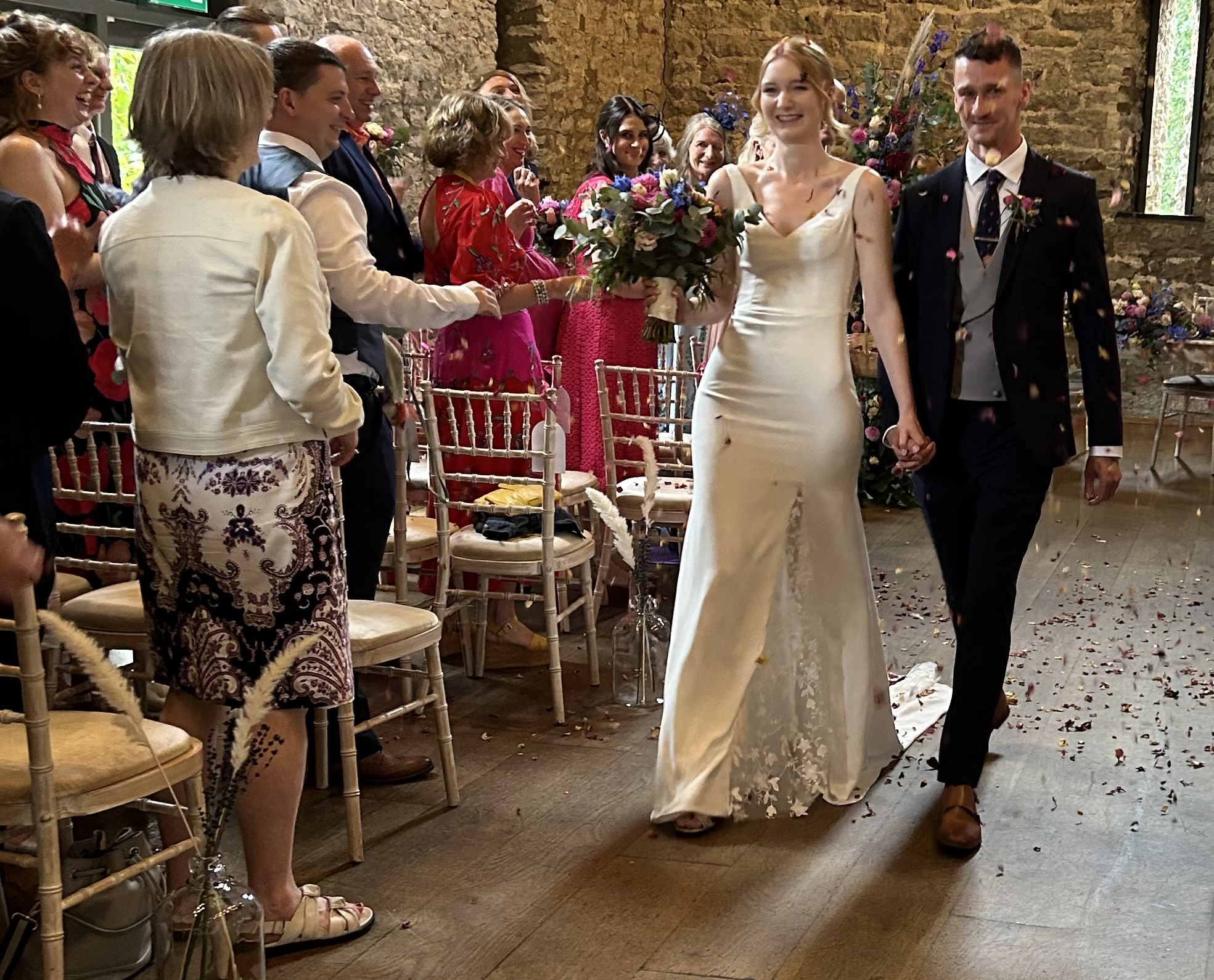
I wrote a poem for the happy couple and read it at the service.

Then I was in a drama showcase where I performed in a scene from Ladies Day as Pearl, a fish packer from Hull. (I even managed to crack a northern accent.)
Read the rest of this entry »Happy publication day to Carolyn Russell

It’s taken three years from writing the very first line of The Secret Life of Carolyn Russell to arriving at publication day. There have been many ups and downs in reaching this point, but I’m proud of this story with its mystery and underlying messages that show changes in the moral code over thirty years and provide glimpses into racism in a rural setting. Book blogger, Linda Hill has posted an insightful review covering many of the elements I hoped to get across in her publication day review here.
If you’ve ever wondered how an author spends publication day, here’s my schedule:
7am: write a blog post and send (timing has slipped a bit here)
8am: join Writers’ Hour to finish a Q&A kindly offered by book blogger Victoria Bucknell
9am: check Amazon rankings to see if the novel has made a splash (repeat hourly every ten minutes)
The Secret Life of Carolyn Russell
On the evening before publication day, it’s such a thrill to receive this review of The Secret Life of Carolyn Russell which digs deep into the story and highlights important takeaways. Have a read and tell me what you think in the comments. Thanks!

So often I look back at my school days and wonder how on earth we used to accept certain behaviours as normal. From the teacher who would regularly hurl the wooden blackboard cleaner towards anyone misbehaving, to the poor souls spanked in assembly in front of the entire school, it was a whole different world to 2023. The Secret Life of Carolyn Russell by Gail Aldwin is partially set in the late 1970s and is a stark reminder of how life was so different for young girls back then. This is a clever, engaging and well-written mystery novel that will keep you guessing to the very end. It’s the perfect summer holiday read.
Our story is told by 2 similarly intriguing female protagonists. First we meet Stephanie, a small town journalist who is down on her luck – she’s just been made redundant and has had to rent out a…
View original post 285 more words
The Secret Life of Carolyn Russell – Gail Aldwin
Book bloggers do an amazing job of spreading the love for books and reading. Books by your Bedside is a fine example where Victoria shares perceptive and thought-provoking reviews. She’s written an outstanding post for ‘The Secret Life Of Carolyn Russell’ for which I’m very grateful. Why not hop over and take a look at Victoria’s reviews? You might find a little known title that you’ll love nestling there.

Published By: Bloodhound Books
Pages: 310
Released On: 03/07/2023
A true-crime podcaster investigates a decades-old suspected abduction, in this powerful psychological suspense novel.
1979:Sixteen-year-old Carolyn Russell grows increasingly infatuated with her school mathematics teacher who is also giving her private lessons. Then she disappears.
2014: Struggling journalist Stephanie Brett creates a true-crime podcast focused on the disappearance of Carolyn Russell. By digging deep into this mysterious cold case, her confidence and flagging career are boosted. But after she confronts the suspects—and talks to a potential witness—the leads dry up. However, Stephanie refuses to let the story rest . . .
Can a small-time journalist with a shoestring podcast really hope to reconstruct the ultimate fate of Carolyn Russell after all these years, or are some secrets best left buried?
*****
Thanks to Gail for gifting me an advanced copy of her new book in return for an honest review.
I…
View original post 749 more words
Excitement is building…
for the release of The Secret Life of Carolyn Russell

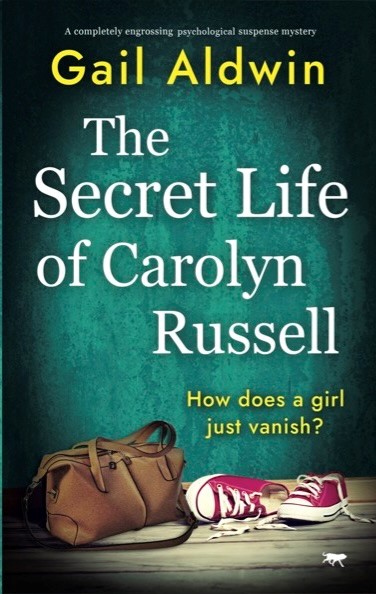
At two o’clock this afternoon Bloodhound Books officially revealed the cover of my new novel The Secret Life of Carolyn Russell. Doesn’t it look splendid? The pumps and tote bag give a distinctly 1970s vibe to the mystery while the rest of the branding suits the psychological suspense elements. To be honest, it’s a relief to have this off my desk and going out into the world in less than 4 weeks. The final stages of bringing a novel to publication is a mixture of joy and panic. Release day is Monday 3 July but if you’d like to get your UK copy organised early, here’s a Kindle pre-order link. (The paperback version should be available shortly.) My thanks go to Suzanne Goldring, Joanna Barnard and Jacquelyn Mitchard for the endorsements.
An enthusiastic early reader has posted a five-star review on Goodreads. It’s a real shot in the arm when someone who’s read my previous books says The Secret Life of Carolyn Russell is her favourite to date.
Read the rest of this entry »Welcome to Maria McDonald, author of The Devil’s Own
Maria and I are both published by the leading independent fiction publisher Bloodhound Books. On signing my contract, I was encouraged to interact with other Bloodhound Books authors through a private Facebook group. This was where Maria and I met and we’ve taken this connection to a new level through this interview. I’m sure you’ll find Maria’s writing journey inspiring and her debut novel a sinister yet fascinating story. Here’s the blurb for The Devil’s Own.
A set of century-old diaries found in an attic draws an Irish couple into a tale of murder and madness, in this absorbing new suspense.
After forty years in the Irish army, Brian is looking forward to retiring and spending time with his wife—though he worries about adjusting to civilian life. While clearing the attic before they move house, he makes a discovery: three journals dating back to the early twentieth century.
One was written by Arthur, an ex-Connaught Ranger; another by Arthur’s wife, Edith, a colonel’s daughter; and the third by Henry, a British soldier and Arthur’s best friend.
Brian and his wife are soon engrossed in reading the diaries and following the intertwined stories of these three people from the past. But it soon becomes chillingly clear that these diaries contain more than the daily adventures of ordinary lives. Because one of the three is a killer . . .


Thank you, Maria, for joining me on The Writer is a Lonely Hunter and agreeing to answer the questions that struck me while reading your impressive debut novel.
What steps brought you to write The Devil’s Own?
The gem of the idea for this book has been lying dormant in the back of my mind since I first saw the Curragh Camp, way back in 1978. I was working, waitressing with my mother at a dinner dance in one of the messes. My career as a waitress was very short-lived! During a break over a cup of tea, we got talking to the army chef about the building we were in, the history of the camp and the general consensus on the night – if only walls could talk.
Little did I know I would end up living in the camp, albeit for a short time around 1993. The Curragh is filled with history, going back to the days of British rule. My husband was born in the Curragh, grew up there. At one stage it had a vibrant community, completely self-contained. I was fascinated by the stories I heard from his family and our friends about the people who lived in the camp. I didn’t write them down at the time. It would take another forty years for that first spark of an idea to come to fruition.
Read the rest of this entry »How true crime podcasts inspired ‘The Secret Life of Carolyn Russell’ a psychological suspense mystery

In December 2022, Chris Dawson, a former PE teacher and rugby league star was sentenced to 24 years in prison by the New South Wales Supreme Court in Australia for the murder of his wife decades earlier. Although Lynette’s body has never been found, The Teacher’s Pet podcast shone a light on Chris Dawson’s sordid affair with a pupil from the school where he worked, the obsession with her that followed, and the disappearance of his wife. Release of the podcast hosted by Hedley Thomas in 2018 finally persuaded police to reinvestigate the case and charges were brought.
I became hooked on true crime podcasts in early 2020. At the time, I was living in a remote town in the north west of Uganda and volunteering at a nearby refugee settlement. The power supply was very unreliable and cuts happened most evenings at eight o’clock. With no light to read by, I was often in bed and under my mosquito net around the same time. The nights were long and hot so I spent many hours listening to the podcasts I’d downloaded at a local hotel. I developed a fascination for crime stories from around the world but it was the series podcasts that allowed me to tune into the twists and turns that created crucial listening. It occurred to me I could learn something from the way podcasts were put together that could inform the plotting of my own fictional writing.
Prior to leaving for Uganda, I had established a regular writing routine which meant getting up early to focus on a writing project before the working day started. I hoped to continue this routine while living overseas but the demands of volunteering on the settlement and the inconsistent electricity supply put an end to that ambition. Power in the town kicked in for about 40 minutes at seven in the morning, and at that time there was always a rush to prepare for the day ahead where I worked with colleagues to improve the social and emotional wellbeing of refugee families fleeing conflict in South Sudan. It was challenging and rewarding work which left little headspace for creativity. Instead, I became absorbed in the refugee stories I collected as part of my work, and the podcasts I listened to each evening. With a wealth of material stored away, I was empowered to write again following repatriation to my home in Dorset, UK due to Covid-19.
Read the rest of this entry »


