the writer is a lonely hunter

writing by Gail Aldwin and other authors

Should libraries charge reading groups for book loans?

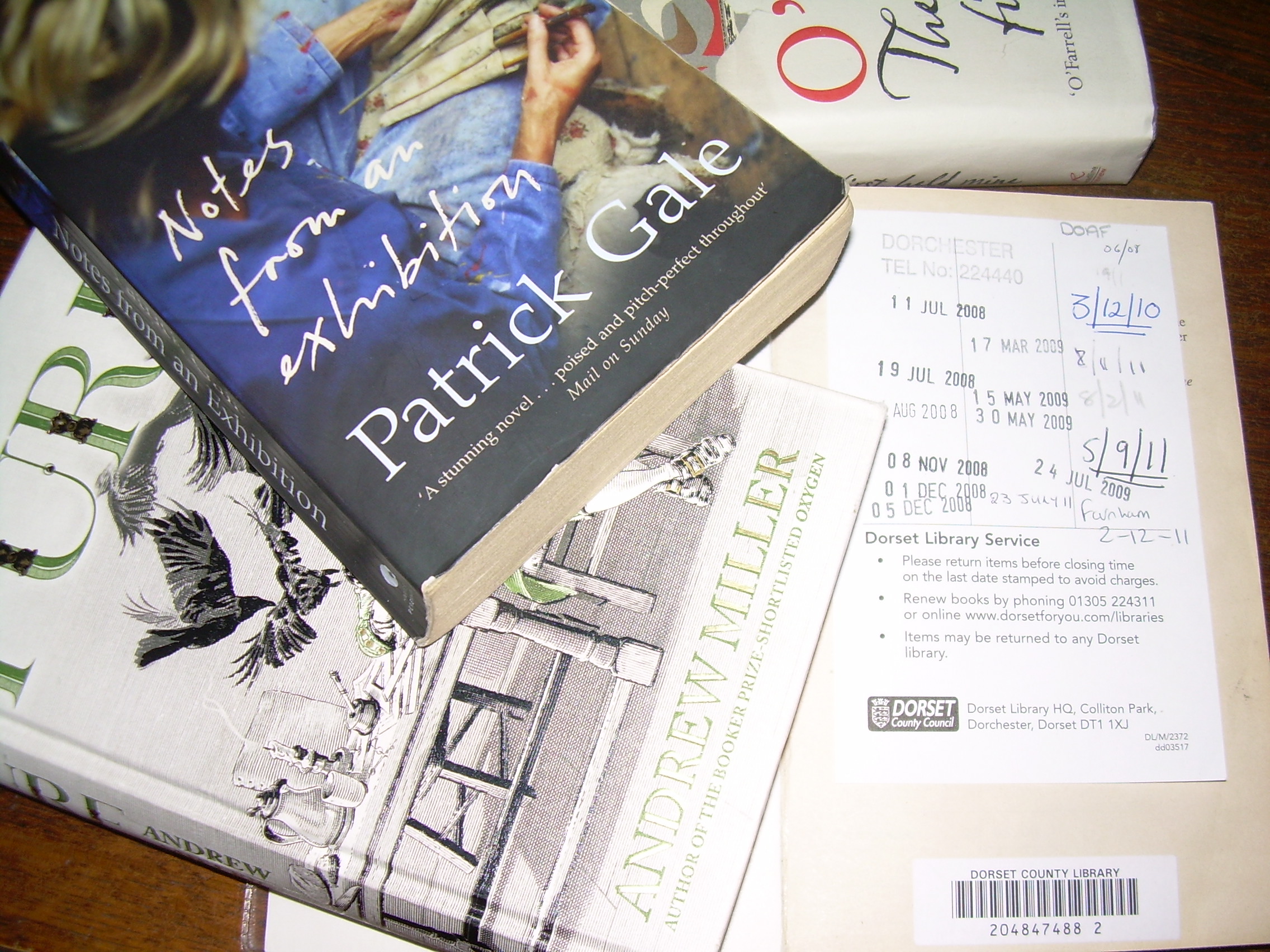
Unlike many reading groups (where members purchase a copy of the book to discuss) in Dorset we are fortunate to have the support of the library service. Book groups in the county can reserve up to twelve copies of available books (there is a list of titles to select from – all texts are over a year old) and the books are loaned for an extended period of eight weeks.  Sets of books are collected from a local branch although due to the County Council funding cuts there are considerably fewer libraries than previously.

Enquiries were recently made to all 360 reading groups in Dorset to ask whether members would be willing to make a voluntary financial contribution for this service. 110 reading groups responded to the consultation with 83% indicating that they would be prepared to make a donation.  In my reading group much discussion continues. While the service is excellent, there is a concern that donations may subsidise other aspects of the library service rather than being a dedicated support for reading groups. There may also be a review of income generated by voluntary contributions to consider whether a set fee should be applied. Does this lead us along the slippery path of  requiring payment for any book loan? Perhaps this is an over-reaction but I’d be interested in hearing your views.  Please use the comments box to contribute to the discussion.

5 Comments »

Interview with Louisa Adjoa Parker

Louisa is a writer, poet and Arts Project Co-ordinator who has lived in the West Country since she was 13. Her first poetry collection, Salt-sweat and Tears was published by Cinnamon Press to critical acclaim in 2007. She has also written a book and exhibition about the history of African and Caribbean people in Dorset over the past 400 years, both entitled Dorset’s Hidden Histories. Louisa has recently worked on a project using images and stories to celebrate multi-ethnic Dorset. Funded by Arts Council England and Dorset County Council, the exhibition and book is called All Different, All Dorset was launched in September 2011. Louisa is passionate about equality and the Arts, and hopes to inspire people from a range of backgrounds to become interested in writing.  

Let’s start with your writing journey

I wrote a few adventure stories when I was about six, which my mum said were like Enid Blyton books and I still have a poem written at that time. When I was a teenager I kept a diary for three years and wrote about everything that happened to me. As an adult, I turned to letter writing to try to sort out problems with relationships. In 2002, I went to Exeter University to complete the degree I’d started with the Open University, and I began writing poetry alongside the essays and coursework. I was encouraged by Selima Hill and I had a poem published in a magazine. Getting published was exciting and encouraged me to write more. I realised I had a lot to say about being dual heritage and growing up in white communities. My Dad is Ghanaian and came to England in the late 60s for education and he met and married my mum and had three children with her. We lived in Yorkshire, Cambridgeshire, and then when my Dad left we moved to Devon. Growing up knowing only the white side of my family was weird. No one wanted to talk about my background. Writing helped me to explore unresolved issues around my identity. It helped me come to terms with some of the things that had happened, racism and domestic violence.

What inspires you to write now?

Lots of different things, but I usually write about emotional and difficult subject matter, like relationships and parenting. When I’m writing poetry ideas come to me. For example, I read a newspaper article about a young girl who left her dead baby in a railway station bin and I wrote a poem about it that was shortlisted for the Bridport Prize in 2010.

How does writing prose compare to writing poetry?

I research and write non-fiction books relating to Black History but I always look for the story in whatever I write. I’ve started my first novel which came from a seed of an idea but I find novel writing more challenging than poetry because of the length and the need to navigate the story in my head. Activating the imagination in a novel is a different process to describing an event through poetry. Poetry leaps into my mind through an idea or image, but the novel takes more working at.

What do you think about writing competitions?

I entered the Cinnamon Press Poetry Competition in 2005 and was long listed. The following year I entered again and had my collection of poetry Salt-sweat and Tears published as the prize. Now, I enter competitions occasionally, but it’s usually dependent on having the time and energy to submit and the money to pay the submission fee. It’s unfortunate that the cost of entry excludes some people. I entered the Mslexia First Novel Competition in 2011 and was longlisted for my novel, The Red Behind Her Eyes. The story is about a teenager who hits back against her stepfather who inflicts violence on the family.

I think it’s worth entering competitions but don’t get too hung up about it. It’s easy to imagine you’ve got a good chance of winning and being discovered, only to be disappointed. I’d encourage people to enter, because it’s good to take part, but have realistic expectations.   

Which authors and poets have most influenced you?

With poetry I was influenced in the early days by Selima Hill. With novels, I’ve read thousands and can’t remember offhand the many writers I love! At the moment I’m working my way through Emma Donoghue’s books. I like crime novels such as those by Ruth Rendell which, although aren’t great works of literature, tell a good story. I am often drawn to the darker side of life through fiction. I like writing that’s authentic, that doesn’t have to use big words to say what needs to be said. Literature doesn’t need big words – I think this excludes some readers. I do relate to black/dual heritage writers as I can understand their experiences. I love Jackie Kay’s work, fiction and poetry. Other poets I admire include John Siddique, Moniza Alvi, Linton Kwesi Johnson, Helen Dunmore, Catherine Smith, Julia Copus and many many more. I am quite fussy about both poetry and prose, and it has to somehow grab me, draw me in and really say something to me or I can’t be bothered to read it.

What tips do you have for new writers?

Keep writing, even if you think it’s rubbish. Share your work with other writers, in person or on-line. Sometimes I get family members to read my work but it’s better to get people who write to comment on your work. Read widely – you’ll get inspired by different writing styles and stories. If you read, you’ll find out what’s being published, what’s topical and how your writing compares. Keep writing because the process is important – you’ll develop skills by practising.  

Thank you, Louisa

2 Comments »

Celebrate reading and writing, 10.03.12, £15

Dorset County Council Library Service is hosting its first Readers’ & Writers’ Day on 10 March 2012 to celebrate the creativity of reading and writing. Titled Sharing the Passion, the day offers the opportunity to join authors Robert Goddard, Sophie Hannah, Lindsey Davis, Patrick Gale and Natasha Solomons to share the passion generated by talking about books and writing. There will be morning and afternoon creative writing workshops and book discussion sessions. The cost for the whole day (including lunch) is only £15, making it well worth spending a day in Sturminster Newton, Dorset. I’ve already booked my place (early bird bookings are £13 until 16 January) and I hope to see you at the event.   Find further information here.

10 Comments »

Moving forward: writing groups

I love a fresh start and now that the tree is down, the cards put away and the bottles are in the recycling, I’m ready to greet 2012 with my first post of the year.  Thank you for following me and I hope that I’ll be able to generate discussion about books and writing. In this post, I’m thinking about writing groups.

Receiving feedback on written work is always valuable.  Typos alone are difficult to spot and being confident that you’ve met the needs of your reader is never easy.  That’s when the advice of a critical friend is particularly helpful.  Presenting work for comment can be a daunting experience but one that may identify strengths and areas for development.  Writing groups are an excellent way to share work, particularly when there is strong leadership/facilitation and committed members who ensure that participants enjoy a supportive environment. If I were able to have an ideal group, it would include the following:   

  • 4-6 people, including some experienced writers
  • A focus either on poetry or prose
  • Monthly scheduled meetings
  • Opportunities for critical feedback, writing activities and tasks
  • A comfortable venue with access to refreshments

Indeed, my ideal is similar to the writing group I currently attend but it’s not always easy to find a group that works for you.  As an alternative, you might like to consider starting your own group, but if you go down this route, it is worth ensuring that the boundaries are clear:

  • Develop terms of reference that identify what the group hopes to achieve, how the group will operate, ground rules
  • Be clear about the roles and responsibilities for participants, facilitators/group leaders
  • Have an understanding of group dynamics

Alternatively, it’s worth considering an on-line forum. My New Year Resolution is to showcase an example of my writing each month on this blog. By linking the post to the #fridayflash community, I increase my visibility as a writer and receive feedback on my work.  It’s also a fun way to meet other writers, read their work and share experiences. If you’re interested in becoming part of an on-line writing community, have a think about joining this group.

http://madutopia.com/blog/fridayflash/what-is-fridayflash/

10 Comments »

Looking ahead…

Didn’t get a Kindle for Christmas?  Don’t worry here’s the Kindle for PC free download

For some playful writing ideas, please see Robert McCrum’s Fifty things I’ve learnt about literary life.

For a literary TV treat, don’t forget to watch Great Expectations on BBC1 at 9pm on 27,28 and 29 December. 

My blog during 2012, will include:

  • an interview with Louisa Adjoa Parker as she moves from published poetry into writing her first novel
  • a focus on contemporary writers taking inspiration from living in Dorset
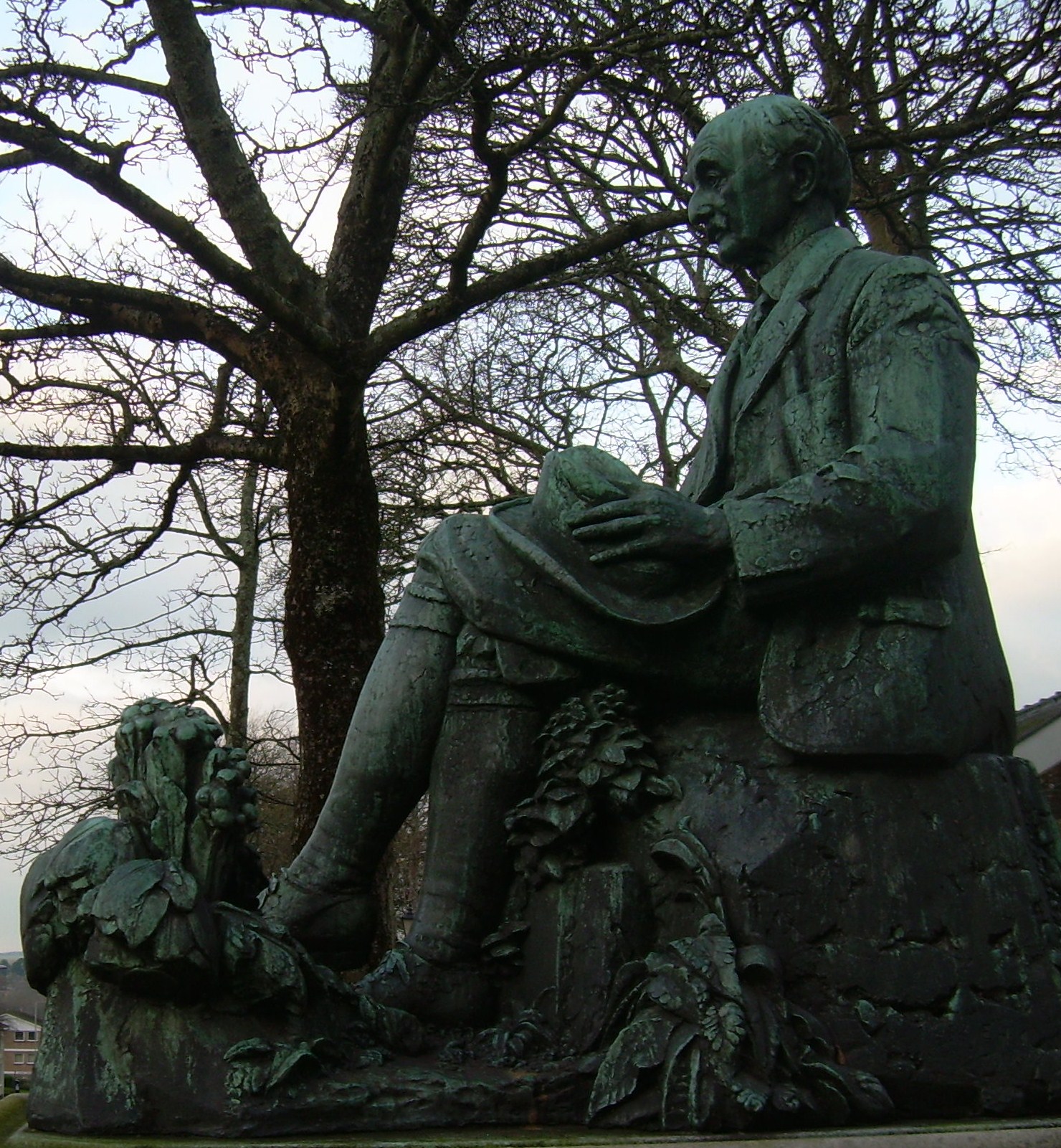
  • Thomas Hardy in Dorchester

What are your writerly resolutions for 2012?

Leave a comment »

Clever Titles

I love clever titles but because  copyright law means titles cannot be protected (except in the case of sequels, like Harry Potter) it can be confusing!   Take Lost in Translation which is the title of a Hollywood film and a delightful book by Eva Hoffman

Eva’s family survive the Holocaust by hiding in the Ukraine. When she’s 13, the family leave Cracow and emigrate to Canada where Eva learns about the importance of language and identity.  The autobiography is subtitled: A life in a new language, and one of my favourite references is where Eva describes words in English, the new language she learns, as being like pearls on her tongue. 

Of course there are similarities between the  film and the book, for example, the sense of isolation when living in a a new country. However, the film is set in Tokyo and follows the development of a relationship between the two main characters (played by Bill Murphy and Scarlett Johansson) making the film part comedy, part romance. 

Another clever title I like is Foreign Bodies with novels variously written by Amanda Craig, Cynthia Ozick and Candy Neubert (with another list of authors using the title Foreign Body).  My favourite title is I Know Why The Caged Bird Sings which is the  first volume of Maya Angelou‘s autobiography.  A clever title that is unlikely to be copied.

If you’re interested in entering a competition to work the name of a fruit into a spoof film title, please see Circalit to enter by Twitter.  Good luck!

Leave a comment »

Friday Flash: Belemnite

The wind lashes my cheeks and strands of untamed hair escape from my scarf. False footed by the incline, I lose my nerve and shelter by the rocks. But Tommy strides the beach, his eyes fixed to the ground. Each time he shows a specimen to the expert, his shoulders hunch when the bearded man shakes his head. Other fossil hunters in flapping raincoats scurry like crabs, picking and turning pebbles. Screwed up with anticipation, Tommy continues to look, forcing over boulders too heavy to carry, examining the stones like jewels beneath. When it’s time to walk back, he stiffens, shoving his hands in his pockets, shrugging off the arm I place around his shoulders. With his elbows sticking out like wings, he bends over and concentrates on searching with each step. The others wander off, but I stay and watch him, my face wet with drizzle. At a rock pool he drops to his knees, the water like obscured glass, he trails a finger through the weeds and shells. Removing a cylinder of black stone, he runs along the shingle to catch up with the guide.

As he walks back he smiles, his wet hair springy like a sheep’s coat, a glint in his navy rimmed eyes.

‘It’s a Belemnite, Mum.’ Tommy places the bullet shaped fossil in my hand; I turn it over studying the surface marked with indents.

‘Well done, Tommy. Now you can start a collection.’

‘Naah.’ He crinkles his nose. ‘It’s a present for you.’

8 Comments »

What’s in a title?

I’m never happy with my writing unless I find a suitable title.  This is not always easy to do and I tend to go for one-word titles as a way of shortening the search.  I notice that several of Toni Morrison’s books have one-word titles including Beloved, Paradise and Jazz.  I frequently wonder if a one-word title gives too much information away, revealing the theme of the novel on the front cover. I had a feeling that Ugly by Constance Briscoe might have set a trend in the use of one-word titles for tragic life stories, although a quick look on the bookshelf in Waterstones seemed to suggest otherwise. Interestingly, Room by Emma Donoghue is fiction and relates to the abduction and rape of a young woman and the birth and imprisionment of mother and child.  The story is narrated by five-year-old Jack who has the habit of omitting definite articles and refers to nouns only as ‘room’, ‘rug’, ‘lamp’. It’s an interesting literary device to illustrate his otherness but unlikely when his mother provides a good model of standard English. 

Finally, I’d like to mention Broken by Daniel Clay.  This is an unusual debut novel that reveals community tensions when Rick Buckley is beaten up as the result of a  false charge of rape by a neighbour’s daughter. He becomes Broken of the title and teeters on the edge while his parents agonise.  Daniel is now working on his second novel and hosts a blog which offers advice for aspiring writers. He’s also willing to look at your covering letter, synopsis and opening pages as a way of encouraging writers to make successful approaches and get published.  I suggest that anyone who is struggling to make headway through the slushpile should have a look here.

Leave a comment »

More debut novels

Continuing the theme of debut novels, I’m delighted Kathryn Stockett’s The Help, is enjoying much success.  Not only is it a hugely successful book but the recent film adaptation made $166 million at the box office in the USA.   Skeeter, a young 1960s Missippissi woman collects the stories of black maids and the hardships they routinely suffer, in a bid to become a published writer.  The narrative breaks one of Elmore Leonard’s 10 rules of writing, in that regional accents are not used sparingly. As a reader, it’s a challenge to ‘tune into’ the patterns and sounds of the American south, but worth the effort.  Aibileen’s voice is particularly strong, showing her maternal side, and the relationship with Mae Mobley, the child of her white employer.

Another debut novel that breaks the same rule about using dialects is The Tin Kin by Eleanor Thom. Set in 1950s Scotland, a gypsy called Jock is murdered and the story shows the consequences for his family and later generations.  Some of the alternating narratives are in full dialect, giving characters like ‘Auld Betsy’ the grandmother a distinctive voice.

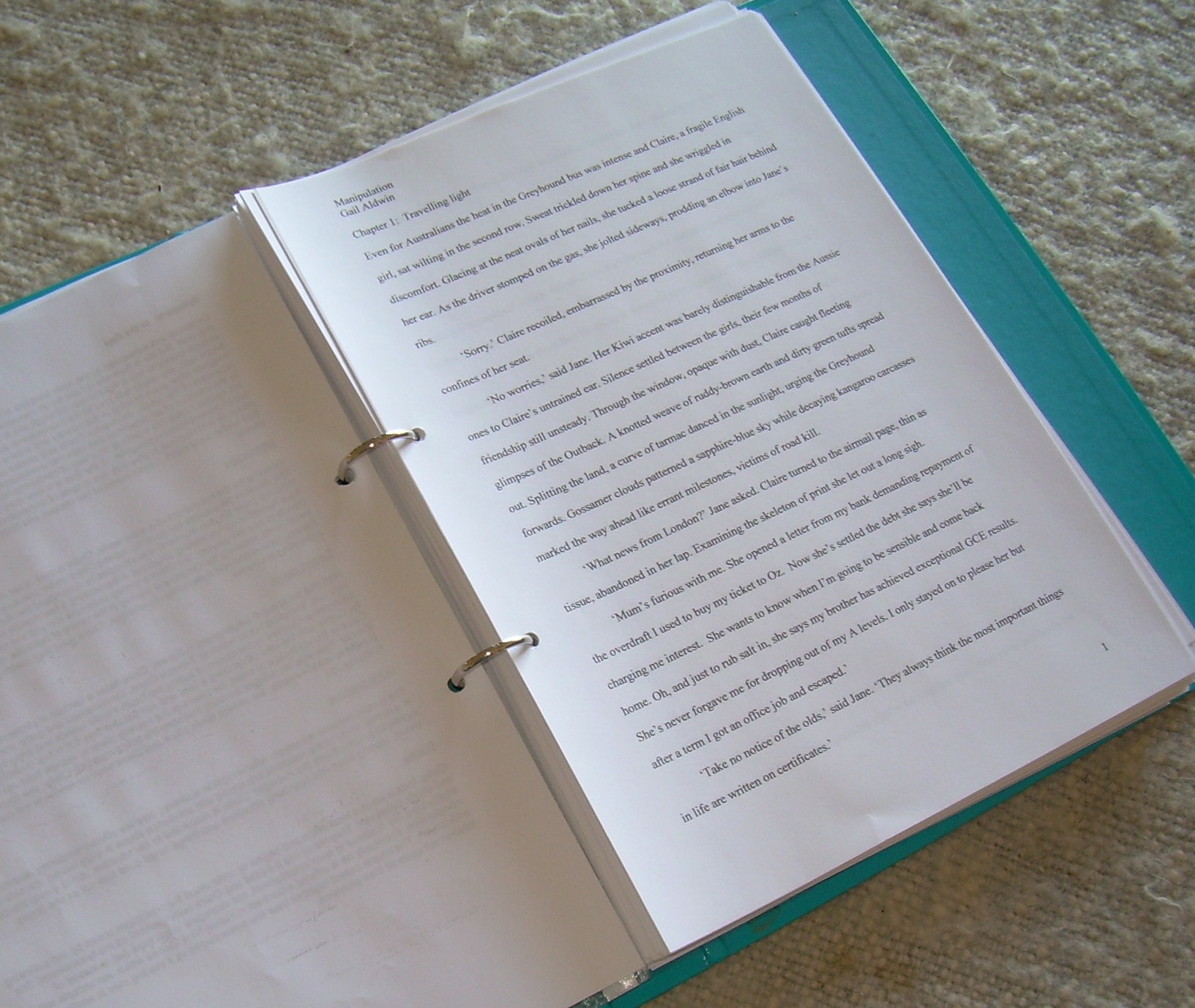
In my manuscript Manipulation, I have a character with a Scottish accent.  Bearing in mind the success of the above novels, I can but hope that Elmore Leonard’s rules are there to be broken. 

To read more about Elmore Leonard’s 10 rules of writing click here.

Leave a comment »

The writer is a lonely hunter

I make a habit of reading debut novels to get a feel for the competition: who’s been successful, the quality of the writing, what makes a book stand out amongst the millions of manuscripts that are submitted.  Some get recognition quickly, like Pidgeon English by Stephen Kelman which was shortlisted for the Booker.  The story is told from the viewpoint of  an eleven-year-old boy, newly arrived from Ghana, and completely unaware of the dangers of becoming involved with the gang culture of East London.   My favourite debut novel is currently After the fire, a still small voice by Evie Wyld.  Set in Outback Australia, the novel provides a vivid sense of otherness and the on-going effect of involvement in conflict, in this case, the Korean War. I’d like to write a book as powerful as that!  I didn’t realise until quite recently that The Heart is a Lonely Hunter was the debut novel by Carson McCullers.  I took  the book on honeymoon over twenty years ago, thinking my husband and I would read aloud to each other.  Perhaps it wasn’t the greatest choice for a romantic interlude, particularly when the the test match was on television, and I finished the book by reading it silently.  The title stays with me though, which I’ve now adapted to acknowledge the challenges of being an isolated writer: the writer is a lonely hunter.

Leave a comment »