the writer is a lonely hunter

writing by Gail Aldwin and other authors

Relationship Strings

I spent the weekend at the VSO offices in Kingston with nine other international volunteers. We took part in facilitation training to assist in the development of our roles at educational settings based in Myanmar, Rwanda, Nepal, Malawi and Uganda. What a lovely bunch of people! Our WhatsApp group is now buzzing with feedback.

One of the things we educationalists find it hard to get our heads around is the idea of ‘passing the stick’. That is, we should adapt our ways of working so that we allow participants in our programmes to take a lead on how input should be focussed and which ideas and strategies to share and develop. As teachers, we’re too used to coming up with questions to solve, but for ownership of the process, participants need to be fully involved with identifying the areas of learning and routes to acquiring skills and confidence.

Many of you will know, I like using string so much I named my debut novel The String Games. But string is also an accessible learning resource available anywhere in the world and can be used to facilitate discussion. As a mixed group of people, the purpose of my activity was to shed light on the things we held in common. Following the directions in the participation manual, we sat in a circle on the floor and as the holder of the ball of string, I was the first to speak. I held the end of string and rolled the ball to someone who I knew I shared something with, saying their name and what we had in common. It could be that we’re both mothers, teachers, shop in the same stores, like the same food … anything really. Upon receipt of the ball, the next person hooks the string over their finger and rolls it to someone else, saying their name and the thing they hold in common. In this facilitation, I appointed roles to each of the participants so we could imagine the activity being delivered on my placement at the Bidibidi refugee settlement in Yumbe, Uganda. You can read more about the context of my placement here.

The photo below shows the string pattern that was produced as part of the activity, illustrating the links between members of the group. In terms of using this on my placement with members of host and refugee communities, it could prove to be a useful tool to inform analysis and planning.

D25E87A8-7CD1-4193-B18F-EBA0BD66FA72

Another way to use a ball of sting in participatory training is to sit in a circle and roll the ball from participant to participant whenever they wish to speak.  Holding the ball of string gives a platform to the speaker and avoids interruptions. The web that is created by hooking the string after turn taking demonstrates whether all have contributed to the discussion and whether certain members have dominated. I’m keen to try this activity at some point. Thanks to trainers Wim and Sue for their input over the weekend and to everyone on the course for their friendly support, ideas and encouragement.

My departure date for Uganda remains unconfirmed but as soon as the visa is sorted, I’ll be off.
1 Comment »

Packing for Uganda

5C5280C5-38D8-4EE7-A15A-574FA05C6C9D

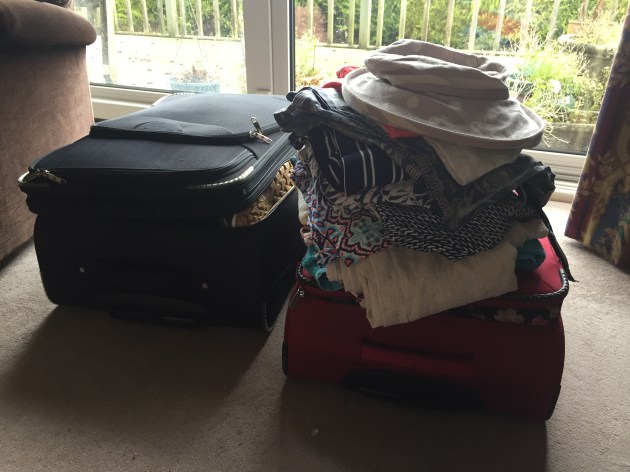
I will be leaving in December to spend four months in Uganda as an international volunteer with VSO. With advice from VSO Uganda I drew up a packing list and undertook a trial pack at the weekend. Some items had to be abandoned because my bags were overweight. Out went a supply of my favourite shampoo and shower gel, abandoned where a number of books I had hoped to read, and I slimmed down the learning resources I planned to take. I’m nearly there but my list of last-minute necessities is growing! Before I leave, I will attend a skills for working in development course and I’m currently undertaking lots of online learning. Although my fictional writing is on the back burner, I plan to use my experiences in Uganda to develop fresh writing. And blogging, of course! So here goes with a little information about Uganda and my placement.

Background

Since independence on 9 October 1962, Uganda has gone from a period of brutal dictatorship in the 1970s to political stability in the 1990s. While more than half the population (56.4%) lived below the poverty line in 1992/1993, this dropped significantly to 19.7% by 2012/2013. Uganda, the Pearl of Africa, has not experienced fighting since 2006 and now focuses support on districts in the north to improve infrastructure, growth and development in an area that was particularly affected by conflict.

North Uganda

Between 1986 and 2006 thousands of children were kidnapped from villages and forced to join the Lord’s Resistance Army (LRA) as child soldiers. Those children are now grown up and living with the legacy of extreme violence experienced in childhood. In addition, north Uganda has become a home to refugees fleeing the civil war in South Sudan.

South Sudan

South Sudan gained independence from Sudan in July 2011 as the outcome of a 2005 peace deal that ended Africa’s longest-running civil war. However, conflict in South Sudan erupted again in 2013 causing many people to flee their homes and seek refuge in neighbouring countries. There are one million refugees from South Sudan living in Uganda.

Bidibidi Refugee Settlement

The once small village of Bidibidi became a refugee settlement in August 2016. It covers 250 km2 stretching across the eastern half of the district of Yumbe where a quarter of a million refugees live. Uganda has a progressive policy towards refugees and in Bidibidi new arrivals are given land to build a house and a garden to grow vegetables. They can also work and access services. While Ugandans provide a warm welcome to refugees, when resources are in short supply, tensions can arise.

VSO in Bidibidi

In my role as an international volunteer, I will work with host and refugee communities to aid recruitment of children to Early Childhood Care and Education. Where young children are able to develop early learning skills, it puts them in a better position to complete their education. My work will focus on under-represented groups including girls and children with disabilities. Through participatory approaches, my role aims to support the protection and psychosocial needs of children and families.

8 Comments »

Off again …

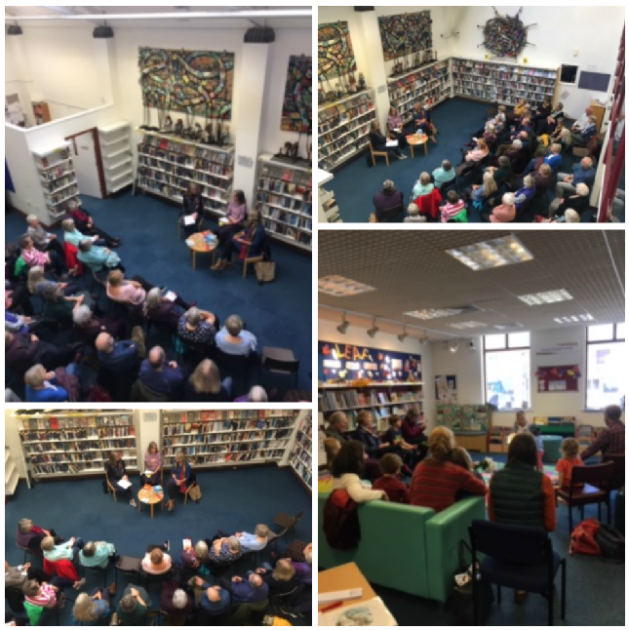
I’ve been advised that following publication, there are six months to promote a debut novel to maximum effect. So, I’ve been getting out and about with The String Games by offering input at Dorset literary festivals, including the BridLitFest where I shared a platform with Maria Donovan and Rosanna Ley.

EIdzYZjXkAIVlZf-2

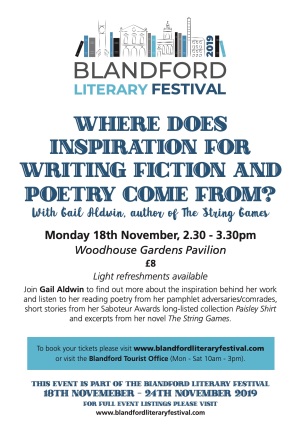
(I’m also at the forthcoming inaugural Blandford Literary Festival at the end of November.)

Posters_Where does inspiration

I’ve given talks with Dorset Libraries (love a public library) in Dorchester, Poole, Wareham and Creekmoor. An author event in Wellington Library was a good excuse to spend a weekend in Shropshire and meet up with an old friend. There have been talks for ladies’ groups, workshops with writers, public readings and even performances (one in Loughborough and the other at Scratch & Spit in Bridport). The String Games won an award for its cover design and is a finalist in The People’s Book Prize (voting for the winners commences in March 2020). Phew! I hope I’ve used my six months wisely.

As this period comes to an end, I’ve decided to refocus and use my experience of working with children and families to volunteer with VSO  at the Bidibidi refugee settlement in Yumbe, Uganda. I’m heading off at the beginning of December for four months to support enrolment of girls and children with disabilities in Early Childhood Care and Education as these groups are currently under represented. Uganda has a progressive policy in supporting refugees fleeing the civil war in South Sudan. Families are given a plot of land on which to build a house and grow produce. There is access to health services, adults can work and children are offered places in schools. After several years of working with refugee families in London, I’m excited to have this opportunity. But it doesn’t mean a hiatus in blogging and writing. On the contrary, I hope this experience will generate new and important work.

Indeed, writing plans for later in 2020 are already taking shape. I’ll be at the Stockholm Writers Festival sharing my experiences as a debut novelist in May. This is a wonderful event for new and emerging writers in a great city.  And I’ll be delivering a talk and a workshop at the Mani Lit Fest in October where reading and writing are celebrated at a town near to the home of Patrick Leigh Fermor. My children’s picture book Pan-de-mo-nium is currently with illustrator Fiona Zeichmeister and will be released next year.  The contemporary novel I’ve been working This Much Huxley Knows is nearing completion.

Watch out for post from Uganda in the coming months. David is incredibly supportive and is 100% behind me. I’m very lucky to be married to him!


1 Comment »

Three things …

The clocks have gone back, it’s a misty moisty morning in Dorset, but there’s lots for me to look forward to. Here are my latest bits of news:

unnamed-15.23.15-4

Thanks to your support, The String Games is a finalist in fiction category of The People’s Book Prize 2019. There will be a further vote March–April 2020 to decide the winner and a black tie do in London for all the finalists on 15 April 2020. Great stuff!

800px-Flag_of_Uganda.svg

In December 2019, I’m going to Uganda with VSO for four months as a volunteer at the Bidibidi Refugee Settlement. The placement draws upon my experience of working with refugee families in London and the skills I developed to support parental involvement in children’s learning. I’ll be assigned to an early childhood care and education centre in order to aid recruitment to early education for girls and children with disabilities. You can read more about Bidibidi in this article from National Geographic. I’m looking forward to living, learning and contributing in Uganda.

FB788AF6-A421-4D08-9ABA-16EC6C71B1B7_1_201_a

In May 2020, I’ll be in Sweden at the Stockholm Writers Festival. Last year I enjoyed this wonderfully inspiring event as a participant – next year I return as a faculty member. If you’re interested in attending an innovative writing festival in a fascinating city, you can’t do better than this. Booking opens (with a 15% early bird discount) today, 1 November 2019.

3 Comments »