the writer is a lonely hunter

writing by Gail Aldwin and other authors

Pt 3: the FABULOUS wider writing community

41-ifVm8jJL._SX323_BO1,204,203,200_

I entered a travel writing competition in 2016 and as runner-up, I was offered a bursary to attend a fiction retreat at Moniack Mhor, Scotland’s creative writing centre. One of the tutors on the programme was Elizabeth Reeder who writes novels, essays and stories. Her debut novel, Ramshackle, was shortlisted for the Saltire Literary Award in 2013 and she’s gone on to write further novels.

The narrator of Ramshackle is fifteen-year-old Roe who one wintery day finds the man she thinks of as her father has gone missing. In the week that follows, Roe finds out more about herself and her father. At this point in growing up, Roe is an expert of her own experience but anything beyond causes anxiety. Roe’s voice is a mixture of confidence and vulnerability and this is something I wanted to explore in The String Games. Advice from Elizabeth was invaluable in moving forward with the middle part of my novel.

When it came to thinking of authors to approach to endorse The String Games, Elizabeth was at the top of my list. She’s an excellent writer so I’m delighted she felt able to offer the following words:

Gail Aldwin’s The String Games debuts her talent in an intimate portrayal of family, love and loss, and one that gives a glimpse into how crisis might shape each of us.

Elizabeth teaches creative writing at the University of Glasgow. I was fortunate to catch up with her at the Edinburgh International Book Festival in 2017 where she facilitated a wonderful readers’ workshop. Keep an eye out for other events Elizabeth is involved with. If you’re able to attend one of her workshops, seminars or talks you’re bound to enjoy it.

The String Games will be published in May 2019 but if you can’t wait until then you could always dip into my short fiction collection Paisley Shirt. It is also available from Waterstones in Dorchester and Bridport, The Bookshop in Bridport, Gullivers in Wimborne and Serendip in Lyme Regis.

1 Comment »

Pt 2: the FABULOUS wider writing community

2912227101_1ff7a935d8_m

Credit: Grafik Mekanik, Flickr

When it came to seeking endorsements for The String Games, I turned to the authors of novels with child narrators or child protagonists that I had read and enjoyed. Amongst them was a debut novel called Not Thomas by Sara Gethin. I like to read debut novels because it’s good to notice any trends in publishing and to check out the competition. Sara Gethin uses a five-year-old narrator, Tomos, who lives in poverty with his mother but who has experience of another life with his grandparents.  Tomos’s voice displays his innocence and optimism while the implied reader knows more about his mother than Tomos.  Using a young narrator allows the action to  take place beyond the child’s full understanding and this is a strategy I employ in The String Games. 

not-thomas-front-cover-for-ai-1-12-16

Careful use of patterned language and repetition perfectly captures the experiences of Tomos:

I am going up into my bed now. I’m climbing my ladder. I am pulling some tee shirts over me and some towels and jumpers too. I’m trying to get warm. I am thinking about the pictures in the book. I’m thinking about other pictures too like the ones in Charlie and the  Chocolate Factory. That is my favourite book. I had it last week from the library in school. It’s my favourite because of the film me and Dat used to watch. We love the film. We used to sit on the settee and watch it in Nanno and Dat’s house.

This extract cleverly shows how a resourceful little boy operates in challenging circumstances and how he is able to distract himself from his current situation. Use of the child’s interior monologue identifies books that spark memories as a pivot to remembering happier times. The contrast reinforces the precarious nature of Tomos’s life with his mother.

Not Thomas was shortlisted in The Guardian’s Not the Booker Prize 2017 and the Waverton Good Read Award 2018. It is published by Honno. I thoroughly enjoyed reading Not Thomas and urge others to step into the shoes of Tomos and see the world from his perspective. It is an illuminating experience.

Sara Gethin has kindly endorsed The String Games. This is what she says about my novel:

This is a gripping novel, where Gail Aldwin skilfully explores the dynamics of a splintered family coping with a truly awful event, and sensitively explores the repercussions of a burden of guilt unfairly shouldered by a child. Aldwin delves into the murky world of teenage manipulation, questions what makes a bad mother and asks whether forgiveness for a horrific act is ever possible. An insightful, engaging novel, The String Games breaks the reader’s heart and leaves them turning the pages ever more quickly to get to the truth of what really happened.

I’d like to thank Sara for her support and the wonderful endorsement.

I’ll be posting again in December with two other endorsements to share. Thank you for dropping by to read this.


7 Comments »

The FABULOUS wider writing community

2912227101_1ff7a935d8_m

Credit: Grafik Mekanik, Flickr

My novel The String Games will be published by Victorina Press in May 2019. It is a psychological drama that focuses on the legacy of loss for the protagonist when her four-year-old brother is abducted and murdered during a family holiday in France. The cover is being designed by Fiona Zechmeister and it is exciting to be part of the process from initial ideas to the final product. One of my roles has been to secure endorsements for the novel to support with marketing and promoting the book. From a study of novels which use child characters and child protagonists, I drew up a list of authors to approach. For my blogs each week this December, I will focus on the authors who have kindly offered their support. 

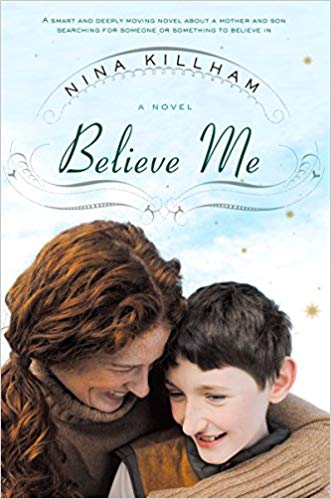
Nina Killham came back to me quickly with a positive response to my request. Nina is the author of three novels including Believe Me which is a wonderful book with a thirteen-year-old narrator called Nic. It is a funny and moving story about a boy who challenges his mother, an astrophysicist and atheist, by turning to the Bible for ways to understand contemporary life.

51t1Yfe-KBL._SX329_BO1,204,203,200_

I was first in touch with Nina a few years ago when she offer to give feedback on the first three chapters of a novel and the synopsis as a donation to the Authors for Refugees charity auction. I was lucky to win the lot and benefitted greatly from Nina’s feedback. We stayed in touch and she recommended several further novels for me to read so that I could learn how published authors develop stories around child characters. It was at Nina’s suggestion that I read Out Stealing Horses by Per Petterson. This is a great book that considers the lifelong repercussions from the accidental death of a child.

Without further ado, please let me unveil Nina’s full endorsement of The String Games:

Gail Aldwin excels at creating characters you care about. The String Games, her story of a child lost on a holiday to France, avoids melodrama and leaves the reader hoping the best for her characters as they move beyond the last page.

I’d like to thank Nina for her support, encouragement and of course, that lovely endorsement.

If you can’t wait until May to read my novel, you could always dip into my short fiction collection Paisley Shirt which is available from Waterstones in Dorchester and Bridport, The Bookshop in Bridport, Gullivers in Wimborne and Serendip in Lyme Regis.


2 Comments »

Blog Tour: F J Morris, This Is (Not About) David Bowie

I was delighted to meet F J Morris in Bristol where she shared one of her fabulous stories with an attentive audience. I’d seen Freya’s name on many competition announcements for winners and attached to stories in quality journals, so it was a real treat to attend the reading. She is a great supporter of flash fiction and assisted the organisers of the first flash fiction festival in 2017. Now, I’m thrilled she has agreed to join me on The Writer is a Lonely Hunter, to celebrate the launch of her debut collection of flash fiction. With the intriguing title This Is (Not About) David Bowie, the imaginatively presented collection contains thought-provoking stories that gave me the chance to take another look at modern life, and rethink a thing or two. Shrinking Giants was one of my favourite pieces, full of poignancy yet with an ending that gives hope.


Thank you for joining me, Freya and congratulations on your new publication. Here are the questions I’ve posed which I think will be of interest to readers and writers.

Do you write with your audience in mind? Who is your ideal reader?

My ideal reader is one that is living. I was going to say a human being, but to be honest, I’m not even that fussed what they identify as. I grew up in an old mining town on the outskirts of Bristol where my mum grew up. People didn’t really read. And so I’ve been asking myself a lot of big questions about fiction and why we should bother. Why should people read?

There are a lot of studies out that that explain how art helps us to understand ourselves and humanity better. Artists deal in feelings better than any other discipline. In the days we live in, it’s so important that we recognise the importance of feelings and how they influence us. Society doesn’t encourage us to be okay with them. They’re considered second-rate. But they have such a big influence on us. I read a study once that a judge’s decisions became more harsh depending on the time of day and his eating patterns (ie – if he’s hangry then you’ve no hope in hell). So it doesn’t matter how smart you are, or how aware you are, your feelings are more in control of you than you know.

We are not machines. We are not products. So I think it’s vital that we value artists, and that artists recognise their own worth, their own power. What people are consuming right now is influencing them in ways they don’t even realise. And we need to write, sing, dance, paint our way out of it. We need a new story to tell ourselves. Stories that have peace, hope, joy, magic. Stories that make you glad to be alive. Stories that bring us together. But ultimately, we need more people reading, and that’s a challenge I’m interested in taking on. So I guess they’re the ones I want to reach out to.

What do you hope readers will take away from your collection? 

That anything is possible. That we are the writers of our own story. That we can be who we really are. A few people have read my collection and told me which stories were their favourites, and what I love the most is that they all chose different ones. I really wanted to cover a range of people, a spectrum of identities, ages, genders, backgrounds – that felt true to Bowie, and what he stood for. I wanted the collection to reflect his essence. Bowie in himself is a powerful idea. He reached out to everyone who didn’t fit in, and it turns out, that’s a hell of a lot of people. Like many, he gave me permission to be as outrageous as I wanted. He allowed me to take risks. To be true to myself. I hope people reading my collection will feel that too.

Can you describe the process of putting together a flash collection?

The initial idea only came when someone asked me to write a collection. I had wanted to put one together for a while. But every theme or idea I had to string a bunch of stories together ran out of juice. It was like being in a labyrinth, thinking you’re on the right track, only to find myself at another dead end.

Then Bowie died. It was like watching an explosion. A supernova. A massive star had collapsed at the end of its life, and it sent out these ripples, this burst of energy. His impact on people spilled out. David Bowie was more than a person. He was a feeling. He was an idea. So that’s when lightning struck, and I saw my way through the labyrinth.

But that was just the beginning. There were a whole host of obstacles and riddles to work through after the first draft. The journey to publication was not straight or easy, but the extra time helped me to develop it more. There were a lot of stories that fell short of what I wanted so I ditched them. And then I put the rest together into a larger narrative structured by David Bowie quotes. I wanted people to feel like there was a bigger picture, a journey to go on, but that element came later.

Do you have a favourite flash and what was the inspiration for writing it?

Slush puppies (there’s a reading of it here): it’s about hidden love between two school girls. I wrote it in a Bristolian accent, so I have to read it in one. And it has a sort of musical quality to it. I wanted to write it in such a way that when you read it, you could feel the build-up and overflowing passion.

My stories are a bit like Frankenstein’s monster – some of the story was inspired by something that happened to friends when I was growing up, some of it is my imagination, and a fair bit has been harvested from different poems I wrote when I was in love. This one does it all. It takes me back in so many ways. Nostalgia is a powerful thing, and so is love.

Congratulations on your new appointment as Assistant Editor for fiction at Bare Fiction. What does this role involve?

Cheers! At the moment its: reading, reading, reading. Then deciding with the editor and team, which stories we think should be published. Robert does a wonderful job running the magazine, and his aspirations are amazing, so I can’t wait to help him achieve them. Plans and aspirations are a foot – so watch this space!

Do you have any favourite writing resources you would like to share with readers of The Writer is a Lonely Hunter?

Oh there are lots! When I read Orwell’s ‘Why I write’ in my twenties that basically became my mantra. I try to avoid writing to show off skills or knowledge. I remember a time when I was eight and I learnt this new word and was so excited to use it. But when I finally did, and nobody understood it, I realised how pointless it was. I felt the embarrassment of those around me, and how they withdrew. You lose people when you make them feel stupid – they disengage. So reading Orwell, made me consciously think about what sort of writer I wanted to be.

I’m always telling people to use the ‘Hemingway editor’ website. I’m going to use it on this interview. It helps me to be an editor to myself and to clean up my sentences. Then there’s Grammarly and Scrivener for the tools that make life easier.

What are your future plans?

To write. I know how that sounds. But it’s a constant fight with myself. I started to write a new novel called Burning down the house a few months ago, but with all the fiddling about, I’ve lost track of spending time on it. I want to write scripts, and make this app, and do another collection… So that’s my problem. Too many things, too many ideas, not enough writing.

What in insightful interview! Thank you, Freya. This is (not about) David Bowie is published by Retreat West Books and is currently on pre-order with Amazon. If anyone is in Bristol on 27 September at 7pm and would like to attend the book launch of This is (not about) David Bowie, your invitation is here.

Leave a comment »

Big Heads staged at Bridport Arts Centre

Over the past couple of years, Sarah Scally, Maria Pruden and I have been co-writing comedy sketches. Once we had sufficient material, Maria approached a group of local actors who agreed to perform the sketches and Bridport Arts Centre offered to stage it. The premiere of Big Heads & Others was on Thursday 8 November 2018.

The first sketch we completed was called Killer Ladybugs – this was drafted during a workshop led by Christine Diment of Juno Theatre. The sketch clashes the invasive behaviours of harlequin ladybirds with Donald Trump’s America First policies. It was topical material at the time of his election yet two years later and (unfortunately for the world) the material remains fresh.  This sketch was originally staged by Cast Iron Theatre in Brighton, so we were confident the writing was entertaining. Our actors Declan Duffy (Borderbug) and Lee Wyles (Ladybug) brought a new and exciting interpretation to the sketch.

45705375_1094925397347723_5688109942129557504_o

Another sketch called Baby Love also had a previous outing, this time at the Salisbury Fringe where it was performed as a scripted reading. This gave us ideas on how to stage the sketch at Bridport where a woman (Lee Wyles) waits for the X54 bus and chats to Lauren (Sally Hunt) who is obsessed with her little one, Dasiy-Waisy.

45698626_1094925717347691_5859762746815414272_o

Big Heads was the most experimental of the pieces and took our audience to Easter Island where they learnt what the famous statues were thinking. This was a static piece which relied on voice, silence and facial expression to convey meaning. Our actors Sally Hunt, Dewi Lambert and Declan Duffy performed this brilliantly and audience reaction confirmed it to be a popular sketch.

The three sketches were tied together with a linking piece that used physical theatre to tell the story of a hapless charity envelope collector (Declan Duffy) and his encounters with others.

45650883_1094925630681033_5241614157173751808_o

The evening was held as a charity fundraiser for the Bridport Arts Centre. All tickets for the show were sold and we had a warm and receptive audience. Thank you to everyone who came along and laughed in all the right places. This was the first time Maria, Sarah and I had directed a performance and we were incredibly grateful to Lee, Sally, Declan and Dewi for their ideas and input. We also had additional roles to ensure the performance went well: Sarah  was responsible for sound effects and lighting, Maria for narration and prompting, I was backstage assisting with costume changes and we all helped as stage hands.

fullsizeoutput_1bbf

Gail Aldwin, Sarah Scally, Maria Pruden


It was a splendid collaborative effort by performers and writers, one that we plan to repeat in 2019 with further comedy sketches.

Thanks to Peter Roe of Wessex Media for the fabulous photos.


2 Comments »

BridLit Fringe

I’m really chuffed to be sharing a few of my stories at the Bridlit Fringe alongside this talented group of local writers. If you’re in Bridport on the morning of Friday 16 November 2018, do drop into the Literary & Scientific Institute for a chance to hear a fantastic range of poetry and prose. Tickets are a bargain at only £5 and are available here.

44579677_10156781130396252_2908532607102746624_o

I hope to see some of you in the audience!

3 Comments »

Helen Corner-Bryant at the Dorchester Literary Festival

I was delighted to introduce Helen Corner-Bryant’s session ‘On Editing’ at the Dorchester Literary Festival last Sunday. As Chair of the Dorset Writers’ Network, I worked with festival co-director, Janet Gleeson, to arrange this input. Helen is a wonderful speaker who has substantial experience in supporting writers, firstly as an editor’s assistant at Penguin, and then in setting up the Cornerstones Literary Consultancy. Helen seeks to help writers overcome the creative barriers they encounter and with her team, they offer support that might otherwise take a writer much time to work out for themselves.

44539096_2329668957047982_8787748085435465728_n

Some top tips offered in the session include:

  • If you don’t feel confident writing dialogue it may be because you don’t know your characters well enough. Try interviewing your character or letting them have conversations in your head.
  • Make sure there is a point of tension on every page of your novel
  • Novels work well using a three act structure
  • When you come to a stop with your writing have a think about what this might mean for the work. Could it indicate a problem with the structure, plot or characterisation?

Did you know Cornerstones welcome submissions of the opening ten pages of your novel with the synopsis for a free evaluation?

Because Q&As are so valuable to writers, Helen has devised an ‘ask a literary consultant’ session where she outlines her role then opens the floor to questions. I am now working with the Dorset Writers’ Network to find a date and venue to offer this input. Follow the Dorset Writers’ Network on Facebook and Twitter for updates and/or subscribe to the newsletter on the website.

Helen’s book On Editing: How to edit your novel the professional way is an invaluable resource and is available from any good bookshop or can be purchased through Amazon.


2 Comments »

One Woman’s Struggle in Iran by Nasrin Parvaz


I was very interested to read this memoir particularly as I travelled through Iran in 1981 as part of an overland journey from London to Kathmandu. Just one year later, political activist Nasrin Parvaz and many other women were imprisoned by the Islamic state for demanding freedom and equality in Iran.

Nasrin and I are roughly the same age. I was twenty when I set out on my travels, she was arrested by the regime’s secret police at the age of twenty-one. My journey was one of culture and learning, hers was of torture, deprivation and hardship. But before I share my thoughts about Nasrin’s memoir, let me describe the situation for me at the time.

It was on 20 January 1981 that fifty-two American hostages were released from the US Embassy in Tehran. They had been held for 444 days by a group of Iranian college students who supported the Iranian Revolution which overthrew the Shah.  None of our group of travellers held American passports but it was impossible to obtain transit visas in London, so we were advised to apply for them once in Paris. Again, no visas were issued. Without the ability to proceed through Iran, our journey would be curtailed. It was then decided that all passengers from the two buses travelling in convoy would hand our passports over to Doug, the bus company’s courier. We all chipped in to cover the cost of his flight to Delhi where visas we issued to us all. 

Nasrin, a member of a socialist party was betrayed by a comrade and arrested by the Iranian regime’s secret police in 1982. She spent eight years in jail where she endured physical and mental torture and periods of solitary confinement. She was denied medical treatment and kept under the threat of execution. Throughout, she refused to recant and confess to charges against her as an infidel.

In order to drive through Iran, a revolutionary guard travelled on board the lead bus and directed the driver to pass through Tehran. Here people were friendly and waved to us through the windows. In country areas whenever our bus parked it was ambushed by angry mobs. They thought we were Americans. They pounded and rocked the bus until we moved on. It was only possible to go outside safely in unpopulated areas. This included climbing the desert lighthouse near Bam in Southern Iran.

Desert Lighthouse Iran0001

Although travelling through Iran was dangerous and scary, many of the places on our journey were remote and beautiful. These experiences contrast drastically with those of Nasrin, who was forced to wear a blindfold and chador in captivity.  She suffered numerous interrogations and episodes of torture but never gave away information relating to her comrades. In one of the most chilling descriptions of intimidation, the women were forced to sit in constructions that represented their own graves and not allowed to move. From Nasrim’s memoir, it seems that friendships  developed in prison enabled her to survive and glimpses of sky and other small gifts of nature brought joy.

Nasrin gives a frank account of her time in Iran’s prison system which has opened my eyes to the extremes that can be endured and overcome. It is a testament to her resilience and that of others who remained resolute and refused to recant their beliefs. Nasrin survived and I celebrate her ability to share these experiences from which we can all learn. I recommend this memoir to you.

I received an advance copy of One Woman’s Struggle in Iran, a prison memoir from Victorina Press to inform this post. The memoir is available to pre-order from Victorina Press and Waterstones.

4 Comments »

Kate Mosse and me

Did you know Macmillan Publishers was established 175 years ago by two brother? Originally crofters from the Isle of Arran, thirty-year-old Daniel and his twenty-five-year-old brother Alexander began a publishing business in London to share learning and capture imaginations. The company continues to publish writers that shape our literary lives. On 16 August at the Spiegeltent in Charlotte Square, Edinburgh, I was lucky to be in the audience as Kate Mosse introduced a range of writers including food poverty activist Jack Monroe and Sharlene Teo winner of the inaugural Deborah Rogers Writer’s Award for her debut novel, Ponti.

fullsizeoutput_1b4a

After the event, I introduced myself to Kate Mosse. She was a judge of the 2015 Elle Magazine writing competition alongside Jessie Burton. I feel privileged that both these authors read my entry and awarded me a place as runner up. (You can read more about the competition here.) Kate enquired about my writing progress and was pleased to learn of my recent successes. In judging a competition, Kate hopes the awards provide motivation to continue to progress with writing. When my novel is accepted for publication, I am now committed to let Kate know.


2 Comments »