the writer is a lonely hunter

writing by Gail Aldwin and other authors

The FABULOUS wider writing community

It was Nina Killham who first recommended I read The Deep End of the Ocean by Jacquelyn Mitchard. This is the debut work by a novelists who has gone on to write ten further books for adults plus others for the young adults and the children’s markets. As a first novel, The Deep End of the Ocean gained much attention and acclaim and was the first title chosen for Oprah’s Book Club in 1996. It is a powerful novel, full of suspense as the protagonist, mother to a missing boy, struggles to come to terms with what’s happened. It’s a very moving story that teaches about resilience and compassion in circumstances that are a nightmare to every parent.

5161

As there are parallels between my novel The String Games and Jacquelyn’s work (in terms of a focus on a lost child) I decided to get in touch with Jacquelyn through the contact page of her website. Imagine my surprise when minutes later a reply from this best-selling author popped into my inbox. Jacquelyn kindly agreed to  read my novel with a view to offering an endorsement. Although delighted with this response, I did feel rather impertinent even asking. As a child, my Grandma frequently used the reprimand ‘askers don’t get’ whenever me or my siblings became demanding. But if my Grandpa was within earshot he’d pipe up ‘don’t ask – don’t want’. This memory of my grandparents convinces me there is no harm in asking.

Read the rest of this entry »

1 Comment »

Pt 3: the FABULOUS wider writing community

41-ifVm8jJL._SX323_BO1,204,203,200_

I entered a travel writing competition in 2016 and as runner-up, I was offered a bursary to attend a fiction retreat at Moniack Mhor, Scotland’s creative writing centre. One of the tutors on the programme was Elizabeth Reeder who writes novels, essays and stories. Her debut novel, Ramshackle, was shortlisted for the Saltire Literary Award in 2013 and she’s gone on to write further novels.

The narrator of Ramshackle is fifteen-year-old Roe who one wintery day finds the man she thinks of as her father has gone missing. In the week that follows, Roe finds out more about herself and her father. At this point in growing up, Roe is an expert of her own experience but anything beyond causes anxiety. Roe’s voice is a mixture of confidence and vulnerability and this is something I wanted to explore in The String Games. Advice from Elizabeth was invaluable in moving forward with the middle part of my novel.

When it came to thinking of authors to approach to endorse The String Games, Elizabeth was at the top of my list. She’s an excellent writer so I’m delighted she felt able to offer the following words:

Gail Aldwin’s The String Games debuts her talent in an intimate portrayal of family, love and loss, and one that gives a glimpse into how crisis might shape each of us.

Elizabeth teaches creative writing at the University of Glasgow. I was fortunate to catch up with her at the Edinburgh International Book Festival in 2017 where she facilitated a wonderful readers’ workshop. Keep an eye out for other events Elizabeth is involved with. If you’re able to attend one of her workshops, seminars or talks you’re bound to enjoy it.

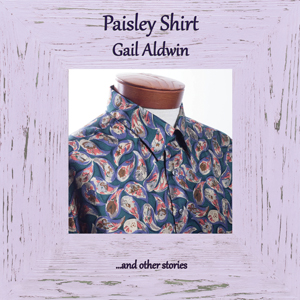
The String Games will be published in May 2019 but if you can’t wait until then you could always dip into my short fiction collection Paisley Shirt. It is also available from Waterstones in Dorchester and Bridport, The Bookshop in Bridport, Gullivers in Wimborne and Serendip in Lyme Regis.

1 Comment »

Pt 2: the FABULOUS wider writing community

2912227101_1ff7a935d8_m

Credit: Grafik Mekanik, Flickr

When it came to seeking endorsements for The String Games, I turned to the authors of novels with child narrators or child protagonists that I had read and enjoyed. Amongst them was a debut novel called Not Thomas by Sara Gethin. I like to read debut novels because it’s good to notice any trends in publishing and to check out the competition. Sara Gethin uses a five-year-old narrator, Tomos, who lives in poverty with his mother but who has experience of another life with his grandparents.  Tomos’s voice displays his innocence and optimism while the implied reader knows more about his mother than Tomos.  Using a young narrator allows the action to  take place beyond the child’s full understanding and this is a strategy I employ in The String Games. 

not-thomas-front-cover-for-ai-1-12-16

Careful use of patterned language and repetition perfectly captures the experiences of Tomos:

I am going up into my bed now. I’m climbing my ladder. I am pulling some tee shirts over me and some towels and jumpers too. I’m trying to get warm. I am thinking about the pictures in the book. I’m thinking about other pictures too like the ones in Charlie and the  Chocolate Factory. That is my favourite book. I had it last week from the library in school. It’s my favourite because of the film me and Dat used to watch. We love the film. We used to sit on the settee and watch it in Nanno and Dat’s house.

This extract cleverly shows how a resourceful little boy operates in challenging circumstances and how he is able to distract himself from his current situation. Use of the child’s interior monologue identifies books that spark memories as a pivot to remembering happier times. The contrast reinforces the precarious nature of Tomos’s life with his mother.

Not Thomas was shortlisted in The Guardian’s Not the Booker Prize 2017 and the Waverton Good Read Award 2018. It is published by Honno. I thoroughly enjoyed reading Not Thomas and urge others to step into the shoes of Tomos and see the world from his perspective. It is an illuminating experience.

Sara Gethin has kindly endorsed The String Games. This is what she says about my novel:

This is a gripping novel, where Gail Aldwin skilfully explores the dynamics of a splintered family coping with a truly awful event, and sensitively explores the repercussions of a burden of guilt unfairly shouldered by a child. Aldwin delves into the murky world of teenage manipulation, questions what makes a bad mother and asks whether forgiveness for a horrific act is ever possible. An insightful, engaging novel, The String Games breaks the reader’s heart and leaves them turning the pages ever more quickly to get to the truth of what really happened.

I’d like to thank Sara for her support and the wonderful endorsement.

I’ll be posting again in December with two other endorsements to share. Thank you for dropping by to read this.


7 Comments »

The FABULOUS wider writing community

2912227101_1ff7a935d8_m

Credit: Grafik Mekanik, Flickr

My novel The String Games will be published by Victorina Press in May 2019. It is a psychological drama that focuses on the legacy of loss for the protagonist when her four-year-old brother is abducted and murdered during a family holiday in France. The cover is being designed by Fiona Zechmeister and it is exciting to be part of the process from initial ideas to the final product. One of my roles has been to secure endorsements for the novel to support with marketing and promoting the book. From a study of novels which use child characters and child protagonists, I drew up a list of authors to approach. For my blogs each week this December, I will focus on the authors who have kindly offered their support. 

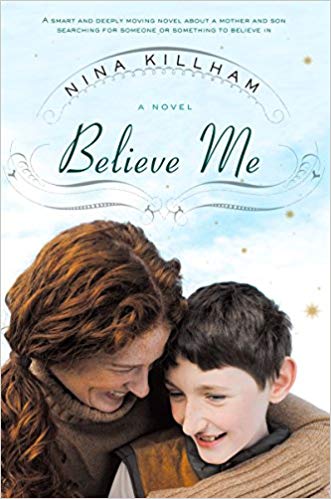
Nina Killham came back to me quickly with a positive response to my request. Nina is the author of three novels including Believe Me which is a wonderful book with a thirteen-year-old narrator called Nic. It is a funny and moving story about a boy who challenges his mother, an astrophysicist and atheist, by turning to the Bible for ways to understand contemporary life.

51t1Yfe-KBL._SX329_BO1,204,203,200_

I was first in touch with Nina a few years ago when she offer to give feedback on the first three chapters of a novel and the synopsis as a donation to the Authors for Refugees charity auction. I was lucky to win the lot and benefitted greatly from Nina’s feedback. We stayed in touch and she recommended several further novels for me to read so that I could learn how published authors develop stories around child characters. It was at Nina’s suggestion that I read Out Stealing Horses by Per Petterson. This is a great book that considers the lifelong repercussions from the accidental death of a child.

Without further ado, please let me unveil Nina’s full endorsement of The String Games:

Gail Aldwin excels at creating characters you care about. The String Games, her story of a child lost on a holiday to France, avoids melodrama and leaves the reader hoping the best for her characters as they move beyond the last page.

I’d like to thank Nina for her support, encouragement and of course, that lovely endorsement.

If you can’t wait until May to read my novel, you could always dip into my short fiction collection Paisley Shirt which is available from Waterstones in Dorchester and Bridport, The Bookshop in Bridport, Gullivers in Wimborne and Serendip in Lyme Regis.


2 Comments »

Blog Tour: F J Morris, This Is (Not About) David Bowie

I was delighted to meet F J Morris in Bristol where she shared one of her fabulous stories with an attentive audience. I’d seen Freya’s name on many competition announcements for winners and attached to stories in quality journals, so it was a real treat to attend the reading. She is a great supporter of flash fiction and assisted the organisers of the first flash fiction festival in 2017. Now, I’m thrilled she has agreed to join me on The Writer is a Lonely Hunter, to celebrate the launch of her debut collection of flash fiction. With the intriguing title This Is (Not About) David Bowie, the imaginatively presented collection contains thought-provoking stories that gave me the chance to take another look at modern life, and rethink a thing or two. Shrinking Giants was one of my favourite pieces, full of poignancy yet with an ending that gives hope.


Thank you for joining me, Freya and congratulations on your new publication. Here are the questions I’ve posed which I think will be of interest to readers and writers.

Do you write with your audience in mind? Who is your ideal reader?

My ideal reader is one that is living. I was going to say a human being, but to be honest, I’m not even that fussed what they identify as. I grew up in an old mining town on the outskirts of Bristol where my mum grew up. People didn’t really read. And so I’ve been asking myself a lot of big questions about fiction and why we should bother. Why should people read?

There are a lot of studies out that that explain how art helps us to understand ourselves and humanity better. Artists deal in feelings better than any other discipline. In the days we live in, it’s so important that we recognise the importance of feelings and how they influence us. Society doesn’t encourage us to be okay with them. They’re considered second-rate. But they have such a big influence on us. I read a study once that a judge’s decisions became more harsh depending on the time of day and his eating patterns (ie – if he’s hangry then you’ve no hope in hell). So it doesn’t matter how smart you are, or how aware you are, your feelings are more in control of you than you know.

We are not machines. We are not products. So I think it’s vital that we value artists, and that artists recognise their own worth, their own power. What people are consuming right now is influencing them in ways they don’t even realise. And we need to write, sing, dance, paint our way out of it. We need a new story to tell ourselves. Stories that have peace, hope, joy, magic. Stories that make you glad to be alive. Stories that bring us together. But ultimately, we need more people reading, and that’s a challenge I’m interested in taking on. So I guess they’re the ones I want to reach out to.

What do you hope readers will take away from your collection? 

That anything is possible. That we are the writers of our own story. That we can be who we really are. A few people have read my collection and told me which stories were their favourites, and what I love the most is that they all chose different ones. I really wanted to cover a range of people, a spectrum of identities, ages, genders, backgrounds – that felt true to Bowie, and what he stood for. I wanted the collection to reflect his essence. Bowie in himself is a powerful idea. He reached out to everyone who didn’t fit in, and it turns out, that’s a hell of a lot of people. Like many, he gave me permission to be as outrageous as I wanted. He allowed me to take risks. To be true to myself. I hope people reading my collection will feel that too.

Can you describe the process of putting together a flash collection?

The initial idea only came when someone asked me to write a collection. I had wanted to put one together for a while. But every theme or idea I had to string a bunch of stories together ran out of juice. It was like being in a labyrinth, thinking you’re on the right track, only to find myself at another dead end.

Then Bowie died. It was like watching an explosion. A supernova. A massive star had collapsed at the end of its life, and it sent out these ripples, this burst of energy. His impact on people spilled out. David Bowie was more than a person. He was a feeling. He was an idea. So that’s when lightning struck, and I saw my way through the labyrinth.

But that was just the beginning. There were a whole host of obstacles and riddles to work through after the first draft. The journey to publication was not straight or easy, but the extra time helped me to develop it more. There were a lot of stories that fell short of what I wanted so I ditched them. And then I put the rest together into a larger narrative structured by David Bowie quotes. I wanted people to feel like there was a bigger picture, a journey to go on, but that element came later.

Do you have a favourite flash and what was the inspiration for writing it?

Slush puppies (there’s a reading of it here): it’s about hidden love between two school girls. I wrote it in a Bristolian accent, so I have to read it in one. And it has a sort of musical quality to it. I wanted to write it in such a way that when you read it, you could feel the build-up and overflowing passion.

My stories are a bit like Frankenstein’s monster – some of the story was inspired by something that happened to friends when I was growing up, some of it is my imagination, and a fair bit has been harvested from different poems I wrote when I was in love. This one does it all. It takes me back in so many ways. Nostalgia is a powerful thing, and so is love.

Congratulations on your new appointment as Assistant Editor for fiction at Bare Fiction. What does this role involve?

Cheers! At the moment its: reading, reading, reading. Then deciding with the editor and team, which stories we think should be published. Robert does a wonderful job running the magazine, and his aspirations are amazing, so I can’t wait to help him achieve them. Plans and aspirations are a foot – so watch this space!

Do you have any favourite writing resources you would like to share with readers of The Writer is a Lonely Hunter?

Oh there are lots! When I read Orwell’s ‘Why I write’ in my twenties that basically became my mantra. I try to avoid writing to show off skills or knowledge. I remember a time when I was eight and I learnt this new word and was so excited to use it. But when I finally did, and nobody understood it, I realised how pointless it was. I felt the embarrassment of those around me, and how they withdrew. You lose people when you make them feel stupid – they disengage. So reading Orwell, made me consciously think about what sort of writer I wanted to be.

I’m always telling people to use the ‘Hemingway editor’ website. I’m going to use it on this interview. It helps me to be an editor to myself and to clean up my sentences. Then there’s Grammarly and Scrivener for the tools that make life easier.

What are your future plans?

To write. I know how that sounds. But it’s a constant fight with myself. I started to write a new novel called Burning down the house a few months ago, but with all the fiddling about, I’ve lost track of spending time on it. I want to write scripts, and make this app, and do another collection… So that’s my problem. Too many things, too many ideas, not enough writing.

What in insightful interview! Thank you, Freya. This is (not about) David Bowie is published by Retreat West Books and is currently on pre-order with Amazon. If anyone is in Bristol on 27 September at 7pm and would like to attend the book launch of This is (not about) David Bowie, your invitation is here.

Leave a comment »

One-to-one with the Dorset Growth Hub

IMG_5208

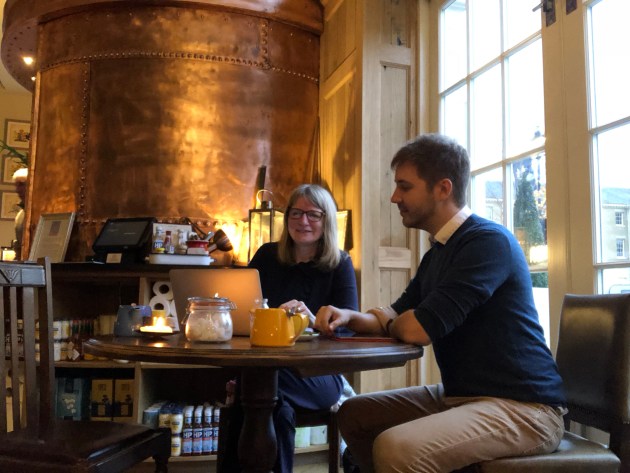
I’ve just had a one-to-one session with digital specialist David Allison from the Dorset Growth Hub. We met at the Duchess of Cornwall in Poundbury to discuss ways to enhance my use of social media for marketing purposes. As a result, I have now taken advantage of the additional facilities on this WordPress blog including use of the poll below. When you have a minute, can you give me some feedback?

If you’re based in Dorset and need help to gain skills and confidence to market your  work as a writer, it’s worth getting in touch with the Dorset Growth Hub, to see how they can help you.


4 Comments »

Writing Inspiration – The South West

When Nicole Fitton and I met on Twitter we were keen to share the experience of living and writing in the South West of England. I am pleased to welcome Nicole to The Writer is a Lonely Hunter where she answers our shared questions (mine appear after).  First, let me introduce Nicole.

Nicole Fitton lives and writes in the heart of Devon. She writes both thrillers and short stories, many of which have been short and longlisted. This year her flash fiction piece ‘Yellow‘ was featured as part of  National Flash Fiction Day on the Flash Flood Journal Blog.

Nicole Fitton

  1. Have you always lived in South West England?

The short answer is no! I started my journey towards living in the West Country as a ‘grockle’ (tourist). The children were small back then and we would set off at the crack of sparrows and head west. Like many who’d travelled before us, we would wind our way slowly down the A303 for two glorious weeks in North Devon come rain or shine! We promised ourselves that if we ever got the opportunity to relocate we would grab it with both hands. Well, that’s what happened. In 2010 we relocated because of my husband’s work. It was a big decision. I am so proud of the way our kids adapted. It was a big shock initially, but within a few months they were taking everything in their stride – even school lessons delivered on the beach – now that was a first!

Until our move to Devon I had lived mainly in big cities such as London and New York. My work in international PR and marketing took me all over the world, and I know I draw on a lot of those experiences when I write.

I now live betwixt the villages of Iddesleigh and North Tawton. Iddesleigh is famously the home of author Michael Morpurgo whilst North Tawton was home to the late poet laureate Ted Hughes. It is a place of isolation, and I love it. There is something quite profound about my small hamlet which runs along the river Taw. Perhaps it is the ebb and flow of the river. I’m not sure, but I know it has worked its way into my bones. Living in a farming community the effects of late harvests, early harvests, failed crops, all subconsciously inform my thinking. I seem to draw on the landscape especially with my short stories.

  1. Is there one particular place in the South West that is special to you, if so why?

I find myself drawn back to the River Taw time and time again. When we first arrived in Devon, it was the first place I discovered within walking distance of the house. We would spend many a happy hour skimming stones, swimming or sitting on ‘the beach’ (a patch of sandy shingle by the river’s edge). There are many ‘hidden’ parts of the river and every time I walk there I find something new.

Further afield I would say it would have to be the North Devon coastline. It is wild and structurally stunning. The rock formations you see are dramatic and magnificent. I have a story in mind for that coastline! Peppered in between the ancient stone cliffs are sandy coves and big expanses of golden beaches. My favourite beach is Westward Ho! The only place in the UK to have an exclamation mark as part of its name – fact!

WestWard Ho!

  1. What is it like to be a writer in the South West?

Devon is a superb place to write, and if someone were to do an audit or something clever like that I believe they would find a writer present in every village! There are a wealth of literary festivals and events across the county, which provide fantastic opportunities for support and collaboration year round.It is such a positive community. I belong to a group called the Sakura Positive Press Writers Group; we hold open mic evenings in our local pub for storytelling. It’s great fun. It would be great if we could roll this out across the region. Stories were initially told that way, and it would be great to see this form reignited.

Nicole’s Blog : www.nicolefittonauthor.com

Facebook:https://www.facebook.com/nicolefittonauthor/

Twitter:@MisoMiss

Instagram: https://www.instagram.com/misomiss/

Forbidden Colours - High Resolution - Version 2


Gail Aldwin

fullsizeoutput_1a83

  1. Have you always lived in South West England?

Dorchester in Dorset became my home in 2007. At the beginning, I wasn’t particularly pleased to be moving from my lovely life in south London but my children and me had to up sticks when my husband got a job in the county town. I soon came to appreciate the benefits of living in a county area and it certainly extended the childhood experiences of my son. He spent his summers building camps and swimming in the river where his London friends thought a good day out was visiting Chessington World of Adventures.

Although I was brought up in London, I spent several years travelling overseas and have lived and worked in Australia, Papua New Guinea and Santiago de Compostela in northern Spain. I do like a remote and beautiful location but living in one is not always easy. There are stories set in Australia and Papua New Guinea in Paisley Shirt, my recently published collection of short fiction. Something of a place remains with me from all the different locations I’ve experienced.

  1. Is there one particular place in the South West that is special to you, if so why?

Chapel Porth in winter

My husband is from Cornwall and we spent many summers on the north coast when my children were little. Our favourite beach is Chapel Porth near St Agnes where a river meets the sea. Out of season, my husband and son spent many hours damming the river in order to flood the beach but that wouldn’t make them popular in the summer when it gets packed with visitors. My novel The String Games draws from my experience of losing my son when he was three years old on a crowded beach. While I was busy smothering my daughter in sunscreen, he wandered off.  I started searching for him by heading in the wrong direction. In spite of a tannoy announcement, he was lost for forty minutes then I eventually found him way down the beach jumping over the ways and completely oblivious to the panic he had caused.

Closer to home in Dorchester, it’s possible to walk across the water meadows and experience Thomas Hardy country. I love going to the cottage that is the place of his birth in Higher Bockhampton. I usually take a detour to visit the great writer’s gravestone in the churchyard at Stinsford. Although it was Hardy’s dying wish to be buried there with his parents, the executor of his will had other ideas and Hardy’s body ended up in Poets’ Corner at Westminster Abbey while his heart was buried in Dorset.  Along the shaded riverside walk I imagine how this place sparked ideas for Hardy and try to generate a few myself!

  1. What’s it like to be a writer in the South West?

Dorset has a thriving writing community with literary events scheduled across the county. I am Chair of the Dorset Writers’ Network and work with the steering group to inspire writers and connect creative communities. We do this by putting on workshops and talks to support writers at different stages of their writing journey. The South West is full of creative people and I love to link up with writers in different counties. I have taken steps to achieve this by joining activities in Devon. I delivered a spoken word performance at the Sandford Y Festival book event and participated in the Chudleigh Dragons pitching competition as part of their annual festival. I would love to see better links for writers across the South West so that we can celebrate the creativity of the region.

Dorset Writers Network:            http://www.dorsetwritersnetwork.co.uk

Facebook:                                https://www.facebook.com/gailaldwinwriter/

Twitter:                                     @gailaldwin

perf6.500x6.500.indd


9 Comments »

Sandford Y Festival Book Event

fullsizeoutput_1a96

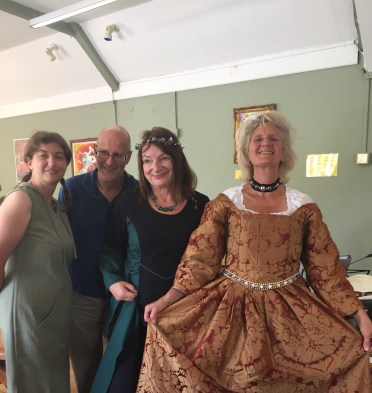
I was invited by Carol McGrath (you can find out about Carol and her first novel The Handfasted Wife here), to do a spoken word performance at the Sandford Y Festival. This took place on Saturday 7 July at The Lamb Inn in the pretty Devon village of Sandford. This award-winning gastro pub has a delightful function room where I shared my stories. Other activities included a meet the writers event where Carol McGrath, Jenny Barden and Jennifer Ash offered input on life as historical novelists. The day was rounded off with a balloon debate where the three novelists dressed up as their characters in a thoroughly entertaining finale.

img_2029.jpg

Very many thanks to Susie Williams for organising this event.

Sandford Y Festival


Leave a comment »

Dublin and the Mercy Institute

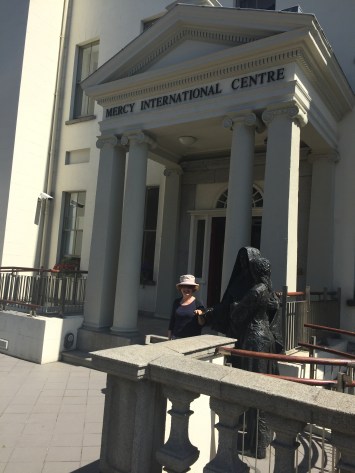
I’m just back from a few days in Dublin. My Australian friend arranged for us to stay at Mercy International. This is a house on the corner of Baggott Street not far from St Stephen’s Green. The accommodation is generous and comfortable and the history of the house fascinating. The founder of the Sisters of Mercy, Catherine McAuley, committed to support the poor when she inherited the estate of a distant relative. She bought the land and built a house in a prominent position in Dublin so that the wealthy were able to see the plight of orphans and the destitute women with whom she worked. While her intention was to operate as Catholic social workers, pressure to become a religious community saw McAuley and two other women formally prepare for life as women religious taking vows one year later. As a result, the Sisters of Mercy was founded on 12 December 1831 and formally confirmed by Pope Gregory XVI on 6 June 1841.

IMG_2005

We enjoyed bed and breakfast accommodation at Mercy International and joined a tour of the house one morning. This included visiting the room where up to two hundred children were taught and the bedroom where Catherine McAuley died. The determination of the Sisters of Mercy to work for the benefit of the poor and to promote the education of girls and women is quite remarkable. Many of the schools established  continue to promote the values of Catherine McAuley.

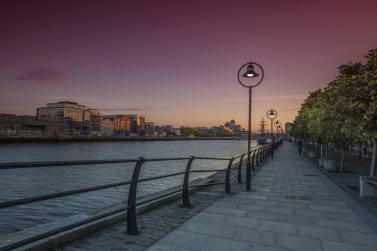
Other pleasures of Dublin included seeing a raucous production of Ulysses one evening and then another watching Roddy Doyles’ The Snapper. We made a visit to the Dublin Writers’ Centre and went to the beach where there was a sliver of sea at Sandymount. Walks beside the Liffey were very pleasurable where the breezes cooled off the summer heat.

dublin-2315015_1920

And the good weather continues now I’m back in Dorset. What a summer!


Leave a comment »